
Imagine you are driving down a busy suburban street. A phone pings, a child laughs in the backseat, or a song changes on the radio. In that split second of distraction, the car in front of you slams on its brakes. Human reaction time is fast, but physics is faster. This is the exact moment where Automatic Emergency Braking (AEB) transitions from a luxury “add-on” to a literal lifesaver.
The National Highway Traffic Safety Administration (NHTSA) is no longer suggesting that automakers include this technology; they are moving toward a future where it is a non-negotiable requirement. By pushing for universal adoption of AEB and Pedestrian AEB, the federal government is aiming to eliminate thousands of rear-end collisions and pedestrian fatalities every single year.
In this deep dive, we will explore the new mandates, the technology that makes it possible, and what this means for your next vehicle purchase.
The New Federal Mandate: A Shift in Road Safety
For years, AEB was something you found on the “options” list of a luxury German sedan or a top-tier SUV. However, following a series of studies on the efficacy of crash-avoidance tech, the NHTSA has finalized rules that will make AEB standard on all new passenger cars and light trucks.
The Timeline for Adoption
By 2029, nearly every new vehicle sold in the United States must be equipped with advanced AEB systems. This mandate isn’t just about having the hardware; it’s about the performance. The NHTSA is requiring that these systems work effectively at higher speeds and in low-light conditions—two areas where early versions of the technology often struggled.
Why the Push Now?
The data is hard to ignore. Rear-end crashes are the most frequent type of collision on American roads. According to safety experts, universal AEB adoption could reduce these types of accidents by nearly 50 percent. Furthermore, as pedestrian fatalities have risen over the last decade, the focus has shifted to “Pedestrian AEB,” which can detect the smaller heat or skeletal signature of a person walking or cycling.
How Automatic Emergency Braking (AEB) Actually Works
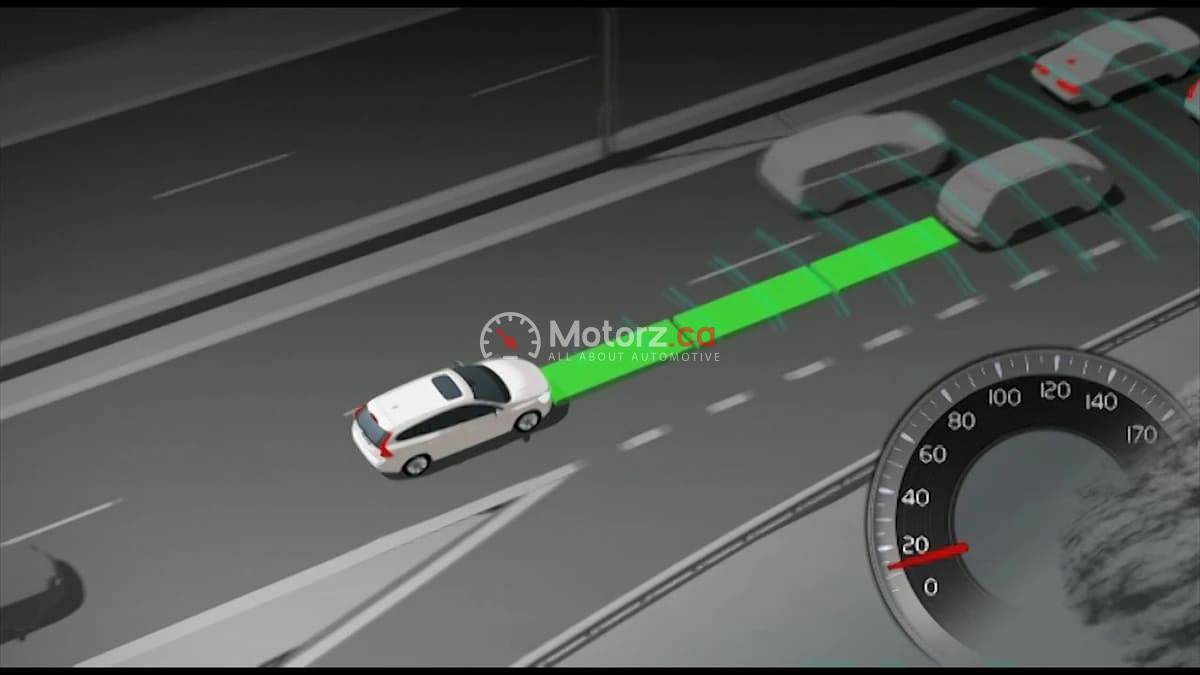
It sounds like magic, but AEB is the result of a sophisticated “sensor fusion” process. Your car is essentially “seeing” the world through multiple layers of data.
Radar Sensors
Most AEB systems use radar units hidden behind the front grille or bumper. Radar is excellent at measuring the distance and relative speed of the object in front of you. It works well in rain, fog, and snow because radio waves can pass through most weather obstructions.
Cameras and Computer Vision
High-resolution cameras mounted behind the rearview mirror look for visual cues. They identify brake lights, lane markings, and the shapes of pedestrians or cyclists. Computer algorithms analyze these images in real-time to determine if an object is a threat or just a stationary roadside sign.
The Decision Loop
The “brain” of the car (the Electronic Control Unit) constantly compares the data from the radar and the camera. If the radar says “object ahead” and the camera says “it’s a car and it’s stopped,” the system enters an alert phase.
Forward Collision Warning (FCW): The car beeps, flashes lights, or vibrates the steering wheel.
Brake Support: If you tap the brakes, the car applies maximum force instantly.
Autonomous Braking: If you do not react, the car slams on the brakes for you to avoid or mitigate the impact.
The Challenges: Why Not All AEB Systems Are Equal
While the NHTSA mandate is a win for safety, not all systems currently on the road perform the same. There are several hurdles that engineers are still working to clear.
The “Darkness” Problem
Many early AEB systems were effectively “blind” at night. Pedestrians wearing dark clothing on unlit roads were often undetected by camera-only systems. The new NHTSA requirements specifically demand that systems perform well in nighttime conditions, which is pushing manufacturers to adopt better infrared tech or more sensitive radar.
False Positives and “Phantom Braking”
We have all heard stories—or experienced it ourselves—where a car slams on the brakes for a shadow under a bridge or a metallic soda can on the road. This is known as a “false positive.” If a system is too sensitive, it becomes a nuisance (and a safety risk). If it is not sensitive enough, it fails to save lives. Balancing this sensitivity is the greatest challenge for automotive software engineers.
How Standard AEB Affects the Consumer
When a technology goes from “luxury option” to “federal requirement,” it changes the landscape for the everyday driver.
Car Prices and Maintenance
Adding sensors and cameras increases the base cost of manufacturing a car. However, because these systems are being produced in such massive quantities, the “per-unit” cost is dropping significantly. You may pay a bit more at the dealership, but you will likely save that money elsewhere.
Insurance Discounts
Many insurance companies are already offering discounts for vehicles equipped with active safety tech. Since AEB reduces the likelihood of “fender benders,” insurers have lower payout risks. Over the life of the vehicle, the insurance savings could potentially pay for the cost of the system itself.
The Cost of Windshield Repairs
Here is a “pro-tip” for new owners: Because the AEB cameras are often mounted to the windshield, a simple rock chip can become an expensive problem. If you have to replace your windshield, the cameras must be “re-calibrated” to ensure they are pointing exactly where they should be. This can add several hundred units to a standard glass repair bill.
The Role of Pedestrian AEB (PAEB)
The NHTSA isn’t just worried about car-to-car hits. Pedestrian safety is a major pillar of the new push. PAEB systems are designed to detect the movement patterns of humans.
Intersections and Turning
A significant portion of pedestrian accidents happens when a car is turning at an intersection. Newer AEB systems are being designed with “turn-across-path” detection, which can stop the car if you are about to turn left into the path of an oncoming cyclist or walker that you might not have seen.
Myths vs. Reality: What AEB Can and Cannot Do
It is vital for drivers to understand the limitations of these systems so they don’t become over-reliant on them.
Myth: “My car will always stop in time.”
Reality: AEB is a “mitigation” tool. At very high speeds, the car might not be able to come to a full stop, but it will slow down significantly, which can turn a fatal crash into a survivable one.
Myth: “I don’t need to pay attention if I have AEB.”
Reality: AEB is a back-stop, not a driver. Weather conditions like heavy ice or thick mud on the sensors can disable the system entirely. You are still the primary safety device in the vehicle.
A Safer Road Ahead
The NHTSA’s push for standard Automatic Emergency Braking represents one of the most significant leaps in automotive safety since the invention of the three-point seatbelt. While the transition will require a “learning curve” for drivers—and some software fine-tuning from automakers—the end result is undeniable: a future with fewer hospital visits and fewer broken cars.