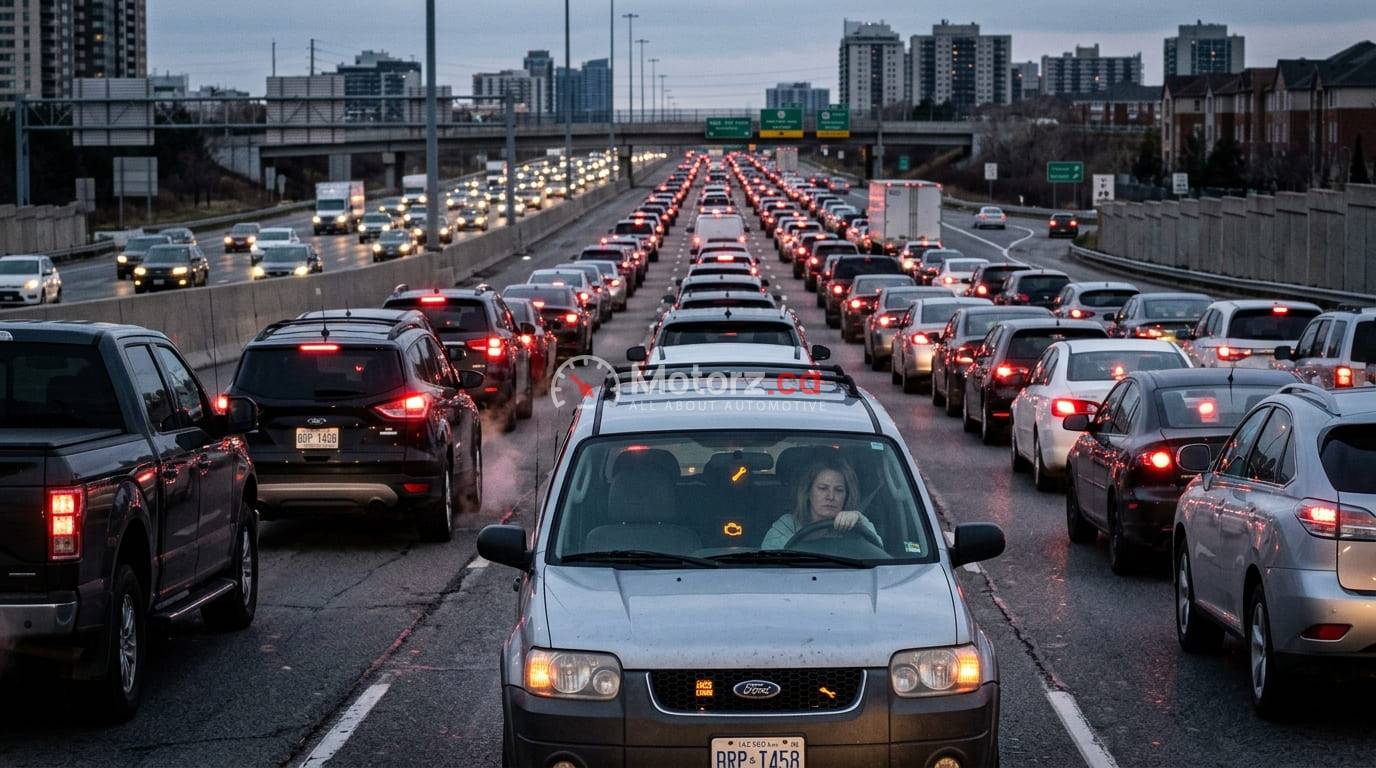
If you commute through Mississauga, Brampton, or Caledon Car Maintenance, you are likely well aware of the mental toll it takes. Creeping along Highway 401 at five kilometers per hour, navigating the relentless construction delays on Hurontario Street, or enduring stop-and-go bottlenecks on Highway 410 are familiar frustrations. However, while you are tracking the minutes lost on your dashboard clock, your vehicle is tracking something far more consequential: an accelerated rate of mechanical degradation.
Many drivers assume that their vehicle’s service intervals are dictated solely by the odometer reading. They wait patiently for that ten thousand kilometer mark to arrive before booking an oil change. But here is the hard truth that local repair shops understand: city driving in the Peel Region qualifies almost exclusively as severe operating conditions.
When your vehicle spends hours idling in gridlock, navigating extreme Southern Ontario temperature swings, and halting every few meters, standard maintenance timelines completely break down. This comprehensive guide breaks down exactly why heavy commuting in the regional municipality of Peel accelerates your auto service lifecycle, which mechanical systems bear the brunt of the damage, and how you can adapt your preventative maintenance habits to protect your asset and your wallet.
Severe vs. Normal Driving Conditions: The Commuter Misconception
To understand why your service calendar needs an overhaul, it is vital to clear up a major misunderstanding regarding factory service manuals. Automotive manufacturers typically outline two completely distinct service schedules in the owner’s manual: Normal and Severe (sometimes referred to as Special Operating Conditions).
What Manufacturers Consider Normal Operating Conditions
In an engineering lab, a “normal” driving cycle looks like a smooth, uninhibited cruise on an open highway. It involves starting the vehicle, allowing the engine block to reach its optimal operating temperature, and maintaining a steady speed between eighty and one hundred kilometers per hour for an extended duration. In this idealized environment, aerodynamic cooling is highly Car Maintenance, the transmission shifts minimally, and moisture or unburned fuel within the engine oil safely evaporates away.
Why Peel Region Comms Match the Severe Schedule Perfectly
Unfortunately, the daily grind on Steeles Avenue, Dixie Road, or the QEW is anything but normal. Automotive manufacturers categorize severe driving conditions using the following criteria:
Stop-and-go driving with frequent, extended idling periods.
Short trips where the vehicle travels less than eight to ten kilometers before stopping.
Operating in areas with high air pollution, industrial dust, or heavy road salt application.
Driving in extreme ambient temperatures, whether during freezing Canadian winters or humid summer heatwaves.
Because the Peel Region features a dense logistics corridor packed with commercial transport trucks, heavy seasonal construction, and prolonged winter weather, your daily drive ticks every single box on the severe list.
Engine Oil Degradation: The Silent Risk of Idle Hours
Engine oil is the lifeblood of your powertrain. It lubricates moving internal components, reduces friction, absorbs heat, and captures microscopic debris. Odometer-based service intervals assume that a car moving at one hundred kilometers per hour covers a massive distance while the engine works under low stress. In gridlock, the math shifts entirely.
The Problem with Idle-Heavy Travel
When your vehicle is idling on a congested highway ramp near the Toronto Pearson Airport boundary, your odometer is completely frozen. However, your engine is still running, pistons are firing, and oil is circulating.
During an hour-long creep over a distance of just five kilometers, your engine undergoes as much thermal cycling and mechanical wear as it would during sixty kilometers of smooth highway cruising. If you stick strictly to an odometer-driven service reminder under these conditions, your oil will be chemically spent and heavily oxidized long before the dashboard light illuminates.
Fuel Dilution and Low-Temperature Carbon Sludge
Short-distance commuting poses another major threat. If your workplace is only a few kilometers away in corporate Mississauga, or if you frequently run short errands around Bramalea City Centre, your engine rarely reaches its optimal internal operating temperature.
When an engine runs cold, a small amount of unburned fuel slips past the piston rings and enters the oil pan. In longer drives, this fuel safely vaporizes. On short trips, the fuel stays mixed into the engine oil, thinning its viscosity and ruining its ability to protect vital components. This dynamic creates a thick, black carbon sludge that clogs narrow oil passages, leading to premature timing chain stretch or complete engine failure.
Braking Systems under Siege: Stop-and-Go Wear Patterns
A high-speed highway cruise requires very little braking activity. Conversely, navigating Peel Region corridors requires your foot to constantly cycle between the accelerator and the brake pedal. This constant friction alters how your braking components degrade.
Brake Pad Glazing and Rotor Warping
When you crawl along a gridlocked road, you are constantly applying light pressure to the brake pedal. This persistent contact generates continuous friction without giving the brake pads time to cool down. The organic or semi-metallic compounds within the pad can crystallize under this trapped heat, a defect known as glazing. Glazed pads become slick and hard, resulting in a noticeable loss of stopping power and a high-pitched squealing sound.
Furthermore, uneven heat distribution across a stationary or slow-moving brake assembly can cause the brake rotors to develop thin spots or warp. When a driver steps on a warped rotor, they will feel a distinct pulsation or shaking through the steering wheel or brake pedal during routine deceleration.
Accelerated Brake Fluid Moisture Absorption
Brake fluid is highly hygroscopic, meaning it actively absorbs moisture from the surrounding air. In a humid Southern Ontario summer or during wet, slushy winter weather, this process speeds up.
The heat generated by heavy stop-and-go traffic transfers straight into the brake calipers, boiling any trapped moisture inside the fluid lines. This creates tiny air bubbles within the closed hydraulic loop. Because air compresses much easier than fluid, the driver experiences a soft, spongy brake pedal feel, which dangerously increases overall stopping distances on slippery winter surfaces.
Transmission and Drivetrain Stress: The Toll of Constant Shifting
Your vehicle’s transmission is designed to route engine power to the wheels efficiently. However, heavy commuting forces the transmission control module to make thousands of microscopic operational decisions every hour, increasing mechanical wear.
Thermal Breakdown of Automatic and Dual-Clutch Fluid
The single biggest enemy of an automatic, CVT, or dual-clutch transmission is heat. When a vehicle is trapped in stop-and-go congestion, the transmission continually shifts back and forth between first, second, and third gear to handle minor adjustments in traffic speed.
Each shift relies on internal clutches and torque converters that slip slightly to keep power delivery smooth. This slipping action generates significant friction heat. Without the natural cooling airflow of high-speed travel, the transmission fluid temperature rises quickly. Once the fluid runs hot for too long, its protective anti-foam and anti-wear additives break down, leading to harsh gear changes, internal slipping, and eventual gear failure.
CV Axle and Universal Joint Degradation
The roads of Peel Region take a beating from heavy commercial truck traffic, creating deep potholes, frost heaves, and rutted asphalt. Bouncing through these surface imperfections while accelerating or turning wheels puts a tremendous amount of stress on the Constant Velocity (CV) joints and drivetrain components. The protective rubber boots surrounding these joints flex constantly, making them more likely to crack, leak essential grease, and allow abrasive road debris inside.
Steering, Suspension, and the Harsh Peel Infrastructure
Peel Region features a unique infrastructure footprint. It contains some of the busiest commercial corridors in North America alongside rapidly expanding residential developments. This mix exposes your vehicle’s structural chassis to continuous mechanical strain.
Potholes, Construction Ruts, and Joint Play
Whether navigating ongoing light rail transit construction zones along Hurontario Street or dealing with regular utility cut repairs in Brampton, local pavement is rarely pristine. Crawling over uneven surfaces, raised manhole covers, and deep ruts strains your car’s suspension joints.
Control Arm Bushings: The rubber compounds dry out and tear, leading to front-end noise and unstable handling.
Ball Joints: Continuous low-speed impacts drain internal lubrication, creating dangerous play in the front wheels.
Tie Rod Ends: Small steering corrections made while crawling around construction blockades wear out these joints, ruining front wheel tracking.
Wheel Alignment Degradation
A sudden drop into a deep pothole can knock your wheel alignment out of true instantly, but so can the slow, cumulative vibrations of driving on poorly maintained roads. When a vehicle operates with bad alignment angles, the tires can no longer track evenly along the road surface. This causes rapid, uneven tire tread wear and puts extra strain on your wheel bearings, forcing you to replace expensive tires much earlier than expected.
Cooling System Fatigue and Alternator Load
When your car travels at highway speeds, a massive volume of fresh air passes through the front grille, naturally cooling the radiator and climate control condenser. When you are stationary in traffic, this natural system disappears completely.
Complete Reliance on Electric Cooling Fans
In gridlock, your cooling system has to rely entirely on electric cooling fans to pull air through the radiator core. This means these fans must run continuously at high speed to prevent the engine from overheating, especially during humid summer months. This constant operation accelerates the wear cycle of the fan motors and places a heavy, continuous electric demand on your car’s charging system.
Electrical Component Stress at Low Engine RPM
An alternator is engineered to produce its maximum electrical current when the engine is running at higher RPMs, typically above fifteen hundred to two thousand revolutions per minute. At a low stop-and-go idle, the engine runs at roughly seven hundred RPM.
At this lower speed, the alternator output drops significantly. If you are simultaneously running a heavy electrical load—such as maximum air conditioning, ventilated seats, windshield wipers, and high-fidelity audio systems—the car battery has to step in to help fill the power gap. This constant charging and discharging cycle shortens the lifespan of both your alternator and your starting battery.
Environmental Factors: Road Salt and Industrial Emissions
Geographic location plays a huge role in shaping your vehicle’s custom maintenance needs. The Peel Region sits right within a busy industrial and commercial transit belt that experiences harsh Canadian winters.
Winter Chemical Melters and Structural Rust
To keep high-volume roads safe during winter storms, local transport authorities apply massive amounts of rock salt, calcium chloride, and sticky liquid brine solutions. When you tail close behind other vehicles in heavy traffic, a fine mist of this corrosive chemical mix is kicked up directly into your car’s undercarriage. It settles deep into brake caliper slider pins, exhaust hangars, suspension coils, and structural frame rails, speeding up rust formation and causing moving mechanical parts to seize up prematurely.
Airborne Contaminants and Filtration Clogging
Because Peel Region features major logistics hubs filled with diesel trucks, the local air has higher levels of airborne soot, fine particulate matter, and industrial dust. Your car’s engine intake filter and cabin air filter have to work extra hard to capture these elements. A clogged engine filter starves the combustion chamber of fresh oxygen, hurting fuel economy. Meanwhile, a dirty cabin filter allows allergens and exhaust odors to enter the passenger space, making your commute uncomfortable and unhealthy.
The Optimized Commuter Maintenance Schedule: How to Adapt
Now that you know how heavy commuting alters your car’s mechanical wear patterns, you can take control. You do not have to watch your vehicle break down early. By shifting from a simple odometer mindset to a severe-use proactive maintenance strategy, you can protect your car’s reliability.
The Commuter Service Adjustment Table
To counteract the effects of a grueling daily drive, consider adapting your service intervals using this severe-use framework:
Expert Tips to Reduce Mechanical Strain During Your Commute
Beyond changing how often you service your car, modifying a few small driving habits can significantly lower the physical stress placed on your vehicle during daily gridlock:
Increase Your Following Distance: Instead of tailgating the vehicle ahead and constantly tapping your brakes, leave a generous gap. This buffer allows your car to coast smoothly at a steady low speed, reducing brake wear and easing transmission stress.
Disable Engine Stop-Start in Heavy Traffic: While automated engine stop-start systems can save a bit of fuel in brief rental car stops, constant cycling every few seconds in heavy gridlock strains your starter motor and drains the car battery.
Invest in a Quality Undercarriage Wash: During the winter, use an automated car wash that features a high-pressure underbody rinse at least twice a month. Getting rid of trapped road salt is the best way to prevent your suspension and brake parts from rusting out.
Let Your Engine Idle Briefly After a Tough Drive: If you have just spent an hour grinding through a hot summer traffic jam, do not shut the engine off the second you park. Let the vehicle idle for thirty to sixty seconds while stationary. This allows coolant and oil to circulate smoothly, lowering internal engine temperatures safely.