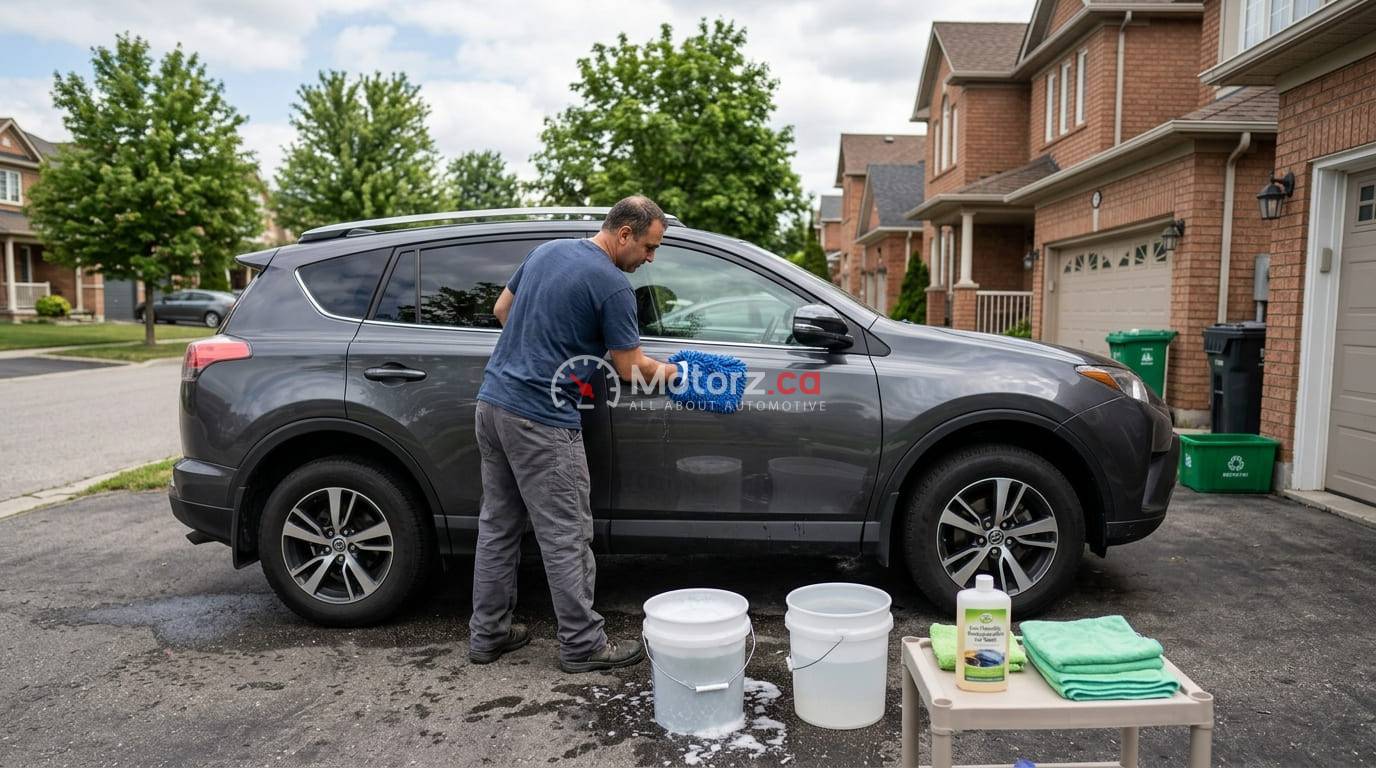
For car enthusiasts and Eco-Friendly Brampton Car Wash, nothing beats the satisfaction of a crisp, glossy car wash right in your own driveway. Rolling up your sleeves on a sunny weekend to wash away road dust, pollen, and tree sap is a beloved seasonal ritual.
However, washing your vehicle at home in Brampton is no longer as simple as dragging out a garden hose, grabbing a bottle of dish soap, and spraying down your car until the driveway turns into a river of suds.
In recent years, the City of Brampton and Peel Region have placed a massive emphasis on environmental preservation, storm sewer protection, and water conservation.
Every time you wash your car on an asphalt or concrete driveway, the runoff water—packed with petroleum hydrocarbons, heavy metals, brake dust, and chemical surfactants from your soap—flows straight into the nearest street catch basin.
Unlike indoor household drains, Brampton’s outdoor storm sewers do not lead to a wastewater treatment plant. Instead, that toxic slurry empties directly into local ecosystems like the Credit River, Etobicoke Creek, or local stormwater retention ponds, harming aquatic life and polluting the watershed.
Does this mean you are completely banned from washing your car at home? Not at all. It simply means you must adapt your methods to follow local eco-laws, protect the environment, and avoid heavy municipal fines.
This ultimate guide will break down the legal realities of car washing in Brampton, explain how your home drainage systems work, and provide a step-by-step blueprint for safe, effective, and completely compliant home car detailing.
Decoding Eco-Friendly Brampton Car Wash: What is Actually Allowed?
To stay completely on the right side of local bylaws, you must understand the clear division between your home’s two primary drainage systems: the sanitary sewer and the storm sewer.
The Core Law: The Stormwater Sewer Bylaw
The absolute most critical rule to remember as a Brampton homeowner is this: Only rain and melted snow are allowed down the storm drain.
The square iron grates located at the edge of your street or the bottom of certain sloped driveways are catch basins for stormwater management. Under local environmental protection regulations, discharging any chemical product, automotive fluid, or contaminated wash water into these grates is considered an illegal spill and a direct violation of environmental bylaws.
This means that traditional driveway washing—where you leave a garden hose running while scrubbing thick soap suds that cascade down the curb into the street drain—is entirely illegal. Even if your car wash soap states it is biodegradable on the front of the bottle, it is still a prohibited substance that cannot enter the storm system. Biodegradable soaps require soil bacteria to break down safely over several weeks; if they enter open rivers or ponds directly, they instantly destroy the protective slime coat on local fish and drop dissolved oxygen levels in the water.
Understanding Sanitary Drains vs. Storm Drains
To wash your vehicle responsibly, you must differentiate where your wastewater goes:
The Storm Sewer System: Enters through street grates and driveway catch basins. It bypasses all filtration and treatment, carrying water directly into Brampton’s natural streams, creeks, and rivers.
The Sanitary Sewer System: Enters through the plumbing drains inside your house, such as your kitchen sink, toilet, bathtub, and laundry tub drain. This water travels through dedicated underground pipes directly to a regional wastewater treatment plant, where complex filtration systems safely neutralize soaps, dirt, and heavy contaminants before the water is safely reintroduced into Lake Ontario.
Therefore, compliant home washing requires preventing dirty water from reaching the street storm drains and, whenever possible, redirecting it to the sanitary system or allowing it to filter naturally through the ground.
The Permeable Surface Wash
If you have a spacious property with a flat lawn or a gravel parking pad, you can safely wash your vehicle using standard automotive shampoo without violating local regulations.
How Soil Acts as a Natural Filter
When you park your car on a permeable surface like grass or gravel, the soapy wash water sinks straight down into the earth instead of running down the asphalt into the street.
The soil acts as a highly effective, natural bio-filter. Microorganisms and bacteria living within the dirt break down the chemical surfactants of the soap safely over time, while the physical structure of the soil traps heavy metals and grease before they can migrate into deep underground water tables or surface streams.
Best Practices for Lawn Washing
While effective, you must follow a few specific guidelines to protect your lawn and remain compliant:
Use a Shut-Off Nozzle: Never use an open-ended hose that runs continuously. Equip your garden hose with a spring-loaded trigger nozzle that cuts off the water flow completely the instant you let go of the handle. This minimizes total water usage and prevents pooling.
Choose Eco-Friendly Products: Use a plant-based, phosphate-free car wash shampoo. This ensures the runoff will not scorch your grass or alter the pH of your lawn soil negatively.
Keep the Car Moving: Do not park your heavy vehicle on the exact same patch of grass for hours or perform detailing tasks every single weekend in the same spot, as this can compact the soil, damage grassroots, and create muddy patches.
The Containment and Indoor Disposal Method
If you do not have a lawn or gravel area and must wash your car on a hard surface like a paved driveway or a concrete garage pad, you can use the containment method to protect the municipal storm system.
The Two-Bucket System with Inside Disposal
This method relies on strict water rationing and containment, ensuring zero runoff leaves the boundaries of your property.
The Controlled Driveway Wash Sequence
To safely wash your vehicle on a hard paved surface without letting a single drop of polluted water contaminate the street storm drains, follow this precise mechanical routine:
Brampton Environmental Note: Never pour your dirty car wash bucket down an outdoor drain, ditch, or catch basin. Even a small bucket containing concentrated brake dust and soap can cause a localized toxic spike in a neighborhood creek.
The Rinseless and Waterless Detailing Revolution
For modern detailers living under tight urban water restrictions or those without access to an outdoor tap, rinseless washing is the absolute pinnacle of safe, regulatory-compliant car care.
What is a Rinseless Wash?
A rinseless wash uses a highly specialized chemical formula completely different from traditional high-foaming car soaps. These advanced products utilize substantive polymers that instantly bond to surface dirt, encapsulating the abrasive grit particles and lifting them away from the clear coat paintwork.
The primary benefit? As the name implies, you do not need a hose to rinse the soap off after scrubbing. You simply wipe the product on, wipe the dirt away, and buff the panel dry with a clean cloth.
Step-by-Step Guide to a Rinseless Driveway Wash
To execute a flawless rinseless wash with absolutely zero driveway runoff, follow this simple procedure:
Mix the Solution: Add two ounces of a high-quality rinseless wash concentrate into a single five-gallon bucket filled with clean water.
Pre-Spray the Panels: Fill a standard handheld compression sprayer or spray bottle with some of the mixed solution. Spray a generous mist directly onto a car panel (such as the hood or a door). Let it sit for sixty seconds to soften the surface grime.
The Contact Clean: Submerge several clean microfiber towels directly into your wash bucket. Pull out one thoroughly soaked towel, fold it into fourths, and gently glide it across the pre-sprayed panel using straight, light strokes. Never rub or press down hard.
Flip the Towel Frequently: After cleaning a section, flip the towel over to an entirely clean, fresh side. Once all eight sides of the folded towel are dirty, discard it into a laundry bin and grab a fresh towel from the bucket. This prevents dragging captured dirt back onto your vehicle.
Buff Dry Immediately: Before the product can evaporate on the paint, use a dry, plush microfiber towel to buff the panel dry. The polymers leave behind a slick, highly glossy protective layer with absolutely zero pooling water left on your driveway.
Because this method requires less than two total gallons of water and generates zero stream runoff, it can be performed completely legally anywhere in Brampton at any time of the year.
Smart Adjustments for Different Seasons in Brampton
Depending on the time of year, your home detailing strategy should shift to match current weather patterns and regional water availability.
Spring Cleanup and Road Salt Neutralization
Spring is when your car requires the deepest clean, but it is also when local streams are at their most vulnerable due to high seasonal melting volumes.
When cleaning off heavy winter road salt crusts, remember that salt is highly alkaline. Before doing a contact wash, use a dedicated pressure washer with a clean water undercarriage attachment to rinse the underside of your vehicle thoroughly over a grassy area or over a home drain basin if appropriate, preventing toxic salt loads from overwhelming local drainage valleys.
Managing Summer Water Restrictions
During long, hot summer stretches, Peel Region may implement mandatory water conservation levels to protect regional supply lines.
If local authorities issue an official water conservation alert, all non-essential outdoor hose use may be restricted to specific days based on your house address number, or banned entirely. During these high-demand summer stretches, put your garden hose away completely and rely strictly on the rinseless wash method or waterless detail sprays to keep your car looking sharp without wasting a single drop of precious drinking water.
When to Skip the Driveway: The Benefits of Commercial Facilities
While washing your vehicle at home is a fantastic hobby, there are times when the smartest, safest, and most environmentally responsible choice is to leave your driveway behind and visit a professional commercial facility.
Commercial Eco-Engineering
Every legal commercial car wash operating within Brampton—whether it is a touchless tunnel, an automatic soft-touch facility, or a coin-operated self-serve bay—is bound by strict industrial environmental bylaws. These commercial systems feature advanced underlying engineering designed to protect the municipality:
Mandatory Interceptor Pits: Commercial bays route all wash water directly into deep multi-chambered settling tanks and oil-water separators. These devices trap heavy grimes, solid sands, oils, and unburned fuel residues, preventing them from entering any public utility grid.
Sanitary System Routing: Once pre-filtered, one hundred percent of a commercial car wash’s wastewater is pumped directly into the sanitary sewer grid, ensuring it receives full treatment at a regional wastewater plant.
Advanced Water Recycling: Many modern Brampton car washes utilize integrated reclamation loops that filter, clean, and reuse up to seventy to eighty percent of the water from previous wash cycles, reducing overall consumption dramatically compared to a home garden hose.
If your vehicle is coated in heavy caked-on mud from a weekend camping trip, or thick, greasy engine sludge, do not attempt to wash it at home. Take it to a coin-operated self-serve bay where the infrastructure is purpose-built to capture and treat those heavy toxins safely.
Responsible Detailing
Washing your car at home is a rewarding way to connect with your vehicle and keep it looking its absolute best. By making a few simple, conscious adjustments—like switching to a rinseless wash formula, washing over your lawn, or disposing of your wash buckets down an indoor drain—you can enjoy a spotless car while actively protecting the beautiful rivers, parks, and groundwater networks that make Brampton a wonderful place to live. Clean responsibly, protect your watershed, and enjoy the pristine shine.