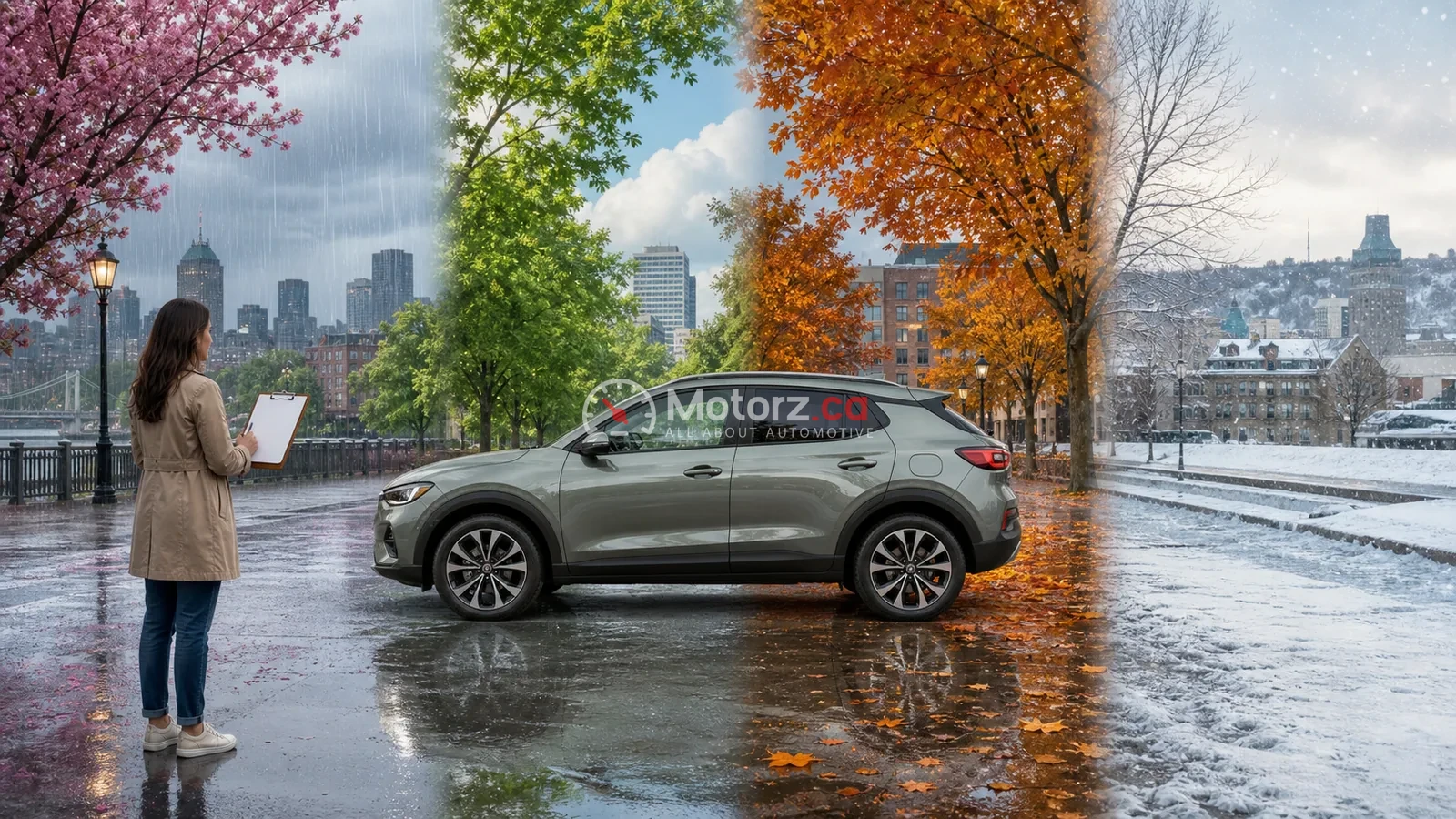
Season can change shopping logistics in Montréal, but vehicle fit, verified condition, total cost and a clear contract matter more than a calendar claim.
The direct answer
There is no guaranteed best month to buy a car in Montréal. Promotions, inventory, trade values, financing and used-vehicle condition vary by seller and vehicle. The practical time to buy is when you can compare several suitable vehicles, arrange an independent inspection where applicable, verify the total cost and walk away from a poor deal. Season should shape the checklist—not create urgency.
What season can actually change
Montréal weather and local ownership needs can affect how thoroughly a buyer can evaluate a vehicle and what must be ready at delivery. They do not prove that every dealer discounts at the same time or that a buyer will save more in one month. Compare current written offers instead of relying on a recurring “year-end bargain” rule.
Winter: test cold-weather needs, not sales slogans
Quebec requires most motor vehicles registered in the province to have compliant winter tires from December 1 through March 15, subject to stated exceptions. A winter purchase should therefore identify which tires are included, whether they are compliant and usable, and what installation or replacement will cost. Confirm the current rule and exceptions with the Government of Quebec rather than treating this summary as legal advice.
Cold and snow can reveal practical questions about starting, heating, visibility and traction, but one test drive is not proof of long-term reliability. Snow can also hide body, wheel or pavement details. Inspect in good light, clear safe access and use an independent qualified mechanic for a used vehicle.
Spring: review what winter may have hidden
Spring can make exterior and underside condition easier to discuss once snow is gone, but surface cleanliness does not establish structural condition. Ask for records, examine the vehicle in daylight and commission an inspection rather than diagnosing corrosion or damage yourself. Availability and asking prices can move independently of the weather.
Summer: include Montréal parking and travel needs
Longer daylight can make comparison and inspection logistics easier. It is also a useful time to test whether the vehicle fits the buyer’s actual life: parking space, passenger and cargo needs, air conditioning, highway travel and expected kilometres. None of those checks establish that summer is cheaper.
Autumn: prepare for winter before signing
An autumn shopper can price winter tires and storage before taking delivery, check heating and defrost functions during an inspection, and decide how street-parking restrictions will affect ownership. The City of Montréal notes that parking restrictions apply during snow-removal operations and rules can vary by location. That is an ownership-cost question, not evidence of a seasonal vehicle discount.
Compare the deal, not just the monthly payment
Quebec’s Office de la protection du consommateur advises shoppers to establish what they can afford while considering insurance, registration, winter tires, maintenance and fuel. For dealer advertising, it explains that the advertised price must include unavoidable merchant fees, although taxes, the specific duty on new tires and credit charges are treated separately under the applicable rules.
Request the cash price, trade-in amount, optional products, financing rate, credit rate, term, total credit charges and total obligation in writing. A promotion with a lower payment can still cost more when the term or credit charges differ. Motorz’s Canadian car-financing guide explains how to compare these figures, while the lease-versus-buy guide covers the contract differences.
For a used car, condition outranks the calendar
The Office recommends a meaningful road test and an independent inspection for a used vehicle purchased from a dealer. It also advises obtaining vehicle-history information and checking the merchant’s permit and record. A private sale has different protections and warrants its own verification process, including seller identity, history and the Quebec register of personal and movable real rights where applicable.
A good example available today can be safer to evaluate than an unknown future listing. Conversely, a deadline is not a reason to accept missing records, skip an inspection or sign an unclear document. Motorz’s vehicle-history report guide explains why a report is one input rather than a guarantee.
A Montréal timing framework
- Define the need. Record passenger, cargo, parking, range and seasonal requirements before choosing a model.
- Set a total budget. Include insurance quotes, registration, energy, parking, tires, maintenance and financing—not only a payment.
- Watch comparable vehicles. Save written listings and offers for the same trim, condition and terms; do not compare unlike payments.
- Protect evaluation time. Leave enough time for a test drive, records review, insurance quote and independent inspection.
- Price seasonal readiness. Confirm winter tires, storage and delivery equipment in writing.
- Keep permission to walk away. A date-based promotion does not make an unsuitable or unclear contract a sound purchase.
Questions to ask before committing
- Is this the all-inclusive advertised cash price, and which permitted amounts are additional?
- What changes if I use outside financing or pay cash?
- What is the total obligation under the proposed credit contract?
- Which winter tires and accessories are included, and what condition are they in?
- May I take the used vehicle for an adequate test drive and independent inspection?
- What statements, delivery date and refund conditions appear in the written contract?
For a broader decision sequence, see Motorz’s first-time buyer checklist and new-versus-used guide. This article provides general information and does not replace Quebec legal, financial or mechanical advice.
Sources
- Office de la protection du consommateur: Vehicle-purchase tips and tools
- Office de la protection du consommateur: Buying a used automobile from a dealer
- Office de la protection du consommateur: Automobile advertising and all-inclusive prices
- Government of Quebec: Winter-tire requirements
- City of Montréal: Parking information
Updated August 2026: Rewritten with current Quebec consumer, winter-tire and Montréal parking sources. Universal best-month, guaranteed-discount and seasonal inventory claims were removed.