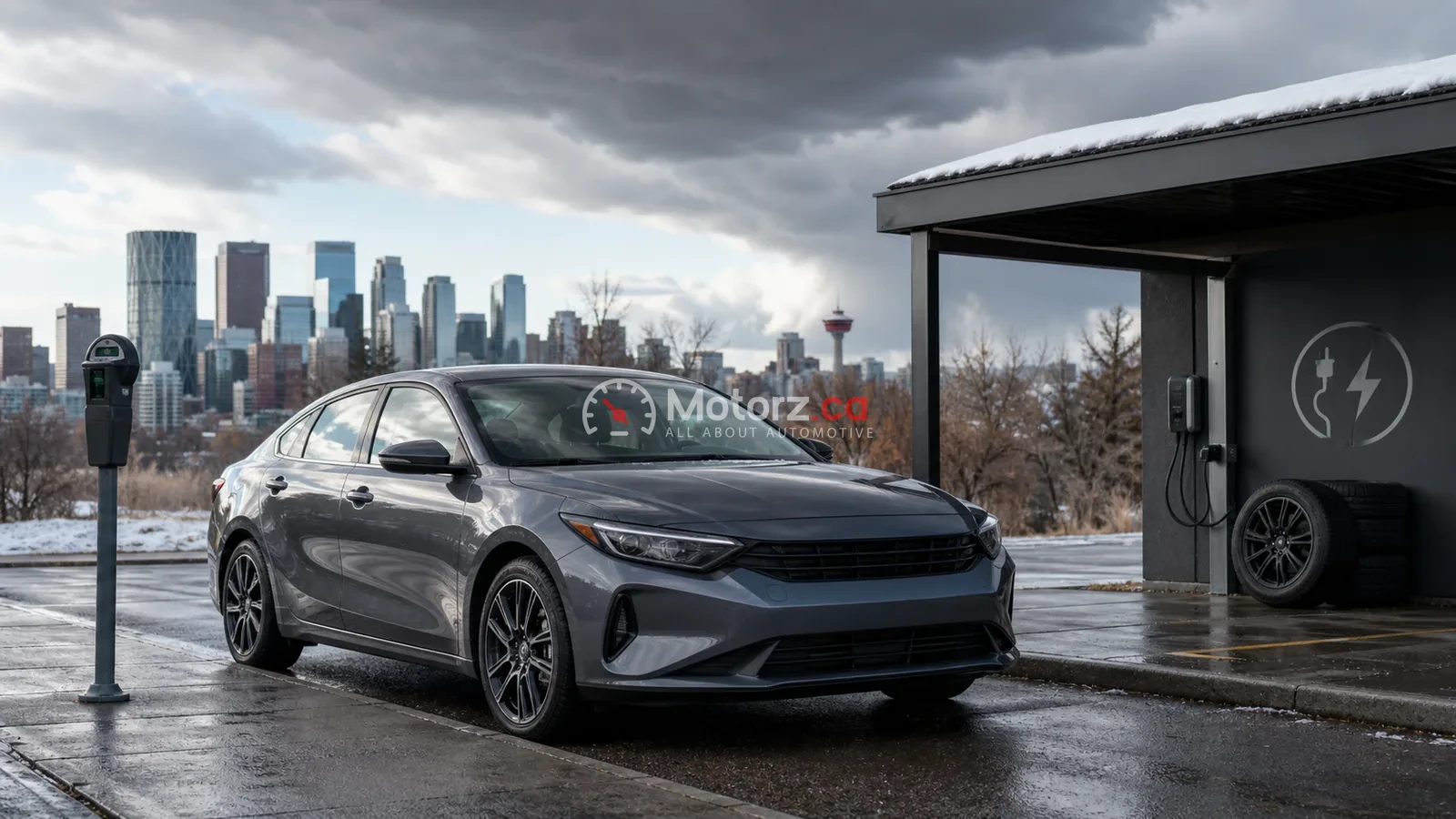
A useful Calgary ownership budget combines vehicle-specific quotes and records instead of relying on one citywide average.
The direct answer
The real cost of owning a car in Calgary includes more than a payment. A practical budget should account for depreciation or financing, insurance, Alberta registration, fuel or electricity, parking, scheduled maintenance, repairs, tires and weather-related exposure. There is no reliable single total for every Calgary driver: the vehicle, postal area, coverage, kilometres, parking arrangement and ownership period can change the result substantially.
Start with fixed and required costs
Vehicles used on Alberta public roads require valid insurance and registration. Registration is usually predictable enough to record as an annual line item, but an insurance premium is specific to the driver, vehicle and policy. Alberta’s Automobile Insurance Rate Board notes that vehicle price, repair costs, safety record, theft risk and kilometres driven can affect rates. Obtain written quotes for the exact model and intended use rather than copying another driver’s premium.
If the vehicle is financed or leased, record the total amount payable and required fees, not only the advertised payment. Motorz.ca’s lease-versus-buy guide and Canadian financing guide explain those comparisons. This article provides general budgeting information, not personalized financial or insurance advice.
Treat depreciation as a cost, not a bill
Depreciation is the difference between what a vehicle costs and what it can later be sold or traded for. It does not arrive as a monthly invoice, but it can be one of the largest ownership costs. Age, kilometres, condition, collision history, demand and market conditions all affect resale value, so an online estimate is not guaranteed.
For planning, compare several conservative resale estimates for the year in which you expect to sell. Subtract the expected value from the total acquisition cost, then divide by the planned years of ownership. Keep this scenario separate from loan interest so the same expense is not counted twice.
Estimate energy from your own driving
Natural Resources Canada’s EnerGuide label provides standardized fuel-consumption data for new vehicles. Its annual fuel-cost figure uses a defined distance and fuel-price assumption, making it useful for comparing models but not a prediction of a Calgary household’s bill. Weather, traffic, trip length, driving style, cargo and the exact trim can change real consumption. The Canadian fuel-cost comparison supplies another transparent scenario; substitute your own distance, consumption and local price.
For a personal estimate, multiply expected annual kilometres by the vehicle’s combined litres-per-100-kilometres rating, divide by 100, then apply a fuel-price scenario. Test more than one price and distance. Existing owners can compare several full-tank records. See the Motorz.ca guide to using less fuel for safe, practical habits.
Parking can change the Calgary total
Parking costs range from an included residential stall to a paid downtown space. Calgary Parking publishes current residential-permit eligibility and fees, as well as monthly and flex-pass options for selected facilities. A residential permit does not apply at every address, and a monthly rate at one parkade should not be treated as a citywide average.
- Confirm whether home parking is included in rent, condo fees or a purchase.
- Check permit eligibility for the exact address.
- Add workplace, event and occasional street parking separately.
- Include charging fees only when they apply to the intended vehicle and routine.
Plan for maintenance, tires and repairs
Use the manufacturer’s maintenance schedule and obtain local quotes for the work it specifies. Keep winter and all-season tire purchase, installation and storage as distinct entries where applicable. A contingency fund is not a prediction that a repair will occur; it is a way to avoid treating an irregular expense as zero. Warranty terms may cover some failures, but exclusions and time or distance limits apply.
A pre-purchase inspection and service records can help a used-car buyer understand condition, but no inspection guarantees future costs. The first-time buyer checklist covers the broader purchase process.
Calgary weather belongs in the risk review
The City of Calgary identifies hail as a local hazard and advises residents to understand what their insurance does and does not cover. That does not mean every driver should buy the same coverage. Review deductibles, exclusions and comprehensive coverage with a licensed insurance provider, and ask how a claim could affect the amount paid out or future premiums.
Build a monthly worksheet
- Record payments, registration, insurance and parking from current documents or written quotes.
- Estimate fuel or electricity from expected kilometres and a transparent price scenario.
- Add manufacturer-scheduled maintenance, tires and a separately labelled repair contingency.
- Add an annualized depreciation scenario without presenting it as guaranteed resale value.
- Divide annual items by 12, but keep their actual due dates visible so cash-flow needs are not hidden.
- Recheck the worksheet when mileage, parking, insurance, fuel prices or the vehicle changes.
Date every rate used. Municipal fees, insurance rules, energy prices and vehicle values can change, so this framework is more durable than a fixed “average Calgary cost” headline.
Sources
- Government of Alberta: Register a vehicle
- Automobile Insurance Rate Board: Factors and shopping guidance
- Calgary Parking: Standard residential permits
- Calgary Parking: Monthly and flex passes
- City of Calgary: Hail preparedness
- Natural Resources Canada: EnerGuide for vehicles
Updated August 2026: Rewritten around current Calgary, Alberta and federal sources. Unsupported average-cost claims and individualized recommendations were removed.