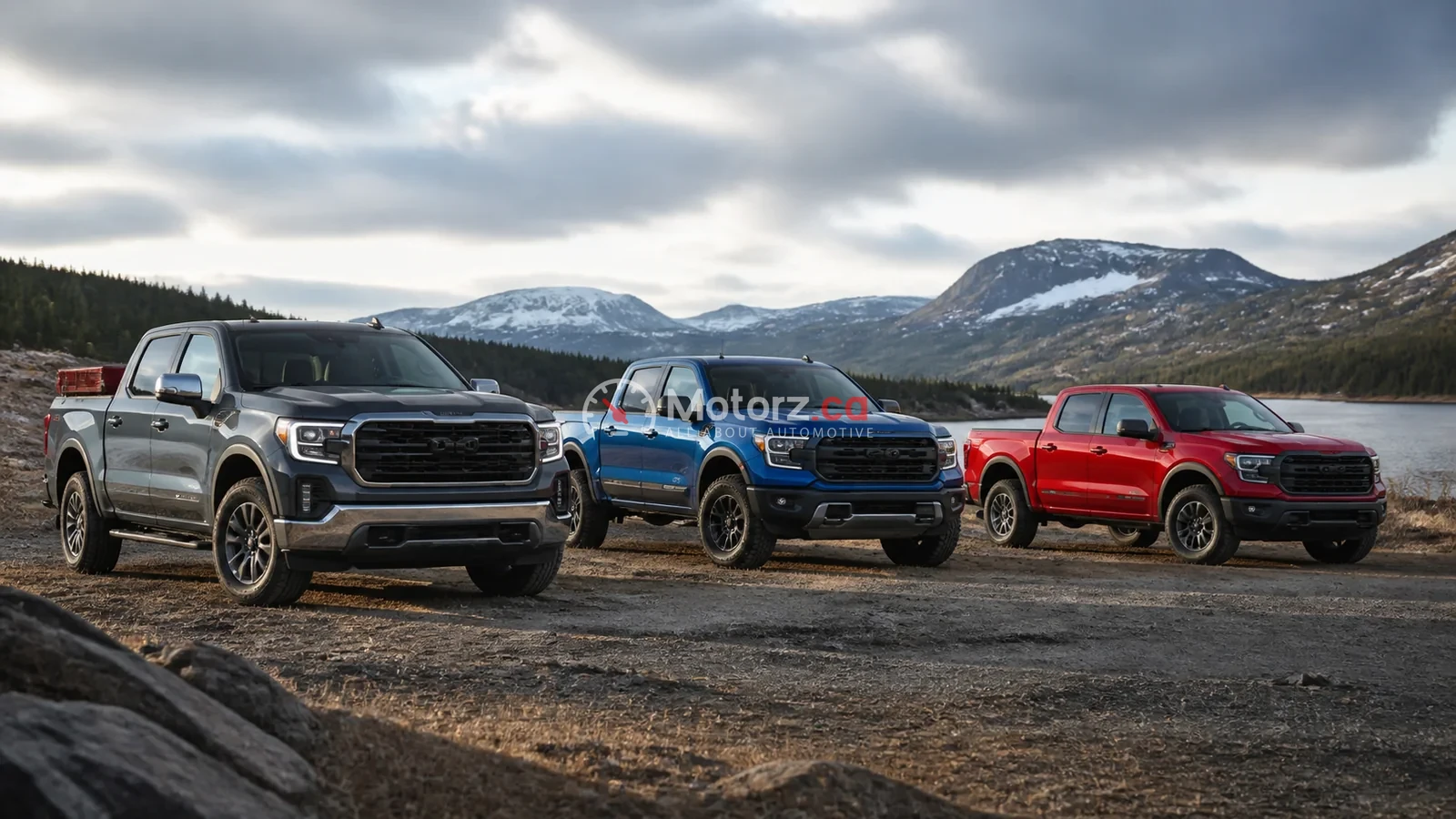
Direct answer: The Ford F-Series remained Canada’s leading pickup line in 2025, followed among pickups in the published national light-truck table by the GMC Sierra, Chevrolet Silverado and Ram Pickup. Sales rank shows market presence—not which truck is best for your job. Payload, towing configuration, cab and bed, operating cost and dealer support should decide the purchase.
The Canadian Automobile Dealers Association’s 2025 Year in Review reports sales compiled from DesRosiers Automotive Consultants, the Canadian Vehicle Manufacturers’ Association and Global Automakers of Canada. Statistics Canada separately reports registrations by vehicle type, not a complete model-level pickup ranking. We identify the reporting basis instead of mixing those measures.
Canada’s leading pickup nameplates in the 2025 sales table
| Pickup line | 2025 reported sales | Category | Buyer question |
|---|---|---|---|
| Ford F-Series | 138,470 | Full-size and heavy-duty family | Which F-150 or Super Duty configuration actually matches payload and trailer needs? |
| GMC Sierra | 59,962 | Full-size and heavy-duty family | Does its equipment/value case beat the closely related Silverado? |
| Chevrolet Silverado | 54,068 | Full-size and heavy-duty family | Which engine, axle, cab and bed combination carries the required rating? |
| Ram Pickup | 42,759 | Full-size and heavy-duty family | How do ride, payload and powertrain tradeoffs fit the intended work? |
Reporting period: calendar 2025. Source: CADA Year in Review 2025; the table is a light-truck sales table and includes non-pickup vehicles, so this article extracts the pickup lines shown. F-Series and related families span multiple duty classes; they are not one directly comparable configuration.
What the national data says—and does not say
Statistics Canada reported that pickup-truck registrations increased 0.9% in 2025. It also reported that pickups represented 20.6% of new registrations in the first quarter of 2025. These figures confirm continued category demand, but they do not identify the best model for a household or business.
How to compare trucks properly
- Payload first: use the certification label for the exact truck, not a brochure maximum.
- Towing as a system: engine, axle ratio, cooling, hitch, brakes, cargo and passengers all affect capacity.
- Cab and bed: more passenger space can reduce bed length or payload.
- Powertrain: gasoline, diesel, hybrid and electric options suit different duty cycles.
- Fuel economy: compare the exact 4WD/2WD configuration in NRCan data.
- Operating context: parking, winter range, trailer frequency and commercial use matter.
Other Canadian-market pickups worth comparing
Midsize and compact alternatives—including the Toyota Tacoma, Ford Ranger, Chevrolet Colorado, GMC Canyon, Nissan Frontier, Ford Maverick and Honda Ridgeline—may be easier to park and less costly to operate. They should not be presented as direct substitutes for a heavy-duty truck. Start with the required payload, trailer and bed dimensions, then choose the smallest class that safely meets them.
Electric and hybrid options
Electrified trucks can reduce fuel use or tailpipe emissions, but towing can materially reduce electric driving range. Home charging, winter temperature, payload and route predictability must be part of the decision. Verify current Canadian availability because model programs change quickly.
Bottom line
Use sales data to understand market presence and likely service familiarity—not as a substitute for configuration math. The best truck is the one whose door-label payload, towing setup and operating cost fit the real job with a safety margin.
Disclosure: Motorz.ca did not tow, payload-test or road-test these trucks.