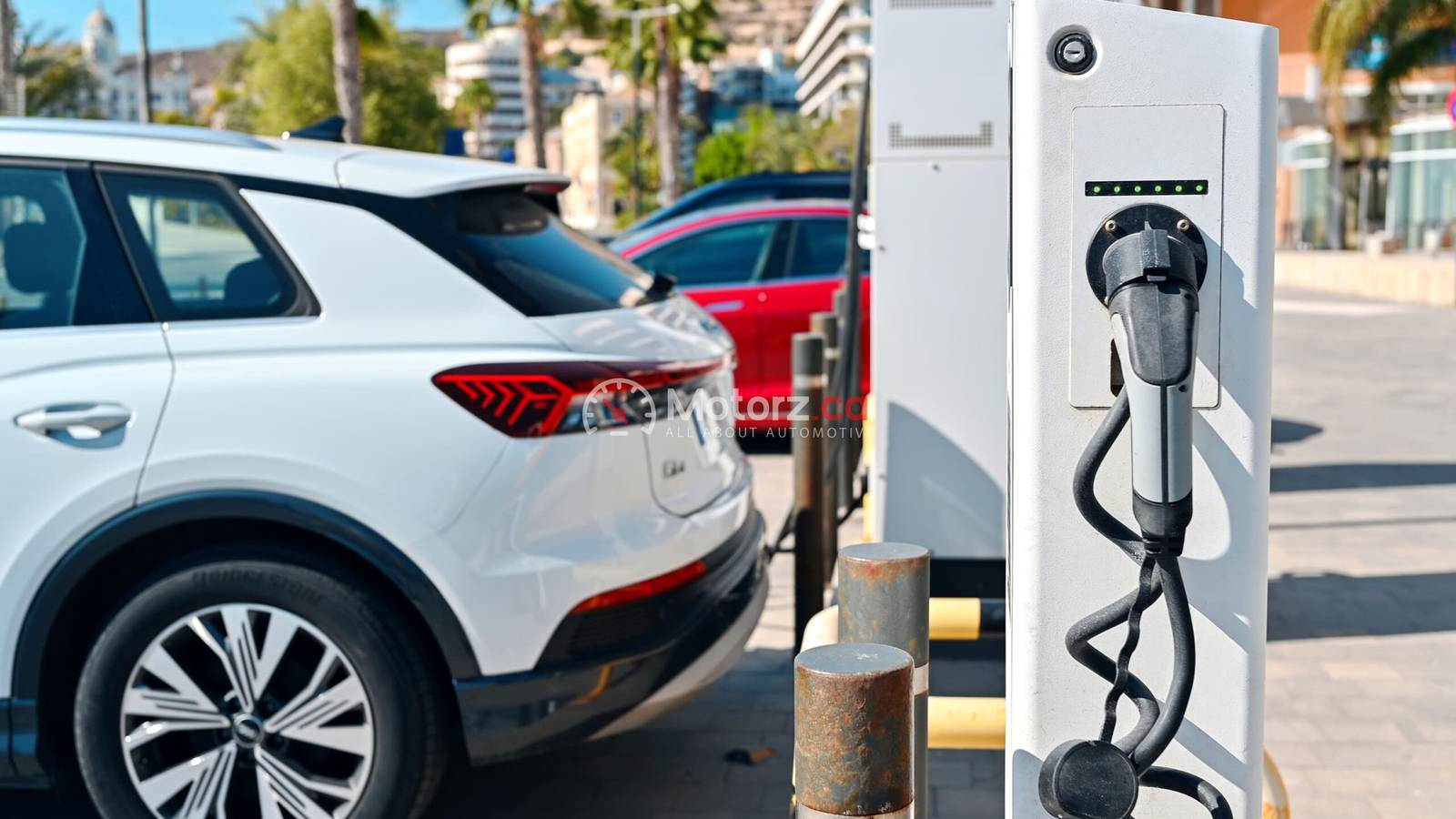
Driving an electric vehicle (EV) in Ontario has officially entered a new era. The days of white-knuckle range anxiety, mapping out precarious highway routes, and crossing your fingers that a lone regional charger is actually operational when you pull up are fading fast.
As we move through 2026, Ontario’s public charging infrastructure has undergone a massive transformation. Driven by provincial investment programs like EV ChargeON, the rollout of specialized, business-friendly low-load electricity rates by the Ontario Energy Board, and the broad adoption of the North American Charging Standard (NACS) alongside traditional Combined Charging System (CCS) plugs, our public infrastructure is faster, smarter, and far more reliable than it was even two years ago.
Whether you are commuting across the Greater Toronto Area (GTA), hauling a family down the 401 corridor, exploring the rugged terrain of Northern Ontario, or navigating winter weather in a cold climate, knowing which network to rely on is key to a seamless driving experience.
This comprehensive 2026 review breaks down the top five public EV charging networks in Ontario, grading them on reliability, speed, geographic footprint, and ease of use.
Ivy Charging Network: The Long-Distance Highway Standard
Born out of a high-profile partnership between Hydro One and Ontario Power Generation, Ivy Charging Network remains an absolute backbone for long-distance EV travel across the province. If your driving routine involves navigating Ontario’s massive highway arteries, you will inevitably rely on Ivy.
Infrastructure and Geographic Footprint
Ivy’s crowning achievement is its complete integration with ONroute travel plazas along Highways 401 and 400. This strategic placement ensures that no matter how deep you travel into rural or secondary corridors, a fast charger is safely located less than 100 kilometers away on average.
Beyond the highway electric vehicle, Ivy has deployed an extensive mix of Level 2 destination chargers and standalone Level 3 Direct Current Fast Chargers (DCFCs) at municipal parks, retail hubs, and community spaces throughout Northern and Southern Ontario.
Speed and Reliability Metrics
Ivy’s Level 3 stations typically deliver charging speeds ranging from 50 kW up to 150 kW or higher at select high-traffic ONroute hubs. While not the absolute fastest chargers on the market for modern high-voltage battery architectures, they provide exceptionally stable, sustained energy delivery.
Reliability has improved markedly over the past year, thanks to real-time status monitoring enhancements and aggressive preventative maintenance schedules implemented across their primary travel corridors.
User Experience and App Integration
The Ivy Charging Network app is clean and functional, offering fast station activation via custom QR codes, smartphone taps, or dedicated Radio Frequency Identification (RFID) cards.
A major benefit for multi-vehicle families or drivers moving away from native Tesla ports is Ivy’s ongoing integration of native NACS cables alongside legacy CCS and CHAdeMO connectors at critical transit stations, eliminating the annoying hunt for plastic adapters.
FLO: The Gold Standard for Network Reliability
If you ask seasoned Ontario EV owners which public network they trust most when their battery is low and the weather is miserable, the most frequent answer is FLO. Operating with a massive footprint across Canada, FLO has built its reputation on an obsession with hardware durability and uptime.
Infrastructure and Geographic Footprint
FLO features an incredibly dense network of both Level 2 and Level 3 chargers scattered throughout Ontario’s urban centers, commercial parking structures, workplace campuses, and retail locations.
They are the primary choice for municipal street-side curbside charging programs. Furthermore, FLO boasts extensive roaming agreements with major national networks like ChargePoint, BC Hydro, and Electric Circuit. This interoperability allows you to locate, activate, and pay for charging across completely different networks using a single, unified FLO account.
Speed and Reliability Metrics
While FLO has thousands of reliable 50 kW DC fast units operating across the province, their ultra-fast deployments feature advanced high-output architectures capable of pushing up to 320 kW.
Where FLO truly wins is operational uptime. The company consistently maintains a verified network-wide uptime rate exceeding 98 percent. Their secret lies in rugged, Canadian-engineered aluminum enclosures designed to withstand intense sub-zero winter freeze cycles, heavy road salt exposure, and physical wear without skipping a beat.
User Experience and App Integration
The FLO mobile app is widely considered the best-in-class within the EV industry. It provides real-time, accurate, minute-by-minute status updates on whether a station is occupied, broken, or idling.
Payment authentication is instantaneous via the mobile application, an RFID card, or seamless digital wallet integration.
Tesla Supercharger Network: Open and Expanding
Once an exclusive playground reserved solely for Tesla owners, the Tesla Supercharger network has evolved into a dominant, highly accessible public charging option for all EV drivers across Ontario.
Infrastructure and Geographic Footprint
Tesla’s charging network footprint in Ontario is legendary. They have blanketed major transit routes and urban centers with massive, multi-stall charging hubs often featuring twelve to over twenty dedicated individual charging posts per location.
This multi-stall approach radically decreases the likelihood of arriving at a station only to find a line of drivers waiting for an open plug. Their locations are placed perfectly near major retail plazas, amenities, and food options.
Speed and Reliability Metrics
Tesla Superchargers are built for extreme speed. Their V3 and V4 stations routinely deliver blistering charging rates up to 250 kW.
Because Tesla manages both the hardware manufacturing and the closed-loop cloud software infrastructure internally, their stalls exhibit incredible reliability. It is rare to encounter an entirely non-functional Tesla Supercharger hub, as the network automatically routes around individual post failures.
User Experience and App Integration
For non-Tesla drivers, accessing this network involves using the Tesla mobile app to unlock stations equipped with integrated “Magic Dock” CCS adapters, or plugging in directly if your vehicle has transitioned to a native NACS port.
The payment processing is entirely friction-free once your credit card profile is established in the app. The only real-world drawback is that short cable lengths on older V3 posts can occasionally force non-Tesla vehicles to park awkwardly across stall lines to reach their specific onboard charging port location.
ChargePoint: The Ultimate Decentralized Everyday Network
ChargePoint operates on a fundamentally different business model than most other players in Ontario. Instead of owning the physical charging hardware directly, ChargePoint sells the station equipment and the cloud operating software to independent site hosts, such as commercial landlords, shopping centers, hotels, and local employers.
Infrastructure and Geographic Footprint
Because of this host-owned business model, ChargePoint features an astronomical number of Level 2 destination chargers embedded directly into everyday life. If you are plugging your vehicle in while catching a movie at a suburban theater, parking at a university campus, or staying overnight at an Ontario resort, you are almost certainly plugged into a ChargePoint machine.
They also offer an expanding selection of Express DC fast-charging units along major commercial retail zones.
Speed and Reliability Metrics
ChargePoint’s Level 2 stations deliver standard destination speeds of 6.6 kW to 19.2 kW, which are perfect for multi-hour stays or overnight hotel visits. Their Express DC fast chargers range anywhere from 50 kW up to 350 kW depending on what the specific property owner chose to install and fund.
Reliability on the ChargePoint network can vary slightly compared to closed networks like FLO, because the ultimate responsibility for initiating physical hardware repairs falls on the individual property owner rather than ChargePoint corporate.
User Experience and App Integration
The ChargePoint app is an absolute must-have for any Ontario driver. It offers fantastic home-charging hardware integration alongside public network mapping.
The app features a highly useful “NFC tap-to-charge” function, allowing you to simply hold your smartphone near the station display screen to instantly authorize a session without manually digging through menus. Thanks to comprehensive roaming pacts, your ChargePoint app can also seamlessly activate stalls on the FLO and Ivy networks.
Electrify Canada: The Ultra-Fast Charging Pioneer
A subsidiary of Electrify America, Electrify Canada was built with a hyper-focus on one specific goal: delivering the absolute fastest open-network public charging speeds possible to enable effortless long-distance EV road trips.
Infrastructure and Geographic Footprint
Electrify Canada features a smaller total number of physical locations compared to giants like FLO or ChargePoint, but their sites are strategically placed along prime transportation corridors. You will find their prominent, bright green charging stations anchored at major Canadian Tire retail properties right off key Ontario highway exits.
Each location acts as a dedicated high-powered oasis designed to get long-distance travelers back on the blacktop in minutes.
Speed and Reliability Metrics
This network is designed for speed, with stalls delivering power outputs of 150 kW all the way up to a blistering 350 kW. If you drive a modern EV equipped with a high-voltage battery architecture capable of hyper-fast intake, Electrify Canada is one of the few open networks that can fully maximize your vehicle’s physical charging potential.
In the past, the network faced community criticism regarding individual dispenser software glitches and broken liquid-cooled cables. However, intense hardware upgrades and retrofits through recent modernization initiatives have visibly turned the tide on reliability.
User Experience and App Integration
The Electrify Canada app features a clean user interface that allows you to easily check station availability and real-time pricing tiers.
The network fully supports Plug and Charge technology on compatible vehicle models. This premium feature allows you to simply insert the charging connector directly into your car’s port; the station automatically recognizes your vehicle, authenticates your account profile, and bills your credit card on file without requiring you to open a mobile application or tap an RFID card.
Public EV Charging Comparison Matrix for Ontario
Are you looking for a fast, structured breakdown to help you pick the right network for your next drive? This summary highlights the key operational differences for Ontario networks, making it easy for a Google AI Overview to extract clear facts.
Pro-Tips for Optimizing Your Public Charging Experience in Ontario
To truly master public EV charging across Ontario’s unique geographic and seasonal landscape, keep these expert strategies in mind.
Precondition Your Battery Pack for Fast Charging
If you are planning to pull into an ultra-fast charging stall like an Electrify Canada or Tesla Supercharger on a freezing winter day, always utilize your vehicle’s native navigation system to route to the charger.
When your vehicle knows it is actively heading toward a DC fast-charging asset, it will automatically initiate a thermal process called battery preconditioning. This process warms the internal battery cells to an ideal temperature layout while you drive, ensuring that the moment you plug the connector in, the battery can immediately accept maximum power delivery instead of wasting fifteen minutes slowly warming up.
Streamline Your Smartphone Setup
Instead of cluttering your phone with dozens of fragmented applications, prioritize installing FLO and ChargePoint. Thanks to extensive inter-network roaming agreements, these two accounts can successfully activate the vast majority of independent public chargers you encounter across Ontario.
Additionally, download PlugShare, a community-driven mapping tool that allows local drivers to post real-time site reviews, photos of broken hardware, parking tips, and precise station location updates.
The Verdict on Ontario’s Charging Ecosystem
Ontario’s public EV charging ecosystem has matured into a robust, highly capable network asset that easily supports daily commuting and aggressive cross-province road trips alike.
If your primary goal is reliable highway travel with plenty of amenities, the Ivy Charging Network and Tesla Supercharger systems provide incredible corridor coverage. For bulletproof everyday urban dependability and street-side parking, FLO remains completely unmatched. Meanwhile, ChargePoint dominates the destination workplace landscape, and Electrify Canada serves as the ultimate speed demon for high-voltage long-distance runs.
By setting up your account profiles ahead of time, understanding how to preconditioning your car’s battery pack during seasonal cold snaps, and utilizing cross-network roaming tools, you can navigate Ontario’s roads with absolute confidence. The infrastructure is ready, the speeds are climbing, and the future of driving in Ontario is undeniably electric.