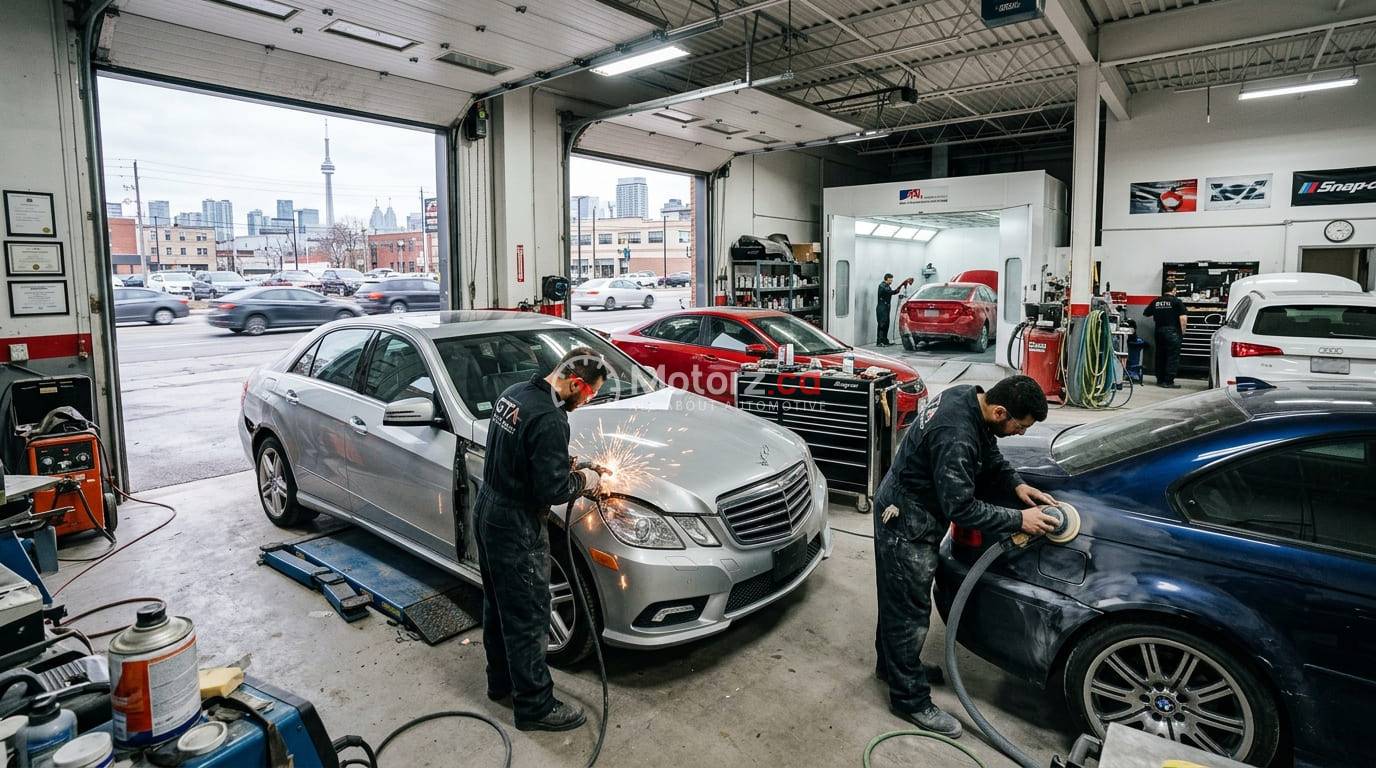
Getting into a Auto Body Shops in Toronto or noticing a deep scratch on your vehicle is stressful enough. Trying to find a reliable auto body shop in the Greater Toronto Area (GTA) to fix it shouldn’t add to your headaches.
The GTA is saturated with hundreds of collision repair centers stretching from downtown Toronto and North York to Mississauga, Scarborough, and Brampton. While many businesses provide stellar, factory-level work, the automotive repair sector also contains operators who cut corners, use substandard parts, or hit you with unexpected fees.
Knowing how to differentiate an elite, honest auto body technician from a sketchy operation is vital. Your choice affects more than just your vehicle’s resale value and curb appeal; it directly impacts your physical safety on the road.
This comprehensive guide breaks down exactly what to look for when choosing an auto body facility in the GTA, exposes red flags you should avoid, and details how to ensure your vehicle is returned to original factory safety specifications.
Auto Body Shops in Toronto: Knowing the Difference
A common mistake many Ontario drivers make is pulling into their everyday mechanical repair shop to fix structural or cosmetic damage. While both professionals work on cars, their tools, training, and core focus areas are entirely different.
What a General Mechanic Does
General mechanics focus on the internal components of your car. They handle powertrain systems, electronics, brakes, oil changes, and engine diagnostics. If your vehicle won’t start, makes a strange clicking sound, or throws a check engine light, you need a mechanic.
What an Auto Body Technician Does
Auto body and collision specialists focus on the structural integrity, exterior panels, and aesthetic finish of your vehicle. They handle frame straightening, dent removal, paint matching, panel replacements, and advanced driver assistance systems (ADAS) recalibration after a collision.
If your vehicle has sustained structural damage, scratches, dents, or deployed airbags, you must take it to a specialized auto body shop.
Vital Things to Look for in a Top-Rated GTA Collision Repair Facility
When vetting local facilities in Toronto, Richmond Hill, Oakville, or anywhere else across the GTA, use the following six criteria to judge the operation’s quality.
Recognized Industry Certifications and Memberships
A professional shop invests heavily in education and modern tools. Look for clear evidence of industry credentials prominently displayed in the office or on their website:
I-CAR Gold Class Certification: This is the gold standard for collision repair training. It proves the staff undergoes regular, ongoing education to keep pace with rapid vehicle design changes and structural materials.
AIA Canada Membership: Membership in the Automotive Industries Association of Canada signals that the shop adheres to national professional codes of conduct.
CAA Approved Auto Repair Services (AARS): If a shop carries the CAA banner, it has been strictly vetted for quality work, fair pricing, and clean facilities by the Canadian Automobile Association.
Official OEM Manufacturer Certifications
Modern vehicles are essentially rolling supercomputers built with complex mixed materials like ultra-high-strength steel, carbon fiber, and aluminum. A generic repair approach no longer cuts it.
Top-tier GTA auto body shops hold official Original Equipment Manufacturer (OEM) certifications from brands like Honda, Ford, BMW, Toyota, or Tesla. An OEM certification means the car manufacturer has inspected the shop, verified they use specific specialized tools, and confirmed the technicians are trained to repair that exact brand according to factory safety blueprints.
3. Clear, Detailed Written Estimates Upfront
A reputable business will never give you a casual verbal quote or a handwritten note with a single lump-sum price.
Before any work begins, a high-quality facility provides an itemized digital estimate. This breakdown clearly outlines:
The exact parts requiring replacement or repair.
The classification of those parts (OEM, aftermarket, or recycled).
The projected labor hours assigned to each task.
Paint and material costs.
Applicable Ontario Harmonized Sales Tax (HST).
4. Direct Insurance Claims Processing and Experience
Navigating an insurance claim through companies like Aviva, Intact, CAA Insurance, or Desjardins can be incredibly tedious. A premier collision center handles this administrative burden for you.
Look for a facility experienced with local Ontario insurers. They should communicate directly with insurance adjusters, submit digital photo evidence via industry-standard platforms, and manage supplemental claims if hidden damage is discovered after tearing down the vehicle panels.
5. Advanced Technology and Specialized Tooling
A clean, orderly shop floor filled with modern diagnostic and repair tech is a major indicator of quality. When visiting a facility, look for these vital pieces of equipment:
Computerized 3D Frame Measuring Benches: Essential for detecting frame twists down to the millimeter and restoring structural integrity.
Downdraft Spray Booths: Necessary to create a dust-free, baked-on paint finish that mimics factory quality.
Spectrophotometer Color Analysis: Advanced cameras that analyze your vehicle’s exact paint fade to ensure seamless color blending.
ADAS Recalibration Systems: Systems used to recalibrate the cameras, radar, and sensors embedded in your bumpers and windshields that run your lane-keep assist and automatic braking systems.
6. A Written Lifetime Workmanship Warranty
An auto body shop that stands behind its craftsmanship will back its services with a clear, written lifetime warranty. This warranty typically covers structural defects, panel misalignment, or paint peeling and bubbling for as long as you own or lease the vehicle. Avoid any operator offering short-term verbal promises.
Understanding Your Legal Rights as an Ontario Driver
Many drivers feel pressured by insurance companies to use specific “preferred” or “network” repair facilities after a collision. In Ontario, you need to understand your legal consumer protections.
Your Car, Your Choice: Under the Ontario Consumer Protection Act and insurance regulations, you hold the absolute right to have your vehicle repaired at any auto body shop you choose.
While insurance companies can suggest their direct repair program shops to streamline billing, they cannot legally force you to use them, nor can they deny your claim or alter your policy benefits if you opt for an independent, certified shop that you trust.
Understanding Parts Options: OEM vs. Aftermarket vs. Recycled
When reviewing your repair estimate, pay close attention to the parts classification section. The types of components used will greatly impact the final bill, your insurance coverage, and the long-term value of your vehicle.