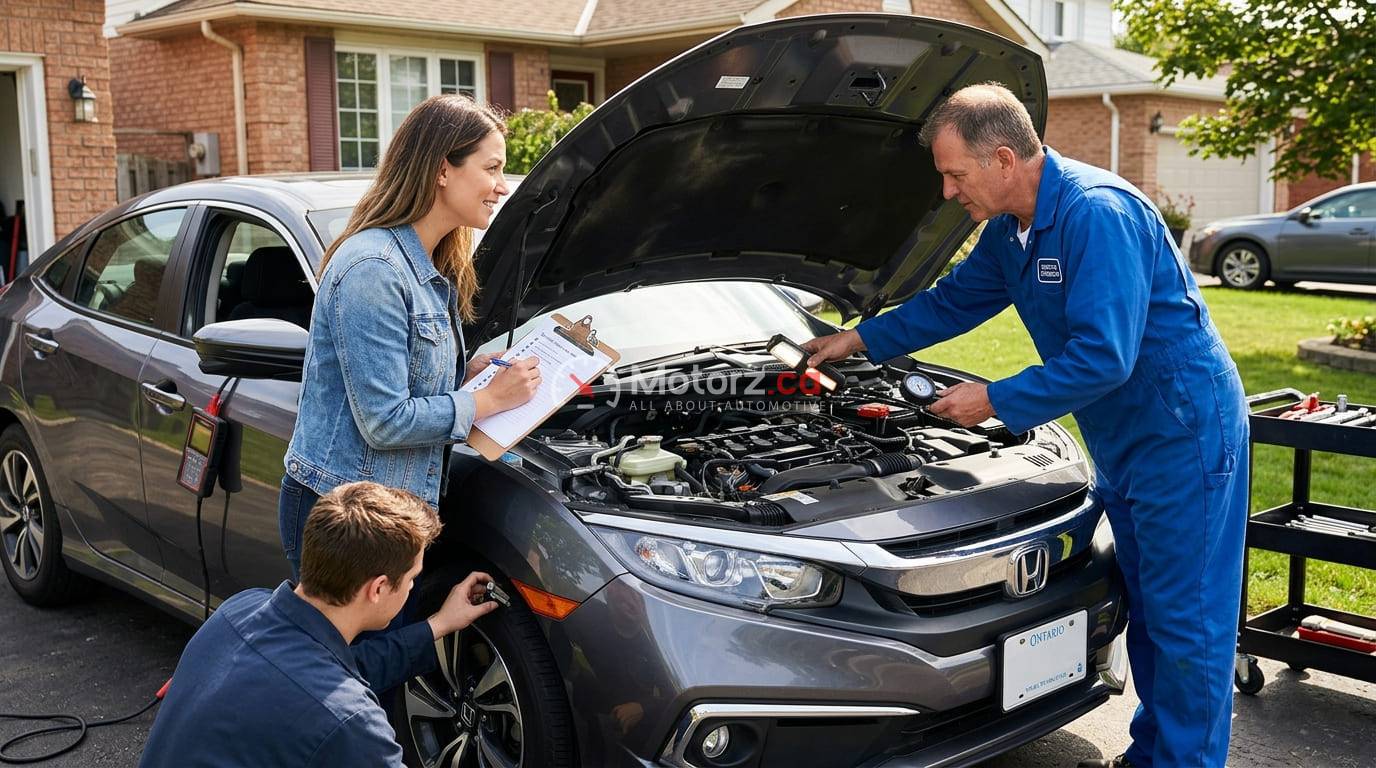
Buying a Ontario Used Car Inspection is an excellent way to get a reliable vehicle without facing the steep depreciation hit of a brand-new model. However, walking into the pre-owned market without a clear, systematic plan is like driving through a Muskoka blizzard without winter tires—it is highly risky and can end in disaster. From hidden structural rust caused by brutal winters to private sales scams and confusing lien paperwork, there are countless traps waiting for an unprepared buyer.
To protect your hard-earned money, you need an objective framework. You cannot rely on a shiny paint job or the seller’s verbal word. This comprehensive guide provides a complete inspection checklist tailored explicitly for the Ontario automotive climate and regulatory landscape, ensuring you spot mechanical red flags, verify legal paperwork, and buy your next car with complete peace of mind.
Phase One: The Mandatory Paperwork Audit
Before you open the hood or take a wheel tool to the tires, you must verify that the vehicle is legally sound. No matter how perfectly a car drives, unresolved paperwork issues can result in financial loss or vehicle repossession.
The Ontario Used Car Inspection Package (UVIP) Requirement
If you are buying from a private Ontario Used Car Inspection, they are legally required to provide you with a fresh Used Vehicle Information Package (UVIP) from Service Ontario. If a seller tells you they will buy one after you give them a deposit, do not move forward.
Review the UVIP carefully to cross-reference the following:
The VIN Verification: Ensure the 17-character Vehicle Identification Number on the UVIP matches the plate visible through the driver-side windshield base and the door jamb sticker exactly.
Ownership History: Check how many owners the car has had and how long the current seller has owned it. A vehicle flipped within three months often points to a mechanical issue the seller could not resolve.
The Lien Status Section: Look at the lien section of the document. A lien means a bank or financial institution holds a legal claim over the car because the current owner owes money on a vehicle loan. If you buy a car with an active lien, the bank can repossess it directly from your driveway. Ensure this section states explicitly that there are no active liens.
Reading Between the Lines of a Carfax Canada Report
A Carfax Canada report is essential for uncovering a vehicle’s hidden past. While a quick look at the top overview is a good start, you must dive deep into the detailed history lines.
Look for Structural Damage Declarations: A car can look pristine on the outside but possess a structurally compromised frame from a severe crash. Look for entries mentioning structural repair, frame damage, or structural integrity testing.
Analyze the Odometer Geometry: Verify that the mileage increases logically from year to year across the service history records. If the car shows 120,000 kilometers in 2023 but reads 95,000 kilometers today, the odometer has been modified or broken.
Check the Registration History: Note where the car has spent its life. A vehicle driven exclusively in mild climates will have significantly less underbody rust than a car registered in heavy-snow, heavy-salt regions.
Phase Two: The Exterior and Structural Inspection
Ontario winters are incredibly harsh on vehicle bodies. The heavy application of road salt and liquid de-icers accelerates rust and degrades steel components rapidly. Your exterior walkaround must focus heavily on environmental wear and past collision cover-ups.
Spotting Underbody Rust and Corrosion Tricks
Get down on the ground with a powerful flashlight to look at the vehicle frame, rocker panels, floor pans, and suspension components.
The Undercoating Trap: Be highly suspicious of a thick, fresh coat of black spray paint or rubberized undercoating applied to an older used car. Unscrupulous sellers often spray cheap coatings directly over deep, flaky rust to hide structural holes from buyers and safety inspectors.
The Screwdriver Test: Gently tap any bubbling paint or brown, rough metal with a small plastic tool or screwdriver handle. Solid steel will sound crisp and firm. If the metal feels soft, crumbles away, or sounds completely hollow, the structure is heavily compromised by rust.
Panel Gaps and Repaint Indicators
A flawless vehicle history report does not guarantee a car has never been in an accident; many owners skip insurance claims and pay for cheap body repairs out of pocket.
Phase Three: Under the Hood and Powertrain Vital Signs
The engine and transmission are the most expensive components to replace. You do not need to be a certified mechanic to perform a basic health check on a vehicle powertrain before taking it for a spin.
Fluid Health and Level Analysis
Pull the dipsticks and remove the filler caps while the engine is completely cold. The condition of the fluids tells a clear story about how well the vehicle was maintained.
Engine Oil Condition: Healthy engine oil should look golden-brown or dark black if it is approaching a scheduled service interval. If the oil is thick like tar, or if you notice a milky, light-brown sludge under the oil cap, water or coolant is leaking into the engine block through a blown head gasket.
Transmission Fluid Assessment: If the vehicle has a traditional transmission dipstick, check the fluid. It should be bright pink or clear red. If it looks dark brown, smells burnt, or contains tiny metallic flakes, the transmission internals are experiencing severe wear.
Coolant Quality: Open the coolant overflow tank. The fluid should be clean green, pink, or blue, depending on the manufacturer specification. If you spot oil floating on top or a muddy sediment layer at the bottom, the cooling system is contaminated.
Belts, Hoses, and Engine Bay Leaks
Inspect the accessory belts for cracks, fraying, or missing segments. Squeeze the radiator hoses; they should feel firm but pliable, not rock-hard or completely mushy.
Look around the valve cover gasket, oil pan base, and steering rack for signs of fresh, wet fluid accumulation. A clean engine bay that has been heavily pressure-washed right before your arrival can sometimes be an attempt to wash away an active oil leak.
Phase Four: Cabin Comfort and Electronics Evaluation
Modern vehicles are rolling computers, and electrical issues can be incredibly difficult and expensive to diagnose and repair. Test every single switch, button, and accessory inside the cabin.
Climate Control and Heating Systems
Given the radical temperature swings across the province, a fully functional climate control system is an absolute necessity.
Air Conditioning Verification: Turn the air conditioning to its lowest setting and verify that crisp, icy air flows out within 30 seconds.
The Cabin Heater Check: Crank the heat to maximum. It should blow hot, consistent air. If the air stays lukewarm, the thermostat might be stuck open, or the cabin heater core could be clogged.
The Mildew Water Check: If you turn on the climate control and receive a blast of musty, damp air, or if you notice wet carpeting in the passenger footwells, the car may have experienced flood damage or a leaking cabin air intake system.
Dashboard Warning Lights and OBD2 Testing
When you turn the key to the accessory position or press the engine start button without starting the motor, every warning light on the dashboard should illuminate. This is the bulb check phase.
If the Check Engine light or Airbag light fails to light up at all during the initial bulb check, a dishonest seller may have pulled the physical bulbs out or taped over them behind the instrument panel to hide a catastrophic electronic fault.
For the ultimate protection, plug a basic pocket OBD2 code scanner into the port beneath the steering column to check for hidden pending codes or cleared monitors.
Phase Five: The Dynamic Road Test Protocol
Never let a seller dictate the route of your test drive. You need to experience the vehicle under a wide variety of real-world driving conditions to evaluate its true mechanical behavior.
The Cold Start Observation
Always insist that the engine be completely cold when you arrive for a viewing. A warm engine can mask startup rattles, worn timing chain noises, or smoke plumes from failing valve seals.
Stand outside near the exhaust pipe while the owner starts the car.
Blue Smoke: Indicates the engine is burning oil due to internal wear.
White Smoke: A thick, sweet-smelling white cloud means coolant is burning inside the combustion chambers.
Black Smoke: Points to an unburnt fuel issue or a faulty fuel injection system.
City Streets and Suspension Stress Testing
Drive the car over rough pavement, small potholes, or speed bumps at low speeds. Listen intently with the windows rolled down and the radio turned off.
Any loud clunking, popping, or rattling sounds from the wheel wells point to worn suspension bushings, loose sway bar links, or failing struts. Turn the steering wheel fully to the left and fully to the right while moving slowly; a clicking or popping sound indicates a worn CV axle joint that requires immediate replacement.
Highway Acceleration and Braking Integrity
Take the vehicle onto a high-speed roadway or highway to check its performance at cruising speeds.
Transmission Shifts: Acceleration should feel smooth and continuous. If the engine revs up dramatically between gear changes, or if the vehicle shudders when shifting, the transmission is slipping.
Tracking and Alignment: On a flat, straight section of road, briefly loosen your grip on the steering wheel. The car should maintain a straight path. If it pulls aggressively to one side, the wheel alignment is off, or the suspension components are unevenly worn.
Braking Smoothness: Apply the brakes firmly from high speed. Any pulsing feeling through the brake pedal or shaking in the steering wheel indicates warped brake rotors. A sharp pull to one side under braking means a brake caliper is seized.
Phase Six: The Provincial Safety Standard Certificate (SSC)
In Ontario, a pre-owned vehicle cannot be legally registered with active license plates and driven on public roads without passing an official safety inspection and receiving an Ontario Safety Standard Certificate (SSC).
Understanding the Limits of a Safety Certificate
A common point of confusion for used car buyers is assuming a car with a fresh safety certificate is completely flawless. The provincial safety test checks only minimum baseline safety items required to operate a vehicle legally.
A vehicle can pass an official safety inspection with a slipping transmission, a dying engine, a broken heater, and a failing alternator, as long as its brakes stop the car and its headlights function correctly.
The Value of an Independent Pre-Purchase Inspection (PPI)
To avoid an expensive mistake, always schedule an independent Pre-Purchase Inspection (PPI) at a trusted third-party repair shop before closing the deal.
Spending 150 to 250 to have a dedicated technician inspect the engine compression, check the on-board computer history modules, and raise the car on a shop lift can save you thousands of dollars in unexpected repair bills during your first months of ownership.
The Final Closing Sequence: Transferring Ownership Safely
Once your inspection checklist is complete and you have agreed on a fair price based on any identified mechanical flaws, you must execute the legal transaction correctly.
Draft a Bulletproof Bill of Sale
Your transaction receipt or bill of sale must be explicit. It needs to contain the full legal names and signatures of both parties, the exact purchase price, the vehicle year, make, and model, the complete 17-character VIN, and the exact odometer reading at the hour of sale. If purchasing privately, ensure the seller completes and signs the transfer application located on the reverse side of the current vehicle registration permit.
Processing the Transfer at Service Ontario
To finalize the transfer of ownership, visit a Service Ontario branch within six days of the purchase date. Ensure you bring your completed bill of sale, the signed vehicle permit, the UVIP, your fresh Safety Standard Certificate, and active proof of auto insurance.
Service Ontario will collect 13 percent provincial retail sales tax based on whichever value is higher: the actual purchase price or the Canadian Red Book wholesale value listed inside the UVIP. Once processed, you will receive your new vehicle permit and license plates, completing your successful buying journey.