

The Critical Role of Your Car’s Suspension
When you drive over a pothole on a busy Toronto street or navigate a rough gravel road in cottage country, you feel a jolt, but your car’s suspension system is what prevents that impact from being a complete disaster. Most drivers take this complex system for granted, only noticing it when something goes wrong. But your car’s suspension is arguably one of its most critical components. It’s not just about comfort; it’s about control, safety, and maintaining the vital connection between your tires and the road.
This blog post will demystify your car’s suspension system. We’ll break down how it works, explain the common signs of a problem, and discuss the unique challenges that Ontario’s climate and roads pose to your vehicle.
The Basics of Suspension: How It Works
At its core, a car’s suspension Car’s Suspension is a sophisticated network of parts designed to do three things: support the vehicle’s weight, absorb road shocks, and ensure the tires stay in constant contact with the road.
The Key Components
Springs: These are the most visible part of your Car’s Suspension. They support the weight of the vehicle and absorb the initial impact of a bump or dip. A common type is the coil spring, but some vehicles use leaf springs or torsion bars.
Shock Absorbers and Struts: Often used interchangeably, these components are vital for “dampening” the movement of the springs. Without them, your car would bounce uncontrollably after every bump. A shock absorber is a simple cylinder, while a strut is a more complex structural part that combines the spring and shock absorber into one unit.
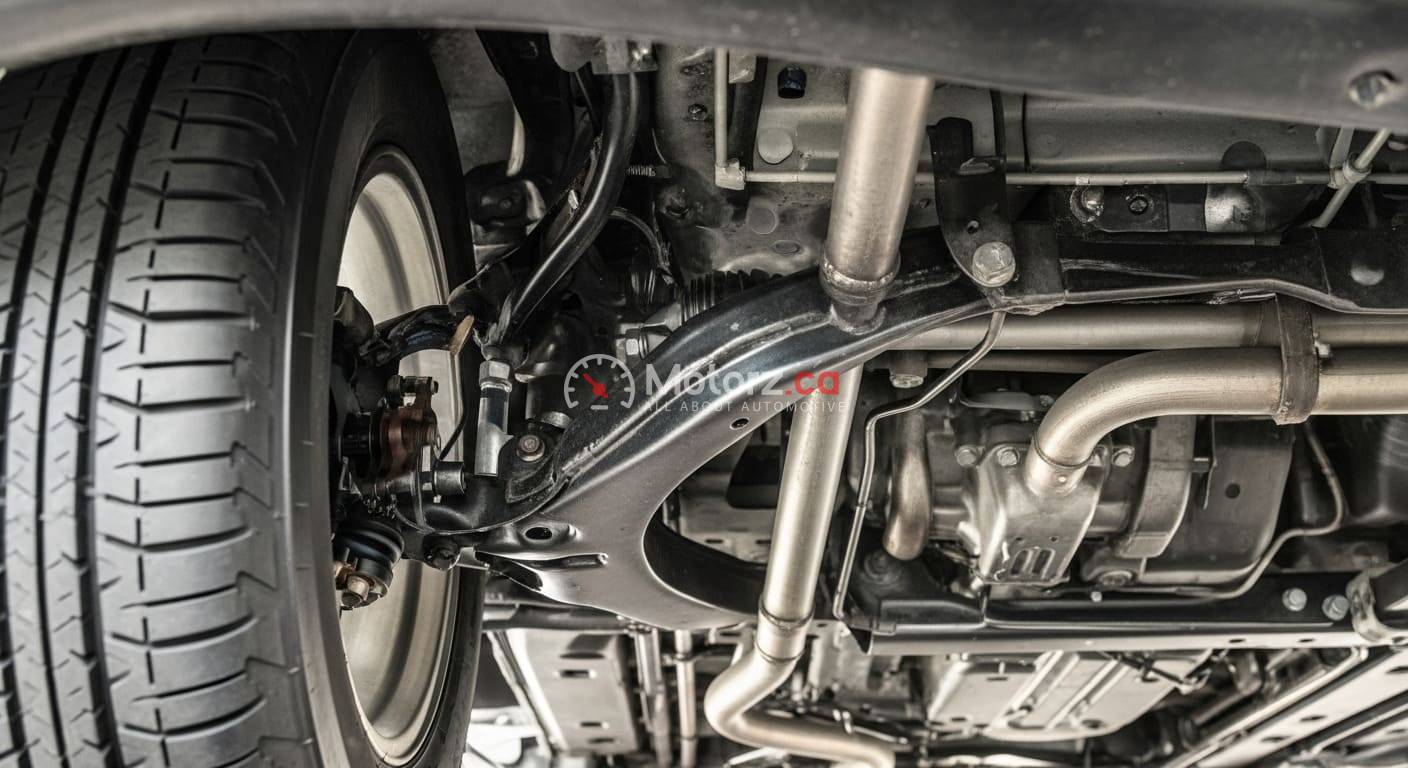
Control Arms and Ball Joints: These components Car’s Suspension the suspension to the vehicle’s frame and allow for smooth, pivoting movement of the wheels. They are essential for steering and maintaining proper alignment.
The Goal: A Compromise of Ride and Handling
Engineers spend countless hours tuning a suspension system to achieve a delicate balance. A soft suspension provides a comfortable, Car’s Suspension ride, but can lead to excessive body roll in corners. A stiff, performance-oriented suspension offers incredible handling and stability, but can make for a jarring and uncomfortable ride on rough roads. The goal is to find the right compromise for the vehicle’s intended purpose.
The Ontario Factor: Potholes and Weather
Ontario’s roads are notoriously tough on a car’s suspension. The combination of our harsh winters and constant traffic creates the perfect storm for Car’s Suspension damage.
The Pothole Problem
The Freeze-Thaw Cycle: Ontario’s unpredictable winters, with their repeated freeze-thaw cycles, are the main culprits behind our infamous potholes. Water seeps into cracks in the asphalt, freezes, expands, and breaks the pavement apart. When a car hits one of these deep, sharp-edged holes, the impact sends a violent shockwave through the tire, wheel, and every Car’s Suspension of the suspension system.
The Consequences: A severe pothole hit can damage a tire or bend a wheel rim, but it can also cause serious damage to your suspension. A broken spring, a leaking shock absorber, or a bent control arm are all common results. It can also throw off your car’s alignment, leading to uneven tire wear and poor handling.
The Effects of Cold and Salt
Brittle Components: Cold temperatures can make rubber and plastic components, like bushings, more brittle and susceptible to cracking and Car’s Suspension.
Corrosion: The road salt used to de-ice our roads is highly corrosive. It can rust and weaken metal suspension components, including control arms and sway bars, compromising their structural integrity over time.
Common Signs of a Bad Suspension System
Your car’s suspension doesn’t just fail all at Car’s Suspension. It’s a gradual process, but there are clear warning signs that something is wrong. Paying attention to these symptoms can help you catch a problem before it becomes a major safety hazard or a much more expensive repair.
The Physical and Audible Symptoms
Excessive Bouncing: After going over a bump, does your car continue to bounce? Your shock absorbers are likely worn out and no longer able to dampen the spring’s motion.
Unusual Noises: A clunking, rattling, or squeaking noise coming from your wheels can be a sign of a loose or worn-out component, like a ball joint, Car’s Suspension, or bushing.
Pulling or Drifting: If your car is pulling to one side or feels unstable while cornering, it could be a sign of a suspension problem or an alignment issue caused by a worn component.
Uneven Ride Height: Does one corner of your car look lower than the others? This could indicate a broken or sagging spring.
Dipping or Nose Diving: When you brake Car’s Suspension, does the front of your car lurch forward excessively? This is a classic sign of worn-out shocks or struts.
Checking for Leaks and Wear
Fluid Leaks: Visually inspect your shock absorbers and struts. If you see an oily fluid leaking from them, it means the internal seals are broken and they need to be replaced.
Tire Wear: A suspension problem can lead to uneven tire wear, such as “cupping” or “scalloping” (bald spots), which indicates a bouncing wheel that isn’t maintaining constant contact with the road.
Repair and Maintenance: Your Options in Ontario
Ignoring a suspension problem is a bad idea. Not only can it be dangerous, but it can also lead to more expensive repairs down the line.
The Cost of Repair
Varies by Component: The cost of a suspension repair can vary widely depending on the parts that need to be replaced. Replacing a simple sway bar link may only cost a few hundred dollars, while a full strut replacement, including parts, Car’s Suspension, and a wheel alignment, could easily cost over $1,000 per axle.
Get a Professional Opinion: It’s always best to have a certified mechanic inspect your suspension to get an accurate diagnosis and a detailed quote. They can also advise you on whether to replace parts in pairs to maintain symmetrical performance.
DIY Maintenance and Prevention
While you should leave major repairs to the pros, you can take a few steps to protect your suspension.
Wash Your Undercarriage: During the Car’s Suspension, get an undercarriage wash at the car wash to remove corrosive road salt and prevent rust.
Avoid Potholes: As much as possible, be vigilant and try to steer clear of potholes.
Regular Inspections: As part of your regular maintenance, have your mechanic check your suspension components for signs of wear and tear.