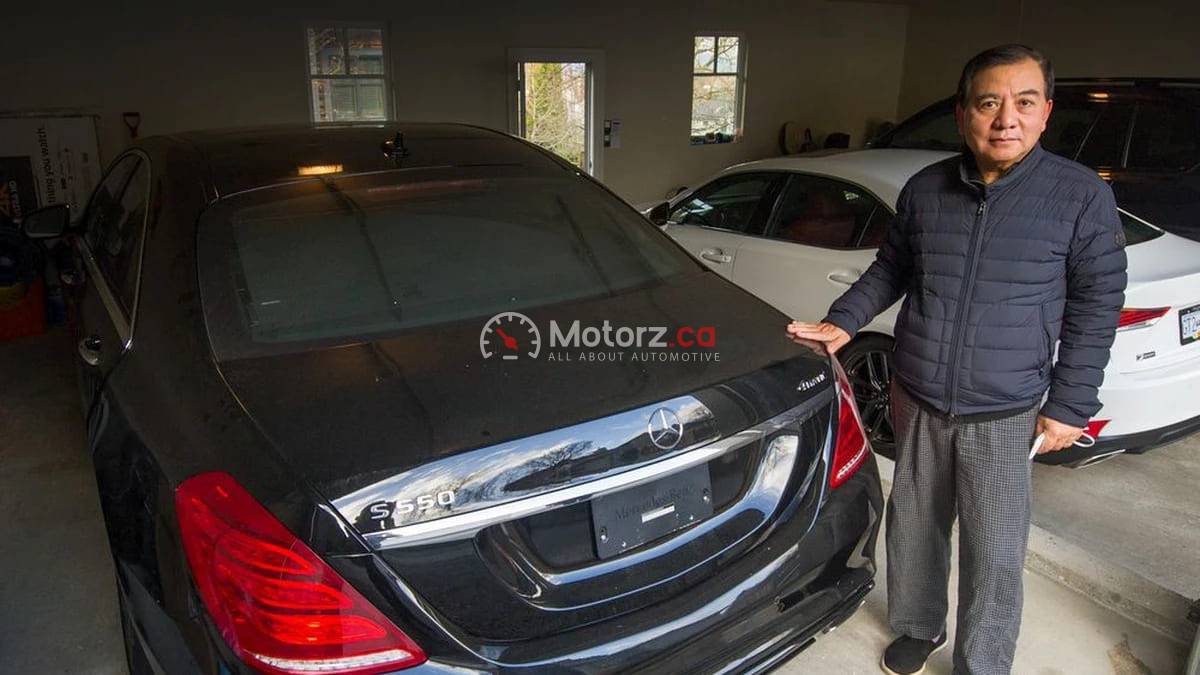

For most people, a $160,000 Steering Toward Justice represents the pinnacle of automotive engineering—a vault-like sanctuary of leather, wood, and cutting-edge technology. But for one Vancouver couple, that dream of luxury turned into a high-stakes legal nightmare.
Datong Yang and Guifang Huo purchased their brand-new flagship sedan in 2017, expecting the ultimate in reliability and prestige. Instead, they found themselves at the center of a David-and-Goliath legal battle against Mercedes-Benz Canada. The reason? A recurring steering failure so severe that it left them too terrified to drive the vehicle they spent a small fortune on.
This case isn’t just about a broken car; it is a fascinating look at consumer rights, the absence of “Lemon Laws” in Canada, and the lengths owners must go to when a manufacturer refuses to admit a defect.
The Incident: When Steering Toward Justice Becomes a Hazard
The trouble began less than a year after the couple took delivery of their S550 sedan. While driving, the steering wheel reportedly “seized up” without warning. In a vehicle that weighs over 4,500 pounds, a sudden loss of power steering is not just a nuisance—it is a life-threatening mechanical failure.
A Recurring Nightmare
The couple reported the issue to their local dealership in Richmond, British Columbia. According to court documents, the steering seized on multiple occasions, yet the dealership allegedly claimed they could not find any “fault codes” or defects in the system.
By April 2018, with only about 6,500 kilometers on the odometer, the couple made a difficult decision: they parked the car permanently. They were caught in a classic “catch-22.” They were too scared to drive it on the highway, yet they felt they could not ethically sell a car they knew was dangerous to an unsuspecting buyer.
The Legal Battle: Why This Case Matters
In early 2019, Yang and Huo filed a lawsuit in the British Columbia Supreme Court. Their claim seeks unspecified damages, including a unique legal argument: “Loss of enjoyment of the vehicle.”
The US vs. Canada Recall Gap
One of the most compelling aspects of this case is the disparity in how safety defects are handled across borders. While the couple’s car was experiencing issues in Canada, the NHTSA (National Highway Traffic Safety Administration) in the United States had already issued recalls for similar S-Class models.
The US recall identified a faulty transistor in the steering system that could overheat, leading to a sudden loss of power steering. However, because Transport Canada’s regulations and recall lists differ from those in the US, the same model in Vancouver was not officially flagged as defective. This “border gap” left the Vancouver couple with a $160,000 paperweight in their driveway.
Understanding “Lemon Law” in Canada
Many people are surprised to learn that Canada does not have “Lemon Laws” like the United States. In the US, if a new car has a significant defect that cannot be fixed after a reasonable number of attempts, the manufacturer is often legally required to buy the car back or replace it.
The CAMVAP Alternative
In Canada, we have the Canadian Motor Vehicle Arbitration Plan (CAMVAP). This is a private, cross-industry program designed to resolve disputes between consumers and manufacturers without going to court.
The Benefit: It is free and much faster than a lawsuit.
The Downside: The results are final and binding. In the Mercedes case, reports suggest the couple bypassed CAMVAP in favor of a formal lawsuit, seeking a public acknowledgment of the safety risk rather than just a private settlement.
Expert Insights: What to Do if Your High-End Car is a “Lemon”
If you find yourself in a situation where your luxury vehicle is unreliable or unsafe, follow these steps to protect your legal position:
Document Every Single Visit
In the Mercedes lawsuit, the lack of “fault codes” was a major hurdle. Always insist that the dealership writes down your exact complaint on the work order, even if they say they “can’t find anything.” This creates a paper trail of a recurring issue.
Research International Recalls
As this Vancouver couple discovered, manufacturers often recall vehicles in one country but not another. If you suspect a defect, check the NHTSA database in the US or the European KBA database. If your car is being fixed for free in Seattle but not in Vancouver, you have powerful leverage in a negotiation.
Seek a Second Opinion
If your dealership is “shirking responsibility,” take the car to a highly-rated independent specialist. While they can’t perform warranty work, they can provide a third-party diagnostic report that can be used as evidence in a legal claim or an arbitration hearing.