

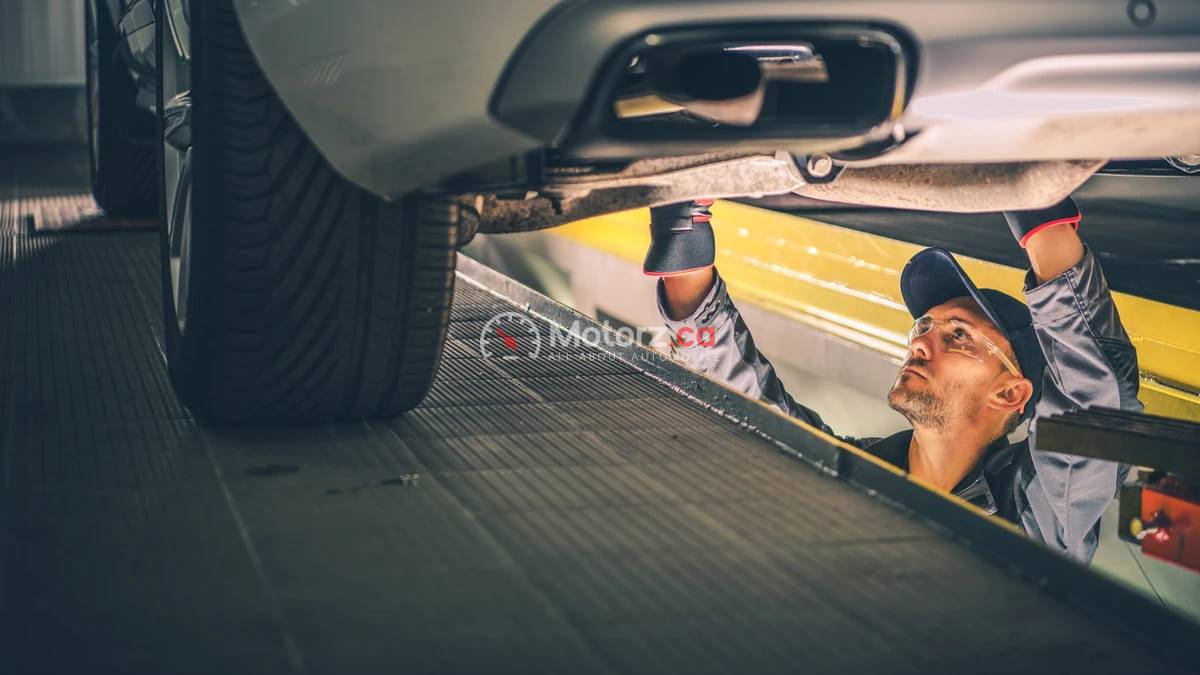




You pull into the service bay, hand over your keys, and opt for the “premium” oil change package. The advisor promises a multi-point inspection, and 30 minutes later, you leave with a fresh sticker on your windshield and a checklist full of green marks. You feel invincible. Your car is “good to go,” right?
Not exactly.
While a complimentary oil change inspection is a fantastic first line of defense, it is often misunderstood by drivers. Many car owners mistake these quick visual checks for a comprehensive mechanical diagnostic. In reality, an oil change inspection is a “glance,” not a “deep dive.” There are critical, expensive, and safety-sensitive components that a technician simply cannot—or will not—evaluate during a routine oil service.
Understanding the gap between a quick inspection and a full diagnostic is the difference between catching a problem early and being stranded on the shoulder of the highway. Let’s pull back the curtain on what really happens during that 15-minute check and, more importantly, what stays hidden.
The Reality of the “Multi-Point Inspection”
To understand what is missing, we first need to define what is usually included. Most quick-lube shops and dealerships perform a visual sweep while the oil is draining. This typically covers:
Fluid levels (washer fluid, coolant, brake fluid)
Tire pressure and tread depth
Visual leaks under the engine
Basic light function (headlights and brake lights)
Air filter condition
These are “low-hanging fruit.” They are easy to see and easy to sell. But your vehicle is a complex machine with thousands of moving parts that aren’t visible to the naked eye.
Deep Engine Diagnostics and Internal Health
The technician will check if you have enough oil, but they won’t tell you the “health” of the engine internals.
Compression and Leak-Down Tests
An oil change inspection cannot tell you if your piston rings are wearing out or if your valves are leaking. These issues lead to power loss and poor fuel economy but require specialized gauges and significant time to diagnose.
Timing Belt Condition
On many modern engines, the timing belt is hidden behind a plastic or metal cover. Checking it requires removing components, which is never part of a standard oil change. If your timing belt is cracking or frayed, a technician looking for oil leaks will never see it—until it snaps and causes catastrophic engine damage.
Advanced Electrical and Computer Systems
Modern cars are essentially rolling computers. While a technician might check if your battery terminals are corroded, the electrical “vitals” remain a mystery during an oil change.
Hidden Trouble Codes
Your car’s computer (ECU) can store “pending” trouble codes that haven’t yet triggered a dashboard warning light. An oil change inspection does not include plugging in an OBD-II scanner to check the health of your sensors, such as the oxygen sensor or the mass airflow sensor.
Battery State of Health
A visual check looks for leaks or crusty buildup on the battery. However, a battery can look brand new while only holding 20% of its original cranking capacity. Without a handheld load tester, the technician has no idea if your car will start on the first cold morning of winter.
The “Invisible” Suspension and Steering Components
When your car is on a lift for an oil change, the technician looks at the shocks and struts for oily leaks. If they are dry, they usually get a “green check.” But “dry” does not mean “functional.”
Bushing and Bearing Wear
Your suspension relies on rubber bushings and metal bearings. These components can dry rot, crack, or develop “play” that causes sloppy handling and uneven tire wear. To check these, a technician needs to “shake down” the front end using a pry bar—a step that is rarely included in a high-volume oil change.
Alignment Issues
A multi-point inspection might note that your tires are wearing unevenly, but it won’t tell you why. Wheel alignment requires a specialized laser-guided rack. You can have a “perfect” oil change inspection while your alignment is so far out of spec that it ruins a new set of tires in six months.
Transmission and Drivetrain Internals
Aside from checking a dipstick (if your car even has one), the transmission is a black box during an oil service.
Clutch Wear
If you drive a manual transmission, the inspection won’t tell you how much friction material is left on your clutch. Similarly, in an automatic, a technician can’t see the health of the internal clutch packs or the condition of the torque converter without a road test or a fluid analysis.
Differential and Transfer Case Fluids
In many SUVs and trucks, the fluids in the 4WD system are tucked away in metal housings with no dipsticks. Checking these requires removing fill plugs, which is an additional labor step not covered in the base price of an oil change.
Brake System Nuance
Yes, most inspections check “pad thickness.” But brakes are more than just pads.
Caliper Slide and Hardware
A brake pad might have 50% life left, but if the caliper slide pins are seized, the pad will wear unevenly or “drag,” causing excessive heat and warped rotors. A visual check through the wheel spokes cannot detect a seized caliper.
Brake Fluid Contamination
Technicians check the level of the brake fluid, but they rarely check the quality. Brake fluid is hygroscopic, meaning it absorbs water from the air. Over time, this water lowers the boiling point of the fluid and rusts your brake lines from the inside out. This requires a chemical test strip or an electronic moisture pen.
Hybrid and Electric Vehicle (EV) Specifics
If you drive a hybrid or an EV, an oil change inspection (for hybrids) or a “tire rotation check” (for EVs) misses the most important part: the high-voltage battery.
Checking the thermal management system, the cooling fans for the battery pack, and the health of the individual battery cells requires proprietary software and specialized training. Most quick-lube shops are not equipped to handle these high-voltage diagnostics.
Why “Green” Doesn’t Always Mean “Go”
The Multi-Point Inspection form can create a false sense of security. It is important to remember that these forms are often used as a sales tool. If a part looks okay, it gets a green check. If it looks “scary” (like a leaking water pump), it gets a red mark so the shop can sell you the repair.
The “in-between” issues—the ones that don’t look broken but aren’t performing perfectly—are often ignored because they are difficult to prove to a customer without a full diagnostic fee.
When Should You Get a “Real” Inspection?
To fill the gaps left by your oil change, you should schedule a Comprehensive Vehicle Inspection or a Digital Vehicle Inspection (DVI) at least once a year. This is a paid service (often 100 to 150) where a master technician spends an hour or more doing the following:
Road Testing: Listening for noises, feeling for vibrations, and checking shift quality.
Component Testing: Using a pry bar on every suspension joint.
Computer Health Check: Scanning all modules for hidden faults.
System Pressure Tests: Checking the cooling system and fuel system for integrity.
Be Your Own Advocate
An oil change inspection is a great “sanity check,” but it is not a substitute for professional vehicle maintenance. Don’t assume that a green checklist means your car is in perfect condition.
If you feel a vibration, hear a squeak, or notice your fuel mileage dropping, don’t wait for your next oil change to mention it. And more importantly, don’t be surprised when the oil change technician says “everything looks fine”—because their job is only to look, not to investigate.