



That familiar hum of your engine, the smooth purr as you accelerate, and the satisfying silence when you come to a stop—these are the subtle cues of a healthy car. But what happens when that familiar hum turns into a strange grinding noise? Or when a dreaded red light flashes on your dashboard? It’s easy to panic, to hope it goes away, or to simply turn up the radio.
Ignoring your Warning Signs Your Car Needs a Pro, however, is one of the most expensive mistakes a driver can make. What starts as a simple, affordable repair can quickly escalate into a catastrophic, wallet-draining disaster. Your car, just like your body, sends signals when something is wrong. Knowing how to read these signals and act on them is the difference between a minor service bill and an unplanned car payment.
This guide is designed to be your cheat sheet for car health. We’ll demystify the most common warning signs and provide a detailed breakdown of what they mean, why they’re important, and what happens if you ignore them. By the time you’re done reading, you’ll be a more proactive and savvy car owner, armed with the knowledge to protect your investment and keep yourself safe on the road.
The Mechanic’s Mantra: Don’t Wait for a Breakdown
Before we dive into the specific signs, it’s crucial to adopt a new mindset. Think of a mechanic not as a last resort, but as a preventative healthcare professional for your car. The vast majority of major car failures—blown engines, seized transmissions, brake failures—are not sudden. They are the final, loud, and dramatic culmination of a small, ignored problem. Paying for a diagnostic check now is always cheaper than paying for a tow truck and a new engine later.
Strange Sounds and Warning Signs Your Car Needs a Pro
A healthy car is a quiet car. Any new, persistent, or unusual noise is your car’s way of talking to you. Learning to interpret these sounds is your first line of defense.
The Squeal: This is perhaps the most common and easily recognizable sound. If you hear a high-pitched squealing sound, especially when you apply the brakes, it’s a clear indication that your brake pads are worn out. Most modern brake pads have a small metal “wear indicator” that makes this noise to warn you that the pad material is gone and it’s time for a replacement. Ignoring this will lead to the next, much worse sound. If the squealing happens when the Warning Signs Your Car Needs a Pro is moving but you’re not braking, it could be a worn or loose serpentine belt, which powers critical components like the alternator and power steering pump.
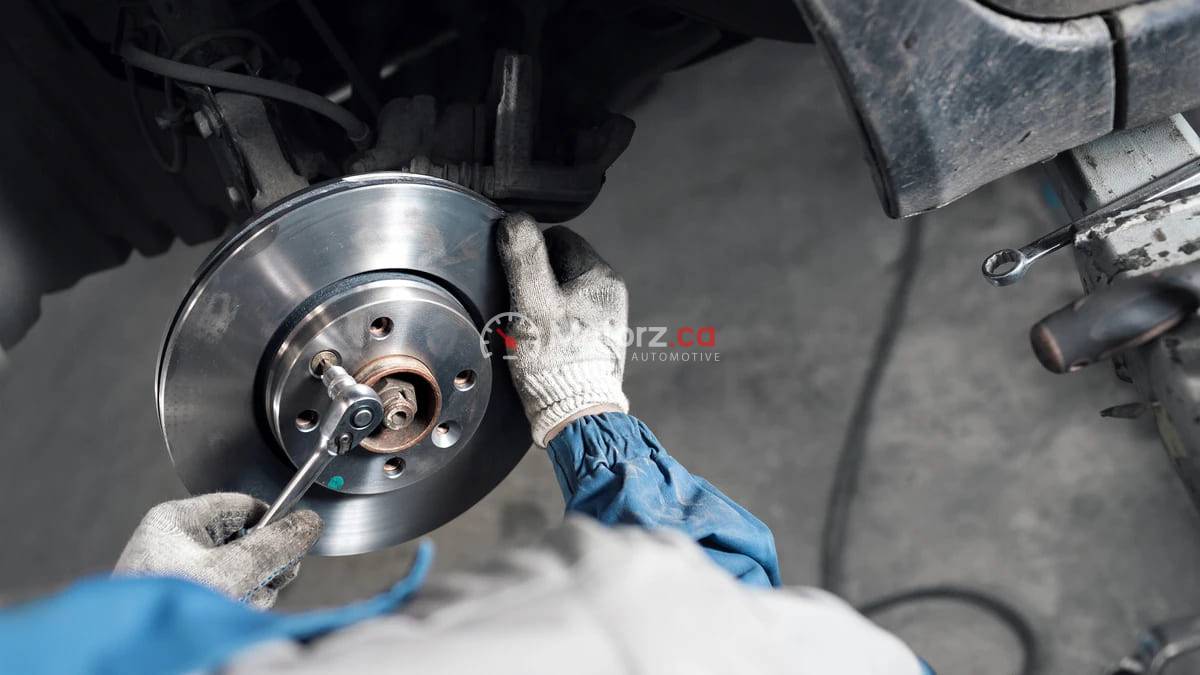
The Grinding: This is a red-alert sound that you should never Warning Signs Your Car Needs a Pro. If you hear a grinding or scraping noise when you brake, it means the brake pads are completely gone and the metal backing of the pad is now grinding directly against the metal brake rotor. This is a very dangerous situation that significantly reduces your stopping power. It can also quickly destroy the rotors and calipers, turning a $200 brake job into a $1,000+ repair. A grinding noise while driving (not braking) often points to a failing wheel bearing. This is a safety issue that can compromise your car’s handling and, in the worst-case scenario, cause the wheel to seize up while you’re driving.
The Clunk or Thump: A clunking sound, especially when you go over a speed bump or a pothole, is a sign of a suspension problem. This could be anything from a worn shock absorber to a bad ball joint or a broken strut. Suspension issues can lead to uneven tire wear, a rough ride, and poor handling. A persistent clunking from the front end, especially when turning, can also indicate a failing Warning Signs Your Car Needs a Pro joint. A failed CV joint can leave you stranded or, worse, cause a loss of control.
The Ticking or Clicking: A ticking sound from under the hood can be a sign of low oil pressure or a major engine problem. When the oil pressure drops, it can no longer properly lubricate the moving parts of the engine, causing a “ticking” noise as metal components make contact. This is an extremely serious warning. Driving for even a few minutes with low oil pressure can lead to a catastrophic engine failure that will cost you thousands of dollars to fix or replace.
The Dreaded Dashboard Lights
Your car’s dashboard is its central nervous system, and its warning lights are designed to communicate with you in a language you can’t misunderstand.
The Check Engine Light: This is the most common and most misunderstood warning light. The “Check Engine” light, or Warning Signs Your Car Needs a Pro, can be triggered by a wide range of issues, from something as simple as a loose gas cap to something as serious as a failing catalytic converter. You cannot know the cause without a professional diagnostic scan. Ignoring this light is a gamble. While it might be a minor issue, it could also be a sign of a problem that is slowly but surely destroying your engine, compromising your emissions, or significantly reducing your fuel efficiency.
The Oil Pressure Light: This light, which looks like an old oil lamp, is an emergency alert. If it turns on while you are driving, it means that your engine is not receiving proper lubrication. It could be due to extremely low oil levels, a clogged oil filter, or a faulty oil pump. You must pull over and turn off the engine as soon as it is safe to do so. Continuing to drive will cause metal parts inside the engine to grind against each other, leading to a complete engine seizure and the need for a total engine replacement, a repair that can cost more than the car is worth.
The Brake Warning Light: This light can appear in red or yellow and looks like a circle with an exclamation point in it. A red light means there is a serious issue with your braking system. It could be something like dangerously low brake fluid or a problem with the braking system itself. A yellow light often indicates an issue with the Anti-lock Braking System (ABS). In either case, your brakes are the most important safety system on your car. Don’t wait to get them Warning Signs Your Car Needs a Pro.
The Overheating Light: This light, usually shaped like a thermometer, indicates that your engine temperature is dangerously high. It’s often accompanied by a cloud of steam from under the hood. The moment this light comes on, you must pull over and shut off the engine. Continuing to drive will lead to overheating and a blown head gasket or a cracked engine block, a repair that can run into the thousands of dollars.
Leaks and Puddles
Most car leaks are a clear sign that a seal, hose, or gasket is failing. If you notice a puddle under your car, take a moment to identify it. Its color and location can tell you a lot.
Black or Brown Fluid: This is the most common type of leak, and it’s almost always engine oil. It can be a minor leak from a valve cover gasket or a major one from the oil pan. Regardless, an oil leak is a serious issue that, if ignored, can lead to your engine running low on oil and Warning Signs Your Car Needs a Pro.
Red or Pink Fluid: A red or pinkish fluid is typically either transmission fluid or power steering fluid. Both are critical for the function of your Warning Signs Your Car Needs a Pro. A transmission fluid leak can lead to shifting issues and, eventually, a failed transmission. A power steering fluid leak will make steering difficult and could damage the power steering pump.
Yellowish-Green or Orange Fluid: This fluid, which often has a slightly slimy feel and a sweet smell, is engine coolant or Warning Signs Your Car Needs a Pro. A coolant leak means your engine’s cooling system is compromised, which can lead to overheating and catastrophic engine damage.
Clear Fluid: This is usually nothing to worry about. If your Warning Signs Your Car Needs a Pro is running the air conditioner, the puddle you see is likely just water from condensation. However, if you see a large amount of clear, odorless fluid, it’s always a good idea to keep an eye on it.
Performance Issues and Strange Smells
Sometimes the Warning Signs Your Car Needs a Pro isn’t a leak or a noise, but a change in how the car feels and smells. These can be the most subtle, but equally important, indicators.
Performance Problems: Is your car hesitating or stalling when you accelerate? Does it feel sluggish or lack its usual power? These issues could be caused by a Warning Signs Your Car Needs a Proof problems, including a clogged fuel filter, a faulty oxygen sensor, or a problem with your spark plugs. While these issues may seem Warning Signs Your Car Needs a Pro, they can lead to poor fuel efficiency and eventually compromise the engine.
Burning Smells: A burning smell is almost always a sign of a fluid leaking onto a hot engine part.
A smell like Warning Signs Your Car Needs a Pro rubber could be a slipping serpentine belt or a worn-out clutch.
A smell like burnt toast or a sweet, burning scent is a sign of a fluid leak, such as oil or coolant, burning on a hot engine component.
Rotten Egg Smell: A distinct smell of rotten eggs or sulfur coming from your Warning Signs Your Car Needs a Pro is the classic sign of a failing catalytic converter. The catalytic converter is designed to convert toxic gases into less harmful ones, and when it fails, it releases a foul-smelling gas. Ignoring this will lead to major emissions issues and can cause your Warning Signs Your Car Needs a Pro to fail an inspection. It’s a costly repair, but it’s a necessary one.