

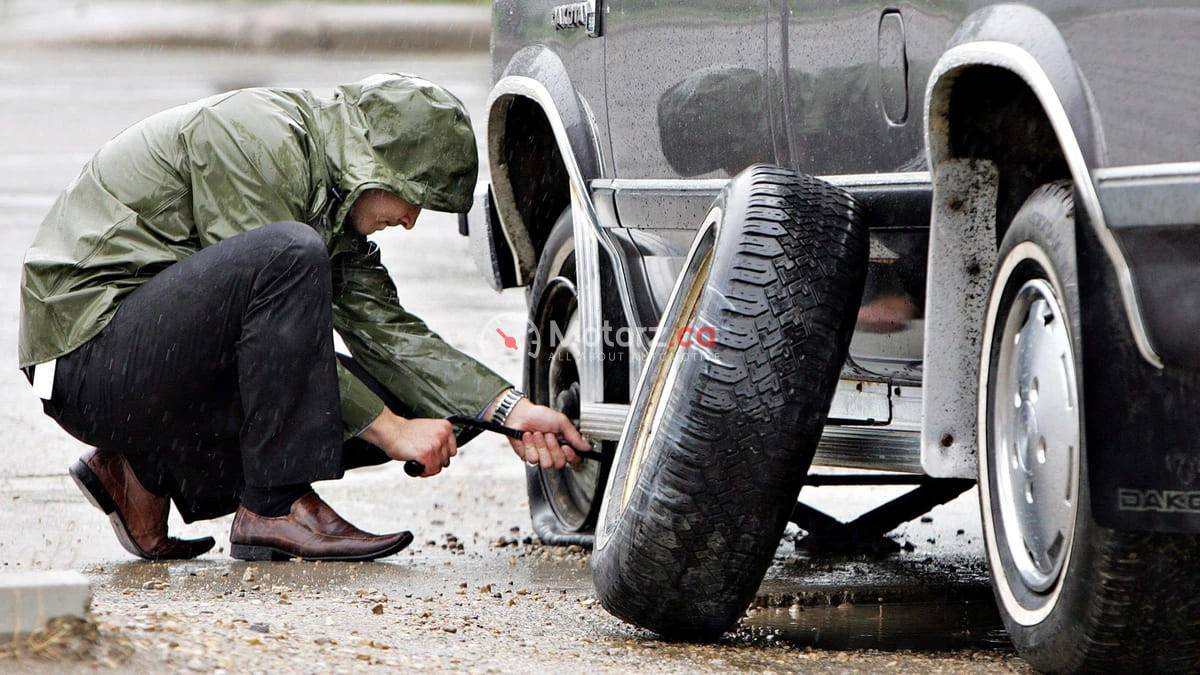



It is a sound every Tire Puncture dreads: the rhythmic tick-tick-tick of a nail embedded in your tread, followed by the sinking feeling of a low tire pressure warning on your dashboard. You pull into your local shop, hoping for a quick, low-cost patch so you can get back on the road. But then the technician delivers the bad news: “Sorry, we can’t patch this one. You need a new tire.”
It feels like a sales tactic. You look at the tire, see plenty of tread left, and wonder how a tiny hole could possibly ruin a 200 unit investment. However, tire repair is governed by strict safety standards set by the U.S. Tire Manufacturers Association (USTMA) and the Tire Industry Association (TIA). These rules aren’t there to pad the shop’s bottom line; they are there to prevent high-speed blowouts and catastrophic structural failures.
In this edition of Your Corner Wrench, we are diving deep into the anatomy of a tire to explain exactly why some punctures are an easy fix, while others are a one-way ticket to the recycling pile.
The “Safe Repair Zone” vs. Tire Puncture
The most common reason a tire is deemed unrepairable is the location of the puncture. A tire is not a uniform piece of rubber; it is a complex sandwich of steel belts, fabric plies, and chemical compounds, each designed for a specific job.
The Crown of the Tire
The only area that can be safely patched is the crown, which is the center portion of the tread. Generally, this is the area between the two outermost circumferential grooves. In this zone, the rubber is supported by heavy steel belts that provide a stable foundation for a repair plug and patch to bond correctly.
The Shoulder and Sidewall: The No-Go Zone
The “shoulder” of the tire—where the tread curves down to meet the sidewall—is under constant flex. Every time you turn, hit a bump, or accelerate, the sidewall bends.
The Problem: Because this area is constantly moving and “working,” a patch will not stay bonded. The heat generated by the flexing will cause the adhesive to fail, leading to a sudden loss of air.
Structural Integrity: The sidewall contains the vertical “carcass plies” that hold the weight of your car. If these are nicked by a nail, the structural “spine” of the tire is compromised. A patch cannot restore that strength.
Puncture Size and Angle: When the Hole is Too Big
Even if a nail is perfectly centered in the tread, its size and the way it entered the tire matter immensely.
The Quarter-Inch Rule
Industry standards dictate that a puncture larger than 6 millimeters (about 1/4 inch) cannot be repaired.
The Reason: A hole this large indicates that the steel belts have been significantly damaged or severed. Filling a large hole with a plug is like putting a cork in a wine bottle that has a cracked neck—it might hold for a moment, but it won’t withstand the internal pressure of 32 to 35 PSI combined with the heat of highway driving.
The Angle of Entry
If a screw enters the tire at a sharp, jagged angle, it can create a “tunnel” through the internal structure that is longer than the actual width of the screw. If a technician cannot properly “ream” the hole to create a clean, vertical path for the repair stem, the seal will never be airtight.
The “Run-Flat” Damage: The Hidden Danger
This is the “silent killer” of tires. If you drove on a flat tire—even for just a few hundred meters—you likely destroyed the tire from the inside out.
Inner Liner Heat Discoloration
When a tire loses air pressure, the sidewalls collapse. As you continue to drive, the rim of your wheel pinches the rubber against the road. This generates massive amounts of friction and heat.
The “Black Dust” Sign: When a technician takes the tire off the rim, they often find a pile of black, crumbly rubber dust inside. This is the inner liner literally disintegrating.
Sidewall Ring: If you see a dark, “bruised” ring around the outside of your tire’s sidewall, the internal structure has been “cooked.” Even if the puncture is in the perfect spot, the tire is now a ticking time bomb and must be replaced.
Why “Plugs” Alone Are Not a Real Repair
You may have seen “DIY” tire plug kits at your local auto parts store. While these are great for getting you off a dangerous highway shoulder, they are considered temporary emergency repairs only.
The Plug-and-Patch Combo
A professional, permanent repair requires a one-piece patch-plug combination.
The Plug: Fills the “tunnel” to prevent moisture from reaching the steel belts (which would cause them to rust and delaminate).
The Patch: Seals the inner liner to keep the air inside.
A shop that simply shoves a “rope plug” into your tire from the outside without taking the tire off the rim is not performing a safe repair. Without seeing the inside, they have no way of knowing if the inner liner is shredded or if the nail caused secondary damage to the opposite side of the tire.
Other “Deal-Breakers” for Tire Repair
There are a few other conditions that will result in a “no-repair” verdict from an honest shop:
Tread Depth: If your tread is worn down to 2/32 of an inch or less, the tire is legally bald. Investing in a repair for a tire that already needs replacement is a waste of your resources.
Existing Repairs: Most manufacturers recommend a maximum of two repairs per tire, and they must be at least 90 degrees apart. You cannot “overlap” patches.
Age: If a tire is more than six years old, the rubber begins to lose its elasticity (dry rot). Patching “old” rubber is like trying to tape two pieces of dry toast together—it just doesn’t stick.
Safety Over Savings
It is never fun to hear that a 10 unit nail resulted in a 200 unit tire replacement. However, your tires are the only thing connecting your vehicle to the pavement. A failed tire repair at 100 kilometers per hour is a much more expensive and dangerous problem than a new tire today.
If your technician tells you a tire can’t be patched, ask them to show you why. A reputable shop will be happy to point out the puncture location, show you the internal heat damage, or explain the structural risks. At the end of the day, “Your Corner Wrench” wants you to stay safe on the road, and sometimes that means saying goodbye to a damaged tire.