
When you climb into a IIHS Crash Testing pickup truck, there is an inherent sense of security. You are sitting high above the asphalt, surrounded by thousands of pounds of reinforced steel. For years, the Nissan Titan traded on this image of “Titanium” strength. However, the 2021 model year brought a surprising and somber wake-up call for enthusiasts and safety advocates alike.
In a world where automotive technology usually moves forward, the 2021 Nissan Titan took a visible step back in certain safety evaluations conducted by the Insurance Institute for Highway Safety (IIHS). This regression sparked a “Bang and Blame” cycle between consumers, safety experts, and the manufacturer.
In this deep dive, we explore exactly what went wrong in the lab, why these ratings matter for real-world truck owners, and how the Titan compares to its fierce competition in the Ford F-150 and Ram 1500.
The IIHS Evaluation: A Moving IIHS Crash Testing
To understand why the 2021 Nissan Titan struggled, we first have to understand the organization holding the stopwatch. The Insurance Institute for Highway Safety (IIHS) is known for having some of the most rigorous testing standards in the world—often exceeding the baseline requirements set by the federal government.
The Shift in Standards
In 2021, the IIHS updated its criteria, placing a much heavier emphasis on passenger-side protection and headlight performance. A vehicle that earned a “Good” rating five years ago might only be considered “Marginal” today. While Nissan made updates to the Titan for the 2020 and 2021 model years, including the addition of Nissan Safety Shield 360, the structural core of the truck faced challenges in the dreaded small overlap test.
Where the 2021 Titan Lost Ground
The headline-grabbing news from the 2021 testing cycle was that the Titan lost its previous Top Safety Pick status. Specifically, the truck saw a downgrade in two critical areas: the small overlap front passenger-side test and headlight efficiency.
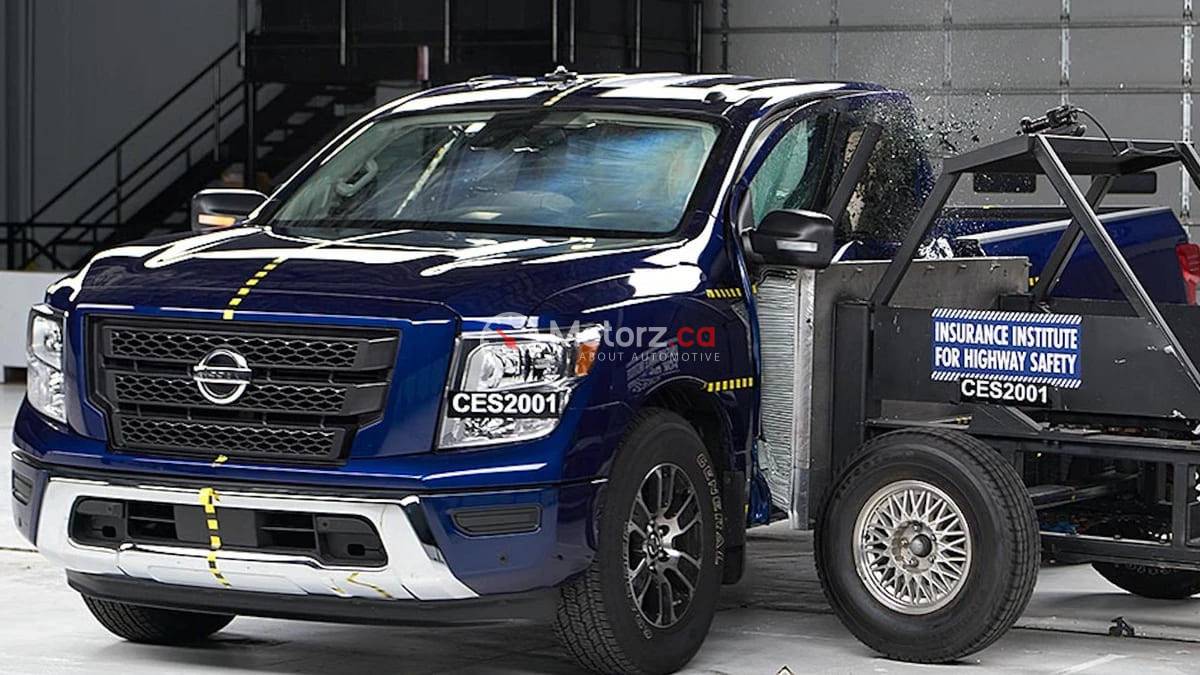
1. Small Overlap Front: Passenger Side
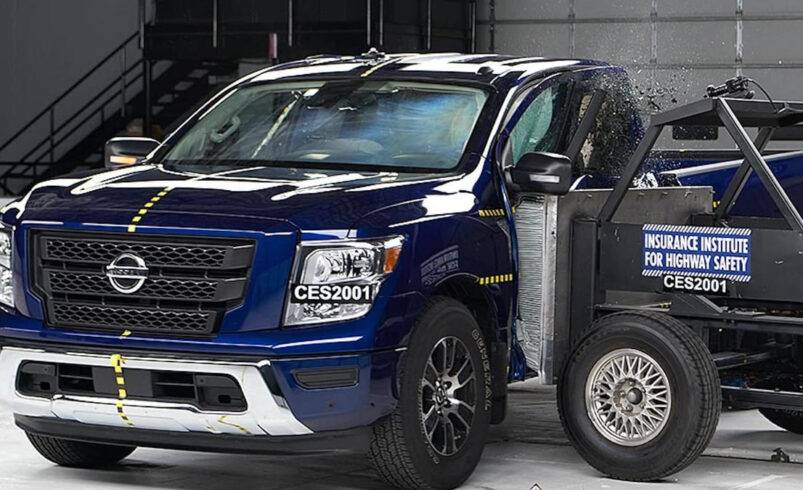
This test simulates what happens when the front corner of a vehicle hits another vehicle or an object like a utility pole at 40 mph. In the 2021 tests, the Titan was downgraded from “Good” to “Acceptable.” IIHS engineers noted that during the crash, the structural reinforcement of the cabin allowed for more “intrusion” into the passenger footwell than in previous years. In plain English: the truck’s frame pushed back further into the cabin than it should have, increasing the risk of injury to a passenger’s lower legs and feet.
2. The Headlight Dilemma
For a truck to be a Top Safety Pick, it must have “Good” or “Acceptable” headlights across all trim levels. Unfortunately, the 2021 Titan’s base halogen headlights were rated as “Poor.” Even the upgraded LED projectors on higher trims only managed a “Marginal” rating because they failed to provide adequate illumination on gradual curves.
3. Roof Strength and Head Restraints
While the overlap tests were a disappointment, it is important to note where the Titan stayed strong. It maintained a “Good” rating in:
Original moderate overlap front
Side impact (original test)
Roof strength
Head restraints and seats
The “Blame” Game: Why Did It Happen?
When a vehicle’s safety rating drops, the public naturally asks: Why? ### Structural Aging The Nissan Titan’s current platform is older than many of its competitors. While the 2020 refresh brought a more powerful engine and a 9-speed transmission, the underlying “bones” of the truck date back to the 2016 redesign. Engineering a chassis to handle new, specific crash forces often requires a ground-up rebuild, which wasn’t part of the 2021 update.
The Weight Factor
Full-size trucks are getting heavier. As trucks pack in more luxury features and soundproofing, the kinetic energy involved in a crash increases. If the frame isn’t strengthened in tandem with the weight gain, the crash test results will inevitably suffer.
Is the 2021 Nissan Titan Still Safe?
It is important to keep perspective. A “Marginal” or “Acceptable” rating in a high-speed IIHS test does not mean the truck is a “death trap.“
The Safety Shield 360 Advantage
Despite the structural test results, every 2021 Titan came standard with a suite of active safety tech that many competitors charged extra for. This includes:
Automatic Emergency Braking with Pedestrian Detection: Helps prevent the “Bang” before it happens.
Rear Automatic Braking: A rare feature in the truck segment that prevents low-speed backing accidents.
Blind Spot Warning and Rear Cross Traffic Alert: Essential for a vehicle this size.
If these systems prevent a crash from occurring in the first place, the structural “Acceptable” rating becomes a moot point.
Buying Advice: Tips for Titan Owners
If you own a 2021 Nissan Titan or are looking at one on the used market, here are a few ways to maximize your safety:
Upgrade the Bulbs: Since the “Poor” headlight rating is a major sticking point, consider high-quality aftermarket LED bulbs if you have a base trim with halogens. Better visibility is the easiest way to improve nighttime safety.
Mind the Passenger Footwell: Be aware that in severe front-corner collisions, the passenger side is slightly more vulnerable than the driver side.
Check for Recalls: Ensure all software updates for the Nissan Safety Shield 360 systems have been applied by a certified dealer.