
Toyota has always been synonymous with truck reliability, but the 2025 model year brings a pivotal question for buyers: which Toyota truck is right for your life? On one side, you have the completely redesigned, next-generation Toyota Tacoma, which now boasts powerful turbocharged engines and an available hybrid system. On the other, the Toyota Tundra, a full-size titan that leverages twin-turbo V6 power and a massive hybrid boost to challenge domestic heavyweights.
Choosing between the 2025 Toyota Tacoma (midsize) and the 2025 Toyota Tundra (full-size) is no longer a simple matter of size. Both trucks feature state-of-the-art powertrains, sophisticated coil-spring rear suspensions, and the latest Toyota Safety Sense 3.0 technology. The decision now hinges entirely on your specific needs: towing capacity, space requirements, off-road agility, and budget.
This comprehensive, side-by-side comparison breaks down the key specifications, performance metrics, and interior features of both the new Tacoma and the Tundra, providing actionable insights to help you drive home the perfect Toyota pickup.
Performance and Powertrain: Turbocharged I4 vs. Twin-Turbo V6
The most significant difference between the two trucks lies under the hood. The 2025 models mark Toyota’s complete shift away from naturally aspirated engines in both lines, embracing smaller, turbocharged, and hybrid-assisted power plants.
Toyota Tundra Engine Specs: V6 Powerhouse
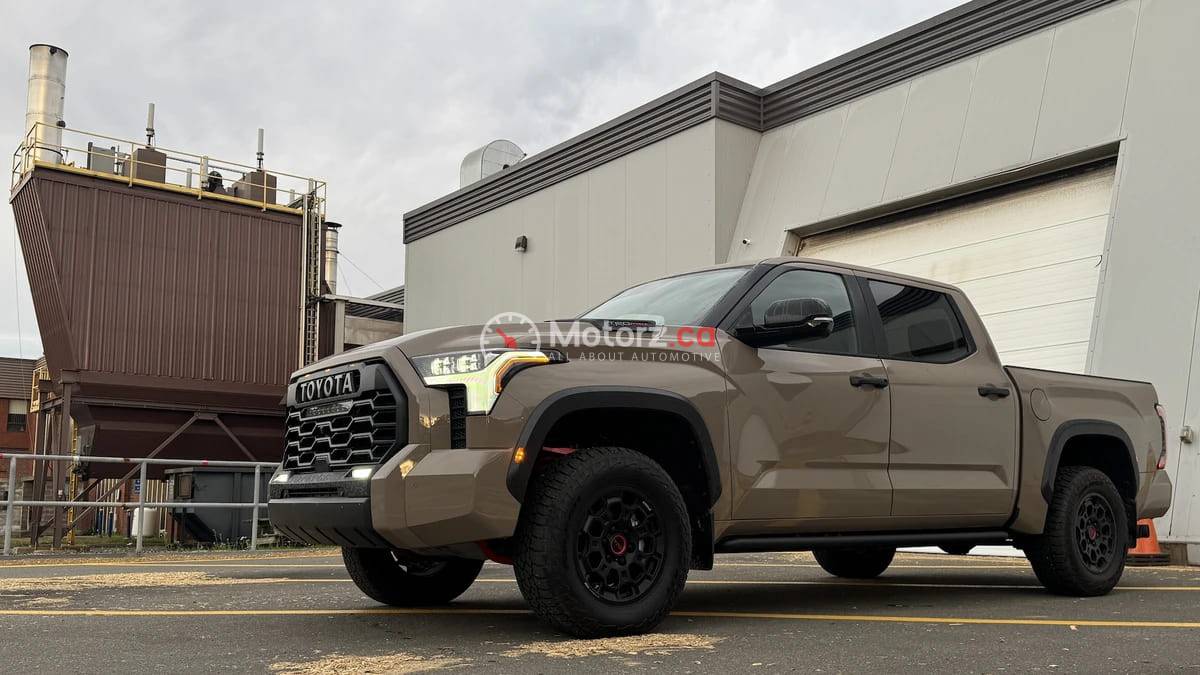
The Tundra, designed for heavy-duty work and long-haul comfort, exclusively uses a twin-turbo V6 architecture across its entire lineup, offering substantially more power and towing capability than the Tacoma.
Standard i-FORCE V6: The base engine is a 3.4-liter twin-turbo V6. In the base SR trim, it produces a solid 358 horsepower and 405 pound-feet of torque. In most other trims, this engine is boosted to 389 horsepower and 479 pound-feet of torque. This setup is the key to unlocking the Tundra’s maximum towing capacity.
i-FORCE MAX Hybrid System: For those seeking ultimate power and instantaneous torque, the available hybrid system pairs the 3.4-liter twin-turbo V6 with an electric motor. This configuration delivers a blistering 437 horsepower and 583 pound-feet of torque. This system prioritizes low-end acceleration and efficiency.
Transmission: All Tundra models come standard with a smooth-shifting 10-speed electronically controlled automatic transmission.
Toyota Tacoma Engine Specs: I4 Versatility
The Tacoma utilizes a smaller, but highly potent, turbocharged four-cylinder engine designed for efficiency and off-road agility.
Standard i-FORCE I4: The standard powertrain is a 2.4-liter turbocharged four-cylinder. In its base form (SR trim), it produces 228 horsepower and 243 pound-feet of torque. In higher trims, this is tuned up to 278 horsepower and 317 pound-feet of torque.
i-FORCE MAX Hybrid System: The new, highly anticipated hybrid system for the Tacoma pairs the 2.4-liter turbo engine with an electric motor. This delivers a substantial performance bump to 326 horsepower and 465 pound-feet of torque. This hybrid option dramatically closes the power gap with the Tundra while retaining the midsize platform.
Transmission Choices: Most Tacoma models utilize an 8-speed automatic. Crucially for enthusiasts, some trims offer a 6-speed intelligent Manual Transmission (iMT) with rev-matching, a feature unavailable on the Tundra.
Capability: Towing, Hauling, and Off-Road Prowess
This is the segment where the size difference truly dictates the utility of each truck. The Tundra is built for work, and the Tacoma is built for adventure.
Maximum Towing and Payload Capacity
For buyers whose primary requirement is pulling heavy trailers, the Tundra is the clear choice. Its full-size chassis and robust V6 power translate directly into superior towing.
Tundra’s Advantage: The Tundra can tow nearly double the weight of the Tacoma. Its maximum 12,000-pound capacity (achieved in specific SR5 Double Cab RWD configurations with the 389 hp V6) is capable of handling large boats, three-horse trailers, and significant fifth-wheel RVs. The i-FORCE MAX hybrid Tundra still maintains an impressive tow rating of up to 11,450 pounds.
Tacoma’s Capability: The Tacoma’s 6,500-pound rating is more than enough for most utility trailers, smaller fishing boats, jet skis, and most teardrop or compact travel trailers. The i-FORCE MAX hybrid Tacoma is rated slightly lower at 6,000 pounds in most configurations.
Off-Road Dynamics and Agility
While both trucks offer incredible off-road trims (Tacoma TRD Pro, Tundra TRD Pro), their size difference makes them suited for different types of terrain.
Tacoma Agility: The Tacoma is the king of maneuverability. Its midsize dimensions and shorter wheelbase (131.9 inches in the Double Cab) allow it to navigate tight, technical trails, weave through wooded areas, and fit into compact urban parking spaces far better than its big brother. The redesigned Tacoma also benefits from a new coil-spring rear suspension (standard on most trims) and an available Stabilizer Disconnect Mechanism (SDM) for enhanced articulation.
Tundra Stability: The Tundra’s full-size wheelbase (starting at 145.7 inches) provides a smoother ride on the highway and greater stability when towing. While capable off-road, particularly in the TRD Pro trim with its wider stance, its sheer size makes it less ideal for narrow, challenging trails where ground clearance (up to 9.4 inches) and width become limiting factors.
Size, Space, and Comfort: Which Truck Fits Your Life?
The difference between a midsize and a full-size truck is most felt in the cabin and the bed.
Cab and Passenger Comfort
Both trucks can seat up to five people, but the quality of the experience, especially for rear passengers, varies significantly.
Tundra CrewMax: The Tundra’s CrewMax Cab provides limousine-like rear legroom and overall shoulder room, making it a genuine family hauler. The spacious cabin is quieter at highway speeds and features more premium materials in the higher trims (Platinum, Capstone), including available semi-aniline leather and genuine wood accents.
Tacoma Double Cab: The Tacoma Double Cab is comfortable for two adults in the front, but the rear seats are tighter. While improved over the previous generation, rear passenger space is best reserved for children or short trips. The new XtraCab option offers seating for two with a small cargo area behind the seats, optimizing bed length for contractors or singles.
Bed Length and Utility
The choice of bed size often determines the truck’s purpose. Both offer composite beds for durability, but the Tundra provides much more volume.
Tacoma Bed Options: The Tacoma offers a 5-foot or 6-foot bed (Double Cab) and the longest 6-foot bed with the XtraCab. This is sufficient for recreational gear, dirt bikes, and standard homeowner tasks.
Tundra Bed Options: The Tundra offers three bed lengths: 5.5-foot, 6.5-foot, and a massive 8.1-foot option (Double Cab). The 8.1-foot bed is a major asset for construction workers, lumber transport, or serious utility work where maximum length is mandatory. The Tundra also offers a wider bed, allowing standard 4’x8’ sheets of plywood to lay flat between the wheel wells, a common limitation in midsize trucks.
Fuel Economy and Cost of Ownership
Fuel efficiency has improved dramatically for both models due to the shift to turbocharged and hybrid powertrains, but the Tacoma maintains a clear advantage in efficiency and entry-level pricing.
Fuel Efficiency Breakdown
The Tacoma’s smaller, four-cylinder engines naturally use less fuel, making it the better choice for daily commuters or those prioritizing fuel costs.
Tacoma MPG: The Tacoma’s i-FORCE gas engine is expected to achieve an estimated 21 city/26 highway miles per gallon (MPG) in its most efficient RWD configuration. The highly powerful i-FORCE MAX hybrid Tacoma still maintains strong numbers, with an estimated combined MPG around 23-24.
Tundra MPG: Despite its larger size and power, the Tundra’s hybrid system performs surprisingly well, achieving an EPA-estimated 20 city/24 highway MPG in the i-FORCE MAX hybrid models. The gas-only Tundra generally achieves 18 city/23 highway MPG.
Pricing and Total Cost of Ownership
Starting Price: The Tacoma’s starting price is significantly lower, beginning around 31,590 MSRP, making it accessible for a wider range of buyers. The Tundra starts approximately 8,500 higher, closer to 40,090 MSRP.
Long-Term Value: Both trucks benefit from Toyota’s legendary reliability and consistently hold their resale value better than almost any competitor in the segment. However, the Tacoma traditionally commands the highest resale value in the entire truck market due to its legendary reputation for longevity and high demand.
Final Verdict: How to Choose Your Toyota Pickup
The comparison between the 2025 Toyota Tundra and 2025 Toyota Tacoma is not about finding the “better” truck, but the right truck for your needs.
Choose the Toyota Tacoma If…
Your Priority is Agility and Off-Road Capability: You spend weekends on narrow trails, use the truck for outdoor sports, or live in a dense urban area where maneuverability matters most.
Your Budget is Under 45,000: You want a highly capable truck with the latest features, including the new coil suspension, at a midsize price point.
You Tow Lighter Loads: You only need to tow utility trailers, ATVs, or small campers (under 6,500 pounds).
You Want a Manual Transmission: The Tacoma is one of the few trucks that still offers a satisfying 6-speed iMT option.
Choose the Toyota Tundra If…
Your Priority is Towing and Hauling: You regularly pull large RVs, heavy boats, or trailers exceeding 8,000 pounds.
You Need Family Comfort: The back seat is crucial for adult passengers or three child seats. The Tundra CrewMax offers vastly superior passenger space.
You Require Maximum Power: The sheer output of the i-FORCE MAX V6 (437 hp, 583 lb-ft) is necessary for frequent heavy acceleration or mountainous driving.
You Need Maximum Bed Size: The 6.5-foot or 8.1-foot bed is essential for your work or hobbies, as the Tundra offers more cargo volume.
The 2025 Toyota Tundra is a luxurious, high-performance workhorse that competes directly with the Ford F-150 and Chevrolet Silverado. The 2025 Toyota Tacoma, reinvented for the next generation, is the definitive choice for the modern adventurer who demands capability without the full-size bulk.