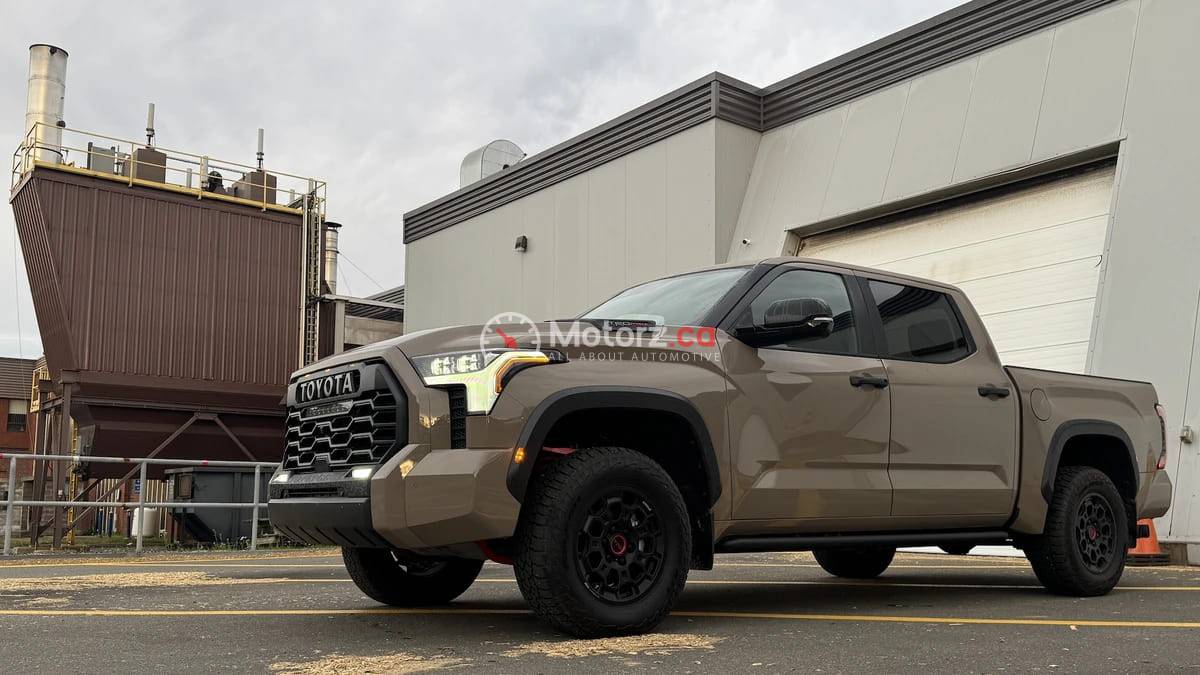

Toyota’s Toyota Tundra vs. Tacoma lineup has been completely revitalized. The 2025 Toyota Tundra maintains its position as the powerful, full-size workhorse, while the 2025 Toyota Tacoma has been reborn as a modern, sophisticated mid-size contender. Both trucks offer rugged capability, advanced technology, and—crucially—hybrid powertrain options, but they are designed for fundamentally different buyers.
Deciding between the Tacoma and the Tundra is one of the most common dilemmas for truck shoppers. Are you prioritizing maximum towing capacity and passenger space, or are you seeking better fuel efficiency and the agility needed for tight city driving and aggressive off-roading?
This comprehensive comparison breaks down the 2025 Tundra and Tacoma across critical metrics—size, performance, towing, and value—to help you determine which Toyota pickup is the perfect fit for your lifestyle and needs.
Size and Dimensions: The Mid-Size vs. Full-Size Divide
The most obvious and fundamental difference between the Tacoma and the Tundra is their size. This distinction impacts everything from parking ease to interior comfort and cargo capacity.
Maneuverability and Daily Toyota Tundra vs. Tacoma
The Tacoma’s mid-size stature makes it the clear winner for drivers navigating crowded urban streets, tight garages, or narrow off-road trails.
Overall Length: The Tacoma is significantly shorter, with a maximum length ranging from approximately 213 to 227 inches, depending on the cab and bed configuration. This shorter length translates directly to easier parking and a smaller turning radius.
Agility in Traffic: Its narrower body and shorter wheelbase (around 131.9 inches) allow for a more nimble driving feel, making it less intimidating for drivers transitioning from a crossover or sedan.
The Tundra, as a full-size truck, prioritizes presence and capacity.
Overall Length: The Tundra stretches from about 233.6 inches to a massive 252.5 inches, especially in its longest bed configurations.
Width: The Tundra is also substantially wider, which is great for cabin space but requires more caution in narrow lanes and parking lots.
Interior Space and Comfort
While both trucks are available in crew cab configurations that seat five, the Tundra’s larger exterior dimensions translate to a much more spacious and comfortable interior, particularly for rear passengers.
Tundra CrewMax: Offers significantly more rear legroom, making it the better choice for carrying adults on long journeys or for use as a primary family vehicle. Its cabin also feels more luxurious, especially in higher trims like the 1794 Edition or Capstone.
Tacoma Double Cab: While functional, the rear seat space is tighter. It’s perfectly adequate for children or shorter trips with adults, but it emphasizes the cab’s utility rather than pure comfort. The Tacoma does offer an XtraCab (two-seater) with a six-foot bed for buyers prioritizing bed length over rear seating.
Powertrain and Performance: Turbocharged Engines Take Center Stage
For 2025, both trucks ditch the older V6 and V8 engines in favor of turbocharged powerplants, with hybrid technology available in both the mid-size (i-FORCE MAX) and full-size (i-FORCE MAX) segments.
Tacoma Engine Specs: Four-Cylinder Agility
The Tacoma’s performance is centered around its 2.4-liter i-FORCE turbocharged four-cylinder engine.
Base i-FORCE (SR Trim): Delivers 228 horsepower and 243 pound-feet of torque.
Standard i-FORCE (Higher Trims): Jumps to 278 horsepower and 317 pound-feet of torque, offering brisk acceleration.
i-FORCE MAX Hybrid: This powerhouse features the 2.4-liter engine combined with an electric motor to produce a potent 326 horsepower and 465 pound-feet of torque. This provides V6-like power with superior low-end torque for off-roading or rapid acceleration.
Manual Transmission: A key differentiator: the Tacoma offers a six-speed manual transmission option on certain gas-powered Double Cab trims, a feature unavailable on the Tundra.
Tundra Engine Specs: V6 Twin-Turbo Dominance
The Tundra’s standard engine is the twin-turbocharged V6, delivering the kind of massive torque needed for heavy hauling.
Standard i-FORCE V6: Produces 389 horsepower and 479 pound-feet of torque (a detuned 358 hp version is standard on the base SR trim). This is paired exclusively with a 10-speed automatic transmission.
i-FORCE MAX Hybrid: The Tundra’s hybrid system pairs the twin-turbo V6 with an electric motor to unleash 437 horsepower and a staggering 583 pound-feet of torque. This maximum torque is what makes the Tundra an elite towing machine.
Towing, Hauling, and Fuel Efficiency: The Capability Trade-Off
This section highlights where the two trucks serve entirely different purposes, primarily defined by their maximum towing capacity and fuel economy.
Towing Capacity: Workhorse vs. Playhorse
If towing a large RV, a substantial boat, or heavy construction equipment is your requirement, the Tundra is the only viable option.
Tundra’s Max Towing: The properly equipped Tundra (SR5 Double Cab 4×2 with the 389 hp i-FORCE V6) boasts an impressive 12,000 pounds of maximum towing capacity. Even the hybrid Tundra can tow up to 11,450 pounds, proving its capability.
Tacoma’s Max Towing: The Tacoma, built for lighter duties and recreation, maxes out at 6,500 pounds (on the SR5 and TRD PreRunner). This is perfectly suitable for small campers, jet skis, dirt bikes, or utility trailers, but it falls short of heavy-duty requirements.
Payload Capacity follows a similar trend, though the gap is narrower. The Tundra can handle up to 1,940 pounds of payload, while the Tacoma maxes out at around 1,710 pounds.
Fuel Economy: Efficiency vs. Power
The smaller, four-cylinder engine of the Tacoma grants it a modest but noticeable advantage in efficiency, particularly in its base configurations.
Tacoma Gas Engine: Estimated combined EPA ratings often hover around 21 to 23 miles per gallon.
Tacoma Hybrid (i-FORCE MAX): Projected combined ratings are around 23 miles per gallon, a slight edge over the Tundra hybrid.
Tundra Gas Engine: Estimated combined EPA ratings are generally around 19 to 20 miles per gallon.
Tundra Hybrid (i-FORCE MAX): The Tundra hybrid improves efficiency, with a combined rating of about 21 to 22 miles per gallon, which is highly competitive for a full-size hybrid truck with 437 horsepower.
Tip for Buyers: If your towing needs are below 6,000 pounds and you value city fuel economy, the Tacoma i-FORCE MAX is the practical choice. If you tow anything over 7,000 pounds, the Tundra i-FORCE MAX offers superior power with surprisingly competitive hybrid efficiency for its size.
Off-Road and Ride Comfort: Coil Springs for All
Both the 2025 Tacoma and the Tundra now feature a multi-link coil-spring rear suspension on most configurations (a significant upgrade for the Tacoma), enhancing both off-road articulation and on-road ride comfort.
Off-Road Focus: Trailhunter and TRD Pro
Toyota’s commitment to off-road excellence is evident in both lineups, with dedicated trims built for extreme capability.
Tacoma’s Off-Road Edge: The mid-size truck benefits from its smaller size, offering better approach, breakover, and departure angles, and superior maneuverability on tight trails. The Tacoma features aggressive off-road trims like the TRD Pro (with Fox internal bypass shocks) and the new Trailhunter (overlanding-focused with Old Man Emu suspension, rock rails, and an available integrated winch).
Tundra’s Full-Size Capability: The Tundra’s TRD Pro is also a formidable off-roader, utilizing the high-power i-FORCE MAX hybrid system and sophisticated suspension technology (including FOX shocks). While it lacks the ultimate agility of the Tacoma on narrow paths, its size and power make it excellent for high-speed desert running and climbing larger obstacles.
On-Road Comfort
The switch to coil-spring rear suspension on both models has dramatically improved their ride quality compared to previous generations that used leaf springs.
Tundra: Benefits from its heavy, full-size construction and longer wheelbase to deliver a quiet, stable, and highly comfortable ride that rivals many large SUVs. This makes it an ideal choice for long highway commutes and family road trips.
Tacoma: Offers a vastly improved ride quality over the last generation, but its shorter wheelbase means the ride is still slightly firmer and more responsive, fitting its adventurous, sporty character.
Technology, Features, and Pricing
The 2025 models are loaded with modern technology, but the Tundra still retains a slight edge in premium luxury offerings.
Shared Technology
Both trucks come standard with the Toyota Safety Sense 3.0 (TSS 3.0) suite and feature the excellent Toyota Audio Multimedia System.
Infotainment: Both offer a standard large touchscreen display (with available upgrades to an impressive 14-inch touchscreen), wireless Apple CarPlay, and Android Auto.
Safety: TSS 3.0 includes Pre-Collision System with Pedestrian Detection, Lane Departure Alert with Steering Assist, and Full-Speed Range Dynamic Radar Cruise Control, ensuring both trucks are among the safest in their classes.
Pricing and Value Proposition
While prices vary significantly by trim and region, the Tundra, being the larger truck with a more powerful standard engine, starts at a higher price point than the Tacoma.
Tacoma (Lower Barrier to Entry): Starts at a more accessible price point, making it an excellent value proposition for the first-time truck buyer or those needing utility without the full-size price tag.
Tundra (Luxury and Capability): Its pricing reflects the increased size, power, and the near-luxury level of its upper trims.
The value decision comes down to your non-negotiables: If towing 8,000+ pounds is required, the Tundra’s higher price is justified. If off-road agility and a lower monthly payment are priorities, the Tacoma offers the best blend of features and capability for the price.