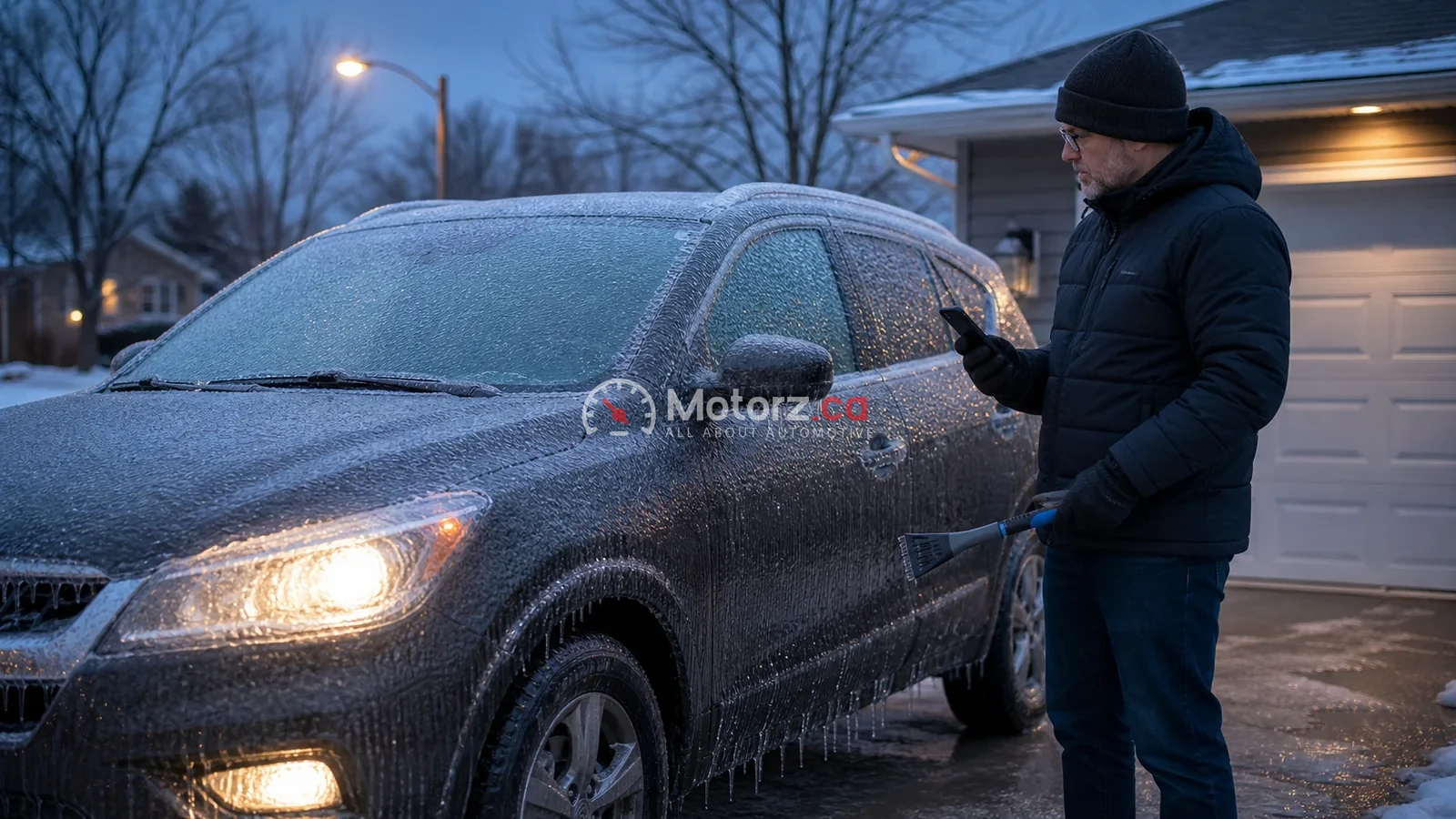
A “frozen car” can mean obstructed visibility, iced components or a vehicle that will not operate normally. The safest response begins with stopping—not improvising.
The direct answer
Do not drive until the vehicle offers clear visibility and operates normally. Clear snow and ice, follow the owner’s manual and use roadside assistance or a qualified technician when a door, control or system will not function as designed.
1. Do not drive with obstructed visibility
Transport Canada advises removing all snow from the hood, roof, windows and lights, and clearing frost and fog. A small scraped opening is not enough. Loose snow can also move across your view or affect other road users.
2. Do not assume driver-assistance systems work normally
Snow and ice can obstruct cameras, radar or other sensors. A warning-free dashboard does not guarantee that every feature can see the road. Clear only the areas identified by the manufacturer and remain fully responsible for driving.
3. Do not force a frozen component
If a door, window, wiper, handle or control will not move, forcing it can cause damage. Stop and use the vehicle-specific instructions or roadside assistance. This guide intentionally does not prescribe a thawing or repair method.
4. Do not keep trying when the vehicle will not start normally
A no-start condition or warning can have more than one cause. Repeated attempts are not a diagnosis. Check the manual, observe the warnings and contact roadside assistance or a qualified service provider instead of guessing at an electrical or mechanical repair.
5. Do not set off unprepared in severe conditions
Check weather and road information and delay travel when conditions are unsafe. Carry a proper snow brush, scraper, lock de-icer, charged phone and winter emergency kit. If stranded, Transport Canada advises keeping the tailpipe clear of snow.
When to stop and get help
Stop when visibility cannot be made clear, a required control remains frozen, warning lights persist, the vehicle does not start or operate normally, or you are unsure whether it is safe. For normal cold starts, see how long to warm up a car in winter.
Bottom line: clear the whole vehicle, respect system limits and use vehicle-specific guidance. A frozen component is a reason to pause, not to improvise a repair.