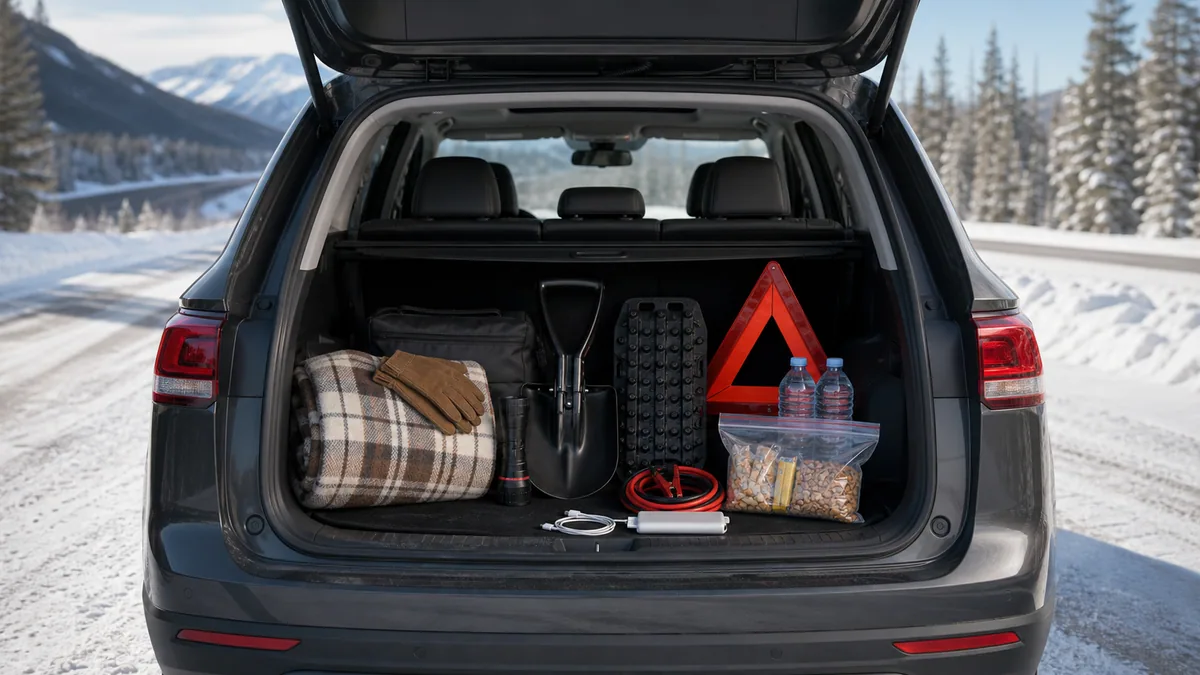
The Ultimate Car Winter Emergency Kit Checklist: Must-Have Gear to Survive a Cold-Weather Breakdown

The Ultimate Car Winter Emergency Kit Checklist: Must-Have Gear to Survive a Cold-Weather Breakdown

Comments
11 min read

Imagine driving down a quiet, snow-covered highway late at night. The wind is picking up, creating a blinding wall of white-out conditions. Suddenly, your vehicle hits a patch of black ice, slips off the asphalt, and slides deep into a snowbank. Your tires spin uselessly. You try to call for roadside assistance, but your smartphone screen flashes a low-battery warning and goes completely dead. Within minutes, the cabin temperature begins to drop, matching the freezing environment outside.

This is not a scene from a dramatic survival movie—it is a terrifying reality that thousands of drivers face every single winter.

When a severe winter storm hits, a routine commute can transform into a life-threatening survival situation in a matter of minutes. Whether you get stuck in a ditch, experience a sudden mechanical breakdown, or find yourself trapped in a massive multi-vehicle traffic standstill on an unplowed highway, your vehicle is your only shelter.

The single difference between an uncomfortable delay and a tragic medical emergency often comes down to a single thing: what you have packed in your trunk.

Building a comprehensive, reliable car winter emergency kit is one of the most critical steps you can take to protect yourself and your passengers during the freezing months. This ultimate guide will break down exactly what you need to keep in your vehicle, why these specific items are essential, and how to use them effectively to stay safe, warm, and alive until help arrives.

The Car Winter Emergency Kit: Why You Need a Dedicated Kit

Many modern drivers suffer from a dangerous sense of false security. We assume that because our vehicles are packed with advanced safety features like all-wheel drive, anti-lock brakes, and traction control, we are completely immune to the dangers of winter weather.

However, technology cannot protect your engine from a frozen fuel line, nor can it stop another vehicle from sliding into you on an icy overpass.

Furthermore, we rely heavily on mobile phones to pull us out of trouble. But cold weather drains phone batteries at an accelerated rate, and massive winter blizzards can easily knock out local cell towers or leave you stranded in a geographic dead zone with zero signal.

When emergency services are overwhelmed by hundreds of simultaneous accidents during a major snowstorm, tow trucks and emergency responders can take hours to reach your location. Your winter emergency kit is your personal insurance policy, designed to bridge that critical gap between the moment you become stranded and the moment professional help arrives.

Life-Saving Warmth and Shelter Essentials

When a car stops running in sub-zero weather, the metal chassis acts like a giant refrigerator, drawing heat away from the interior space. Hypothermia can set in far more quickly than most people realize. Your primary goal in a winter survival situation is to maintain your core body temperature.

High-Thermal Blankets or Mylar Space Blankets

Keep at least two or three heavy wool or thick fleece blankets in your trunk. Wool is an exceptional survival material because it retains its insulating properties even if it accidentally gets wet from melting snow.

In addition to traditional blankets, pack several compact Mylar space blankets. These lightweight, metallic sheets reflect up to ninety percent of your body heat back toward you and take up virtually no space in your glove compartment.

Spare Winter Clothing Layers

Never assume that the clothes you wear while driving are enough to keep you safe during a prolonged breakdown. If you have to step outside to shovel snow or change a tire, your clothes can quickly become soaked with sweat or slush, which will accelerate freezing once you step back inside. Pack a dedicated waterproof duffel bag containing:

  • Heavy-duty insulated winter gloves or mittens

  • Thermal beanies that cover your ears completely

  • Thick wool socks

  • A windproof, waterproof winter jacket

  • Sturdy, insulated winter boots

Disposable Chemical Hand and Foot Warmers

Pack a dozen air-activated chemical heat packs. When slipped inside your gloves or boots, these affordable packets generate comforting warmth for up to eight to ten hours through a safe, simple oxidation process. They possess a long shelf life, making them perfect to pack away and forget about until an emergency strikes.

Category 2: Tools for Visibility, Signaling, and Rescue

If your vehicle slides off the road during a heavy snowfall, your car can quickly become buried, making it nearly invisible to passing motorists, snowplows, and rescue crews. You need tools that allow you to see what you are doing and make yourself highly visible to the world.

A Reliable LED Flashlight and Extra Batteries

The winter months bring short days and long, dark nights. A high-quality, water-resistant LED flashlight is crucial for assessing engine damage, clearing snow away from your tailpipe, or walking around your vehicle safely. Avoid relying on your smartphone flashlight, as it drains your phone’s critical communication battery. Store the flashlight batteries backward inside the casing or keep them in an airtight bag next to the light to prevent slow power drainage in the cold weather.

High-Visibility Signaling Gear

To ensure rescue crews can spot your vehicle through a wall of falling snow, your emergency kit should contain multiple signaling tools:

  • Bright Orange Road Safety Triangles: Place these behind your vehicle to warn oncoming traffic.

  • LED Safety Flares: Unlike traditional chemical flares, electronic LED flares are reusable, highly visible from great distances, and do not pose a fire hazard around leaking automotive fluids.

  • A Highly Visible Safety Vest: Always slip a neon-orange or neon-yellow reflective vest over your jacket before exiting your vehicle on a busy highway.

A Compact, Collapsible Snow Shovel

If your car gets stuck in a snowbank or a deep drift, you will need to dig your tires out to stand any chance of freeing the vehicle. A sturdy, metal-bladed collapsible shovel takes up minimal space in your trunk but is infinitely more effective than trying to clear heavy, packed snow with your hands or a plastic ice scraper.

Traction and Vehicle Recovery Tools

Getting stuck does not always require a tow truck. Often, if you have the right materials on hand, you can provide your tires with just enough physical grip to break free from an icy rut or a slick snow pocket.

The Step-by-Step Vehicle Self-Rescue Sequence

If your vehicle becomes stuck in ice or deep snow, follow this precise sequence to attempt a safe extraction before calling for emergency roadside assistance:

Shovel snow away from the tires:

Use your collapsible snow shovel to clear away heavy snow from directly in front of and behind all four tires. Clear a path at least a few feet long to give the vehicle room to move.

Clear the exhaust tailpipe:

Inspect the rear of the vehicle and ensure the exhaust pipe is completely free of snow, ice, or mud. If the tailpipe is blocked, deadly carbon monoxide gas can back up into the vehicle cabin while the engine idles.

Apply traction materials:

Spread a generous amount of coarse sand, non-clumping clay cat litter, or place dedicated plastic traction mats directly underneath and in front of your drive tires. This provides the rubber tread with something to bite into.

Gently rock the vehicle free:

Straighten your steering wheel, switch your vehicle into a low gear, and apply light, steady pressure to the gas pedal. Do not let your tires spin wildly, as this creates friction that melts the snow, creating a smooth sheet of ice that buries you deeper. Gently rock the vehicle forward and backward until you gain momentum to break free.

Safety Warning: If your vehicle does not break free after a few carefully controlled attempts, stop trying. Overworking your transmission can cause expensive damage, and overexerting yourself outside in the freezing wind can quickly lead to exhaustion and hypothermia. Conserve your energy and prepare to wait for a professional tow.

Sustenance, Hydration, and First Aid

Waiting out a severe winter storm can take anywhere from a few hours to an entire day. During this time, your body expends an enormous amount of calories simply trying to generate heat and stay warm. You must keep your energy levels up.

 High-Calorie, Non-Perishable Food Items

Pack a supply of food that does not require cooking and will not turn into a rock-hard, unchewable brick when frozen. Excellent options include:

  • Energy bars and protein bars

  • Bags of raw nuts and dried fruits

  • Beef jerky or turkey jerky

  • Crackers and peanut butter packs

Avoid canned foods that contain high water content, as the liquid inside will freeze, expand, and rupture the metal cans, creating a messy disaster in your emergency kit.

Emergency Water and Insulation Techniques

Hydration is just as critical in the winter as it is in the summer. Dehydration actually accelerates the onset of hypothermia by reducing your body’s ability to circulate blood efficiently.

However, storing water in a car during the winter is tricky because standard plastic water bottles will freeze and crack. To solve this, fill a heavy-duty stainless steel thermal water bottle or thermos with clean water, leaving a small amount of empty space at the top to allow for natural expansion if it does freeze. Alternatively, wrap standard plastic bottles tightly in bubble wrap or store them inside an insulated cooler within your trunk to delay the freezing process.

A Fully Stocked Comprehensive First Aid Kit

A baseline automotive first aid kit should always remain in your vehicle, but it becomes especially vital during a winter mishap where emergency medical technicians might experience severe delays. Ensure your kit includes:

  • Sterile gauze pads and adhesive bandages of various sizes

  • Antiseptic wipes and antibiotic ointments

  • Pain relievers and anti-inflammatory medications

  • A pair of medical scissors and tweezers

  • A supply of any critical daily prescription medications you or your family members require

Communication and Power Backup

A dead phone is one of the most dangerous vulnerabilities in a modern emergency scenario. Keeping your lines of communication open can cut your rescue time down from days to hours.

A Heavy-Duty Portable Power Bank

Pack a dedicated, high-capacity portable USB power bank to ensure you can keep your phone charged. Choose a power bank that utilizes a rugged, weather-resistant casing.

Because extreme cold degrades battery capacity rapidly, store this power bank inside a thick wool sock or a small insulated pouch within your vehicle kit. Make a recurring calendar reminder to bring the power bank indoors every few months to top up its charge.

 A Multi-Use Crank or Solar Radio

If your car battery dies, you lose access to your vehicle’s built-in radio, cutting you off from critical local emergency broadcasts, weather alerts, and evacuation orders. A emergency hand-crank radio resolves this issue. Many of these survival devices feature integrated bright LED flashlights and built-in USB ports that allow you to charge your mobile phone using manual hand-crank energy.

Smart Rules for Surviving a Stranded Vehicle Situation

Having the ultimate winter kit is only half the battle; you also need to know the smart rules of winter survival to ensure you make it through the ordeal safely.

Stay With Your Vehicle

Unless you can see a warm shelter or a service station within a short, obvious walking distance, do not leave your vehicle to walk for help during a major storm. Blizzards distort distances and cause severe disorientation.

It is incredibly easy to lose your footing, become lost in a snowdrift, and succumb to the elements. Your vehicle provides a highly visible, windproof shield that rescue teams can locate much faster than a walking pedestrian.

Manage Your Engine and Fuel Economically

If your vehicle still runs and you have an ample supply of fuel, you can run the engine and heater to warm up the cabin. However, you must be highly strategic to conserve fuel:

  • Only run the engine for roughly ten to fifteen minutes out of every hour.

  • Whenever the engine is running, open a single window slightly down the track (about a quarter of an inch) to allow fresh air to circulate and prevent stagnant air buildup.

  • Double-check that the tailpipe remains completely clear of snow every single time before you turn the key.

Keep Moving Inside the Cabin

Do not sit completely still and fall into a deep sleep if you are alone. Keep your blood flowing and generate natural body heat by clapping your hands, tapping your feet, and moving your arms and legs rhythmically. Wrap yourself closely in your blankets and huddle with other passengers to share ambient body heat.

Prepare Today for a Safer Tomorrow

The best time to prepare for a winter emergency is during a calm, warm autumn afternoon. Waiting until the weather forecast predicts a major blizzard means facing empty store shelves and hectic, chaotic crowds.

Take an hour out of your schedule this weekend to gather these survival items, pack them neatly into a durable plastic storage bin, and secure that bin firmly in your trunk. Hopefully, you will drive through the entire winter season without ever needing to open that box. But if things go wrong, you will drive with the absolute peace of mind that you possess the exact tools required to keep yourself and your loved ones safe, warm, and secure.

Share this article

About Author

motorz.ca

Leave a Reply

Your email address will not be published. Required fields are marked *

Most Relevent