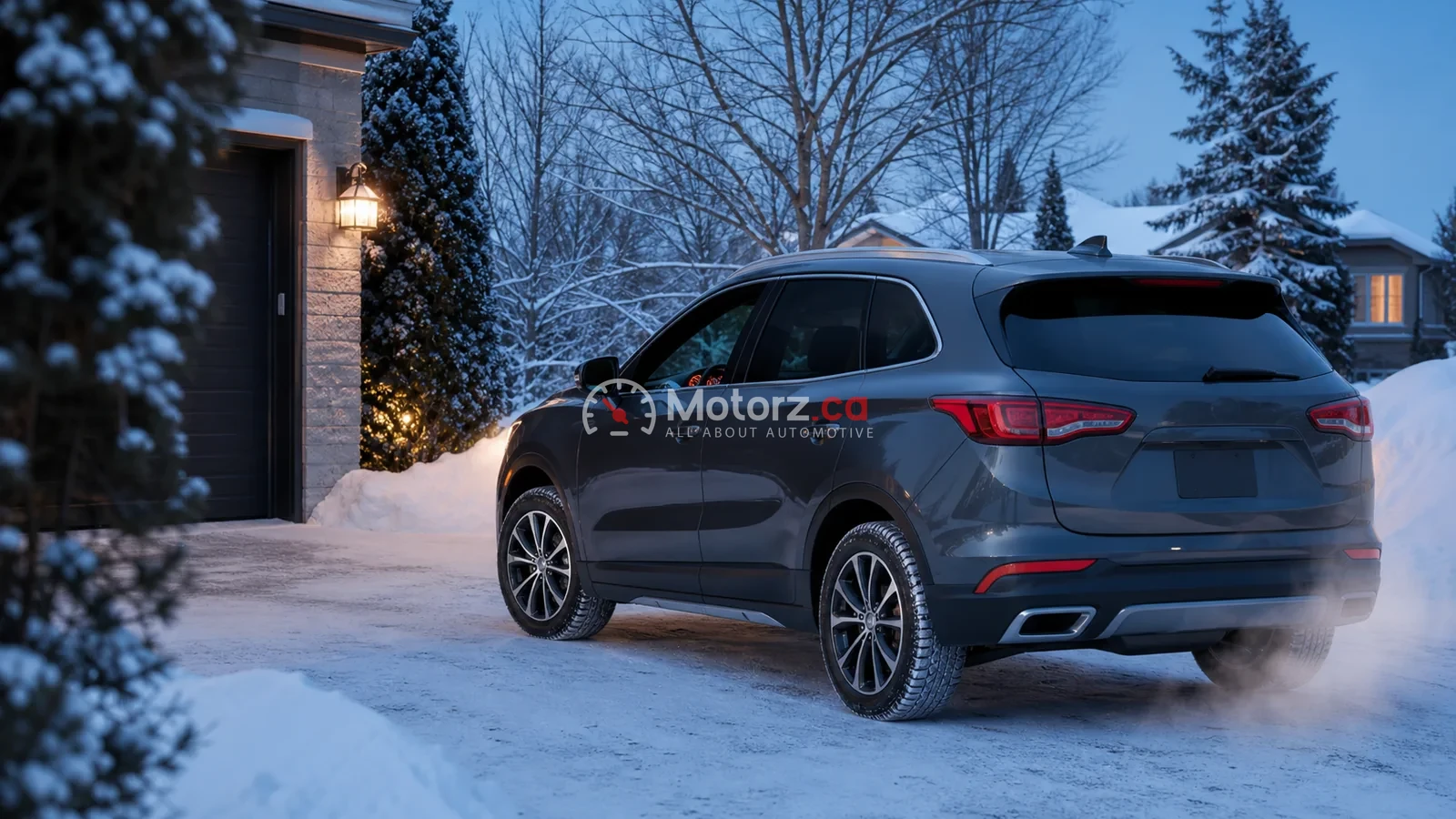
For most modern passenger vehicles, a brief idle is generally enough before moderate driving—but do not move until visibility is safe.
The direct answer
Natural Resources Canada says that, in most cases, no more than 60 seconds of idling is needed after a cold winter start. Gentle or moderate driving then warms the engine, drivetrain and cabin efficiently. Extreme cold can require more time, and the owner’s manual always governs a specific vehicle.
Warm-up time and visibility time are different
A short engine warm-up does not mean the car is ready to move. Clear snow and ice from the roof, hood, windows, mirrors and lights. Use the defroster until frost and fog no longer obstruct the driver’s view. Transport Canada emphasizes a clean vehicle and clear visibility before travel.
A practical cold-start sequence
- Follow the owner’s manual and start the vehicle normally.
- Check warning lights and confirm the vehicle is operating normally.
- Clear the entire vehicle and establish safe visibility.
- After the brief idle appropriate to the conditions, drive moderately and avoid hard acceleration until the vehicle warms.
This is general awareness, not a substitute for model-specific instructions.
Why driving warms more than the engine
While a parked engine may warm at idle, the transmission, wheel bearings, steering components, suspension and tires warm as the vehicle moves. Moderate driving brings more of the vehicle toward operating temperature while avoiding unnecessary fuel use.
When the answer may be different
- Extreme cold: NRCan’s winter guidance notes that two to three minutes may be appropriate in an extreme-cold start.
- Diesel or older vehicles: follow the manufacturer’s cold-start procedure.
- Warning lights or rough operation: stop and consult the manual or a qualified service provider.
- EVs and plug-ins: cabin and battery preconditioning are different from warming an engine; use the official instructions.
Avoid prolonged unnecessary idling
Long idling uses fuel without moving the vehicle. For more ways to reduce consumption, see our fuel-efficient driving guide. Prepare for cold travel with a Canadian winter emergency kit.
Bottom line: use a brief idle for most modern vehicles, wait for safe visibility, then drive moderately. Make the manual—not a universal internet timer—the final authority.
Cold-weather starting needs also vary by parking and power access. Winnipeg drivers can use our block-heater planning guide to separate weather-based guidance from model-specific instructions.