
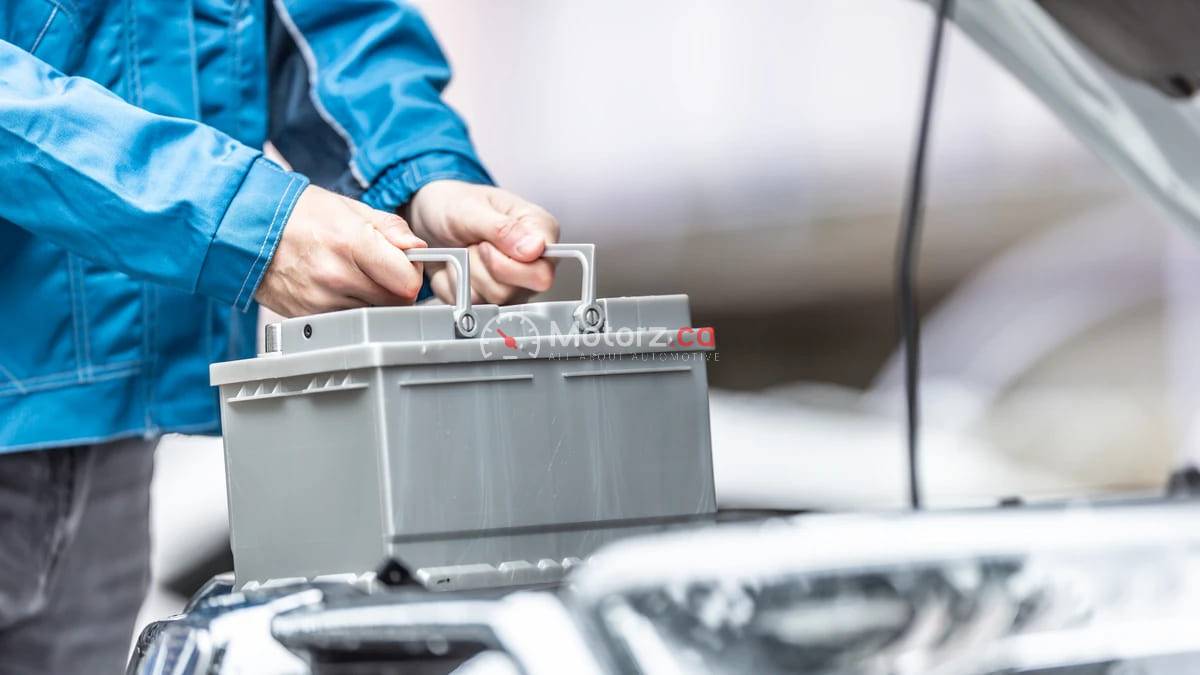

We have all been there. You turn the key in your New Battery for an Older Vehicle, and instead of the reassuring roar of the engine, you get a sluggish groan or a series of rapid-fire clicks. Your first thought is likely the one your local auto parts store wants you to have: “I guess I need to buy a new battery.”
But if you are driving an older vehicle, dropping 150 to 200 units of currency on a brand-new lead-acid battery might not be the most economical choice. Whether you are trying to squeeze another year out of a “beater,” living on a budget, or simply trying to be more environmentally conscious, buying new isn’t your only option.
In this guide, we will explore three effective alternatives to buying a brand-new battery. We will look at how to revive what you already have, where to find reliable second-hand power, and how to use modern technology to bypass the problem entirely.
Why Older Vehicles Don’t Always Need New Batteries
Older cars are often more forgiving than modern, sensor-heavy vehicles. While a brand-new luxury car might throw a dozen error codes if the voltage drops slightly, an older truck or sedan can often thrive on a battery that is less than perfect.
Furthermore, the “failure” of a battery in an older car is often caused by external factors like terminal corrosion or long periods of sitting, rather than the internal death of the battery cells. Before you head to the shop, consider these three paths.
Battery Reconditioning: New Battery for an Older Vehicle
The most cost-effective alternative to buying a new battery is reconditioning the one you already have. Over time, lead-acid batteries suffer from a process called sulfation. This occurs when sulfate crystals build up on the battery plates, preventing the chemical reaction that stores electricity.
The Desulfation Method
Modern technology has given us “smart chargers” with desulfation modes. These devices send high-frequency electronic pulses through the battery to break down those lead sulfate crystals.
How it works: You connect a smart charger to your battery and select the “Repair” or “Recondition” mode. This process can take anywhere from 24 to 48 hours.
The Benefit: It can often restore a “dead” battery to 70 percent or 80 percent of its original capacity for a fraction of the cost of a new one.
The Chemical Refill (For Accessible Cells)
If your older vehicle has a “serviceable” battery (one with removable caps on top), you might be able to revive it using distilled water or a specialized battery additive.
Check Levels: If the liquid inside (the electrolyte) is low, the plates are exposed to air and stop working.
Top Off: Adding distilled water can sometimes restore the chemical balance.
The Epsom Salt Trick: Some enthusiasts use a mixture of Epsom salt and distilled water to dissolve internal buildup. While this is a “last resort” DIY tactic, many owners of older vehicles swear by it for extending battery life by six months to a year.
Purchasing a Refurbished or “Blemished” Battery
If your current battery is truly cracked or has a shorted cell, reconditioning won’t help. However, you still don’t have to pay full retail price for a new one.
Refurbished Units
Many local battery shops and specialized warehouses sell refurbished batteries. These are units that were returned, professionally desulfated, tested for load capacity, and cleaned.
The Savings: You can often find these for 40 to 60 units of currency, which is less than half the price of a new one.
The Warranty: Reputable shops will still give you a 3-month to 6-month replacement warranty on refurbished stock.
“Blem” (Blemished) Batteries
A “Blem” is a brand-new battery that sustained a cosmetic scratch or a dent in the plastic casing during shipping. Big-box retailers cannot sell these at full price, so they are often sent back to distributors and sold at a massive discount.
Why they are great: They are technically new with zero cycles, but because of a tiny scrape on the corner, you get a “used” price.
Junkyard Gems
For the truly budget-conscious, local pick-and-pull yards often have stacks of batteries from vehicles that were totaled in accidents.
Pro Tip: Look for a battery with a recent “Date Code” sticker. If a car was in a wreck three months ago and had a battery installed last year, that battery is likely still in excellent health. Bring a portable multimeter to check the resting voltage before you buy.
Investing in a Portable Lithium Jump Starter
Sometimes the problem isn’t that the battery is “dead,” but that it is “weak.” In an older vehicle that you only drive occasionally, the battery may naturally drain below the point where it can crank the engine.
Instead of buying a new battery that will just drain again, many owners are now opting for a Portable Lithium-Ion Jump Starter.
A Modern Solution for Older Cars
These devices are roughly the size of a large smartphone but hold enough power to jump-start a V8 engine multiple times.
The Strategy: Keep the jump starter in your glovebox. If your old battery fails to start the car on a cold morning, you simply clip on the pack, start the car, and let the alternator take over.
The Value: A high-quality jump starter costs about the same as a cheap new battery but can be used for years, can charge your phone in an emergency, and can jump-start any vehicle you own.
Solar Maintenance
If your older vehicle sits outside, a small solar trickle charger placed on the dashboard can keep a weak battery topped off. This prevents the deep discharge that usually kills older batteries, effectively delaying a new purchase indefinitely.
Important Safety Warning
When working with older batteries, safety is paramount.
Wear Protection: Lead-acid batteries contain sulfuric acid. Wear gloves and eye protection.
Ventilation: Reconditioning or charging batteries can release hydrogen gas. Always work in a well-ventilated area.
Corrosion: Older cars often have “fuzzy” white or blue buildup on the terminals. This is lead sulfate. Before replacing a battery, clean the terminals with a mixture of baking soda and water. Often, the battery is fine—it just couldn’t “talk” to the car through the corrosion.
Which Option is Right for You?
You don’t always need to follow the “replace-first” mentality of modern consumerism. If your older vehicle’s battery is struggling:
Try reconditioning if you have a spare day and a smart charger.
Look for a refurbished or blem battery if you need a reliable daily driver on a budget.
Buy a portable jump starter if you want a long-term tool that solves the “dead battery” problem for any car you own.
By choosing one of these alternatives, you save money, reduce lead waste in the environment, and get a little more life out of your trusted older vehicle.