


An Interview with a Local Calgary Race Car Driver
The roar of an engine is a symphony to some, a cacophony to others. In Calgary, Alberta, that roar often leads to one name: Alex “The Stampede” Smith. A fierce competitor, a hometown hero, and a true ambassador for the spirit of Alberta motorsports, Alex has made the journey from a local karting track to the world stage of professional closed-wheel racing. His story is one of relentless passion, strategic precision, and the sheer grit required to succeed in one of the most demanding sports on the planet.
For those of us who grew up near the old Race Car Driver Speedway or now spend our weekends at Rocky Mountain Motorsports (RMM), Alex represents the dream. The dream that a kid from the foothills can take on the best, and win. We sat down with Alex at his Calgary workshop—a blend of high-tech engineering and grease-stained passion—to talk about his incredible journey, the mental game of speed, and what it truly takes to be a Calgary race car driver.
This isn’t just an interview; it’s a deep dive into the mind of a champion, a 2000-word exploration of speed, sacrifice, and the soul of Race Car Driver. Prepare to go behind the visor.
The Genesis of a Champion: From Calgary Karting to the Grid
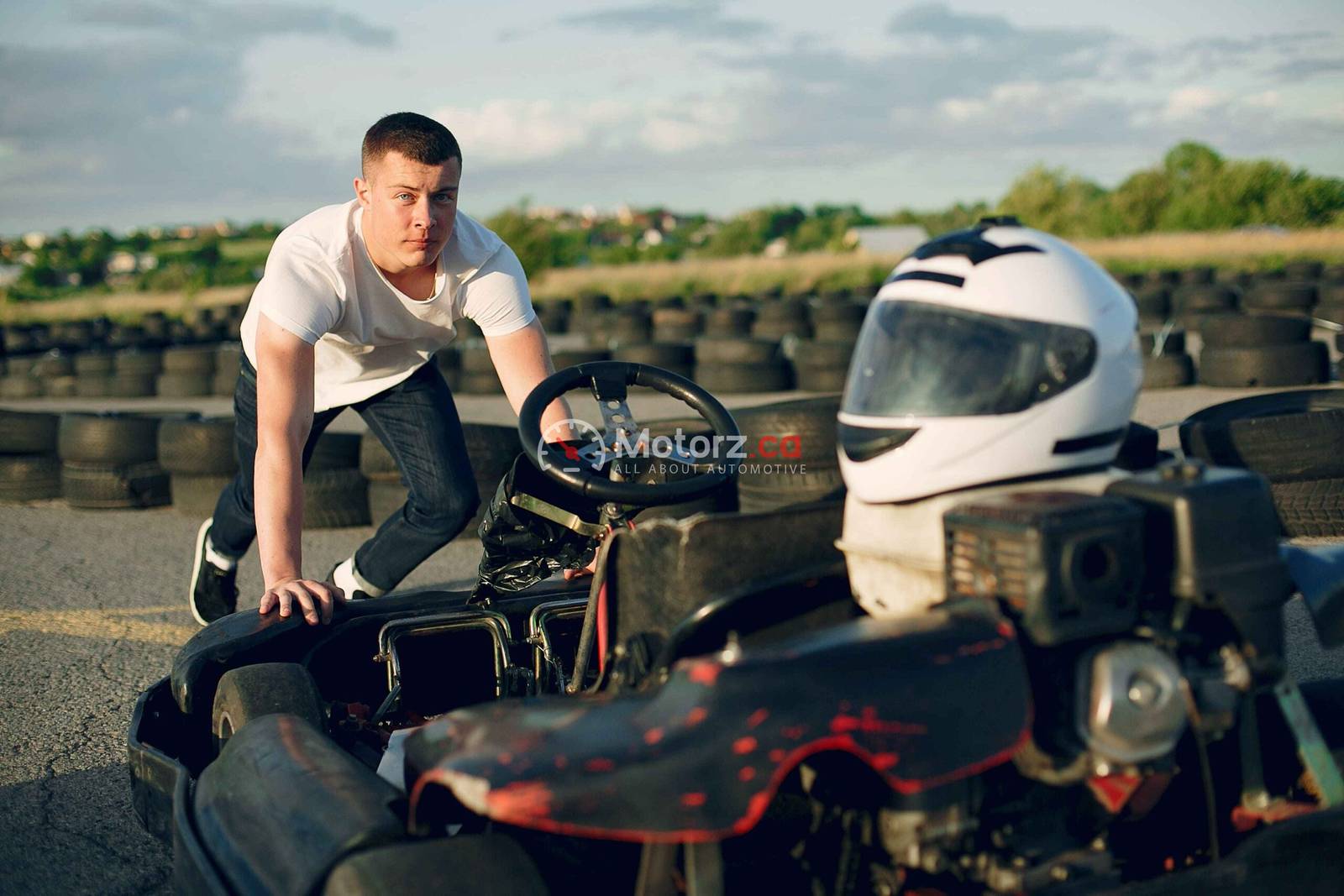
Every professional driver has an origin story, and for Alex Smith, that story began not on the grand asphalt of an international circuit, but on the small, twisty tracks near his home in Calgary. It was the smell of two-stroke oil and burnt rubber that first captivated him.
“I think I was six when my dad first put me in a go-kart,” Alex recalls, his eyes lighting up. “It wasn’t even a proper racing kart, just a little yard kart. But that feeling, that immediate sense of control and speed, was addictive. From that moment, every single day was about getting back into that seat.”
The Crucial Years: Learning the Craft in Alberta Racing
The transition from a hobbyist to a serious Race Car Driver is steep, especially in a region where top-tier competition requires significant travel. Alex spent his formative years competing in local and regional Alberta racing series, honing his skills against a surprisingly tough field of talent.
Q: You started quite young. What were the most critical lessons you learned on the local tracks that still apply today?
Alex: Patience. Pure and simple. When you’re young, you want to be the fastest in every corner, every lap. But local Race Car Driver, especially the smaller ones, teach you precision. They teach you to respect the car, the grip, and the margins. I learned more about car control on a slick, cold Calgary morning than I did on any perfectly prepared international circuit.
Also, the community. The Calgary motorsports community is tight-knit. We were all sharing tools, advice, and sometimes even parts in the paddock. That foundation of respect and sportsmanship is something I carry with me to the biggest races globally.
Q: Many local racers dream of making it professional. What was the moment you realized this was more than just a hobby—that it was your career path?
Alex: It was after a particularly brutal season when I was about 17. We had run out of sponsorship money, the equipment was breaking, and I was losing races I felt I should have won. I had to face the reality of quitting. But instead of feeling relieved, I felt a physical pain, a deep sense of loss. That’s when I knew: quitting wasn’t an option. I took a year off, worked three jobs, and focused solely on fitness and simulator training. The sacrifice solidified the commitment. When I came back, I was mentally unbreakable. That year off was the turning point from ‘Race Car Driver’ to ‘professional race car driver’.
The Architecture of Speed: Strategy, Physics, and the Mental Game
Motorsports is often viewed as a purely physical test, but as any seasoned race car driver will tell you, it’s a game of millimeters and milliseconds, won or lost in the mind. Alex has a reputation for his meticulous preparation and his uncanny ability to maintain composure under pressure—a trait he attributes to his early training.
Preparing the Machine: The Science of the Race Car
A racing machine is an extension of the Race Car Driver. Alex’s success is intertwined with the team of engineers and mechanics who translate his feedback into physical adjustments on the car.
Q: How much of your success is due to your driving talent versus the engineering and setup of the car?
Alex: Honestly? It’s a perfect 50/50 split. The best driver in the world can’t win in a badly prepared car, and the perfect car won’t save a driver who makes poor decisions. My job is to be the ultimate sensor. I need to feel everything the Race Car Driver is doing—the slight push of understeer in turn three, the subtle vibration from a flat spot—and communicate that in a language my engineer can translate into a tenth of a second of improvement.
Can you share an example of a strategic setup decision that won you a race?
Alex: Absolutely. It was a race in a European GT series. Forecast was dry, but we knew the track surface was ‘green’—meaning low grip—after heavy rain overnight. Most teams opted for a standard aggressive setup. My Race Car Driver and I chose to soften the suspension slightly and run a higher tire pressure than anyone else, sacrificing ultimate pace in the first few laps for better tire wear and consistency in the long run. We lost a couple of positions early on, but in the final 15 minutes, as the tires on the other cars started to degrade, we were running laps 0.8 seconds faster than the leader. We took the lead with five laps to go. It was a classic example of winning the race in the preparation, not just in the driving.
The Driver’s Mind: Harnessing Focus and Pressure
The cockpit of a race car is a violent, sensory-overload environment where heart rates can peak above 170 BPM for hours. Yet, the Race Car Driver must be an island of calm.
Q: How do you handle the immense pressure during a tight battle or a last-lap showdown?
Alex: It’s all about routine and mental discipline. Before I even get into the car, I have a 15-minute visualization routine. I walk through the entire race, lap by lap, hazard by hazard. When the pressure is highest, I don’t see the crowd, I don’t hear the engine, and I don’t think about the championship. I focus on my breath and the next three feet of track.
The moment you start thinking about the result is the moment you lose focus on the process. In a tight battle, I treat the other Race Car Driver as an obstacle, not an enemy. It’s a pure physics problem: where is the grip, where is the momentum, where is the most efficient line? That detachment keeps me calm and logical.
The Calgary Connection
Despite his international racing schedule, Alex remains deeply connected to his Calgary roots. He is a passionate advocate for developing the next generation of Canadian racing talent.
Training and Technology: The Off-Season in Alberta
When the global season ends, Alex returns to Alberta to train, often using the stunning, challenging terrain around Calgary for his Race Car Driver and mental conditioning.
Q: What is your favorite part about training in Calgary and Alberta?
Alex: The variety and the altitude. For physical training, nothing beats a run in the Rockies. The elevation and the rugged trails build a phenomenal level of endurance, which is crucial for those two-hour endurance races. I also spend a lot of time on my professional-grade simulator here in the workshop. It allows me to practice a thousand scenarios I couldn’t safely do on a real track, keeping my reaction times sharp during the off-Race Car Driver. I can run the Le Mans circuit in the morning and a simulated lap of a local Alberta track like Rocky Mountain Motorsports in the afternoon.
Q: You often talk about supporting local talent. What advice do you have for young Calgarians looking to become a professional race car driver?
Alex: Three things: First, start local. Get into karting. It is the most pure form of racing and teaches you all the fundamental skills—car control, race craft, and how to setup a vehicle. Second, be your own brand manager. Racing is expensive. You need to learn how to present yourself, how to pitch a sponsorship, and how to deliver value for your partners. It’s a business. Third, never stop learning. Watch data, watch other drivers, and take Race Car Driver. The day you think you know everything is the day your career stalls.
Key Takeaways for Aspiring Calgary Racers
Master the Fundamentals: Karting is essential for genuine race car craft.
Embrace the Business: Sponsorship acquisition is as important as lap times.
Prioritize Fitness: Endurance is non-negotiable for high-level motorsports.
Network Locally: The Calgary motorsports community is a great source of support and expertise.
Milestones, Momentum, and the Road Ahead
Alex has accumulated an impressive tally of podium finishes and race wins throughout his career. He sees these not as endings, but as fuel for the next challenge.
Career Highlights and Biggest Challenges
Q: What is the single most defining moment of your career so far?
Alex: It has to be my first major international win, a 24-hour endurance race. We were the underdogs. Everything went wrong—rain, mechanical issues, a few crashes for other cars. We fought for 24 hours straight. The moment I crossed the finish line, exhausted and soaked, I realized it wasn’t the speed that won it, but the teamwork, the resilience, and the sheer force of will. That trophy represents everything I believe in about Race Car Driver.
Q: Conversely, what is the biggest challenge facing a professional race car driver from Canada today?
Alex: The cost and the geographical isolation. Getting from Calgary to the European or Asian circuits where the biggest opportunities lie is a massive logistical and financial hurdle. It means we have to be better than everyone else just to get the same level of exposure. Sponsorship is the lifeblood of this sport, and securing it from a Canadian base for an international schedule is a constant, year-round battle. It’s a challenge, but it also breeds a level of determination you don’t find everywhere.
A Glimpse into the Future of Racing
Alex is optimistic about the future of Alberta racing, especially with the growth of new, modern tracks. He believes that events like the Calgary Stampede show the city’s hunger for action and spectacle, a hunger that can be translated into motorsports fandom.
Electric Racing: Alex is fascinated by the emerging electric series. “The technology is moving so fast. It’s an entirely new discipline of driving—it’s less about gear shifts and more about energy management. It’s the future, and I want to be a part of it.”
Virtual Racing: The rise of sim racing (virtual motorsports) has bridged the gap between fans and professionals. Alex uses it for training and as a platform for fan engagement, recognizing it as a critical tool for the Calgary racing scene.
Local Track Development: “We need more accessible tracks. Venues like RMM are incredible, world-class facilities, and their growth is vital for local race car development. We need to foster that grassroots culture.”