
For decades, the Honda vs. Toyota Reliability world has been locked in a seemingly endless debate: Honda versus Toyota. Both Japanese giants are global benchmarks for quality, fuel efficiency, and, most importantly, reliability. But the stakes are uniquely high when the debate comes to a place like Winnipeg, Manitoba. On the Prairies, a vehicle isn’t just a convenience; it’s a critical piece of survival equipment.
The extreme conditions of a Honda vs. Toyota Reliability winter—temperatures that plummet to minus forty, roads covered in ice and corrosive road salt, and long stretches of highway driving—don’t just test a car’s engineering; they test its fundamental durability. For Winnipeg drivers, choosing a vehicle is a long-term investment decision, and long-term durability is the single most important factor. Will your sedan start reliably at -35°C? Will its suspension hold up against pothole damage from the seasonal freeze-thaw cycle? Will it retain its value when you are ready to sell it?
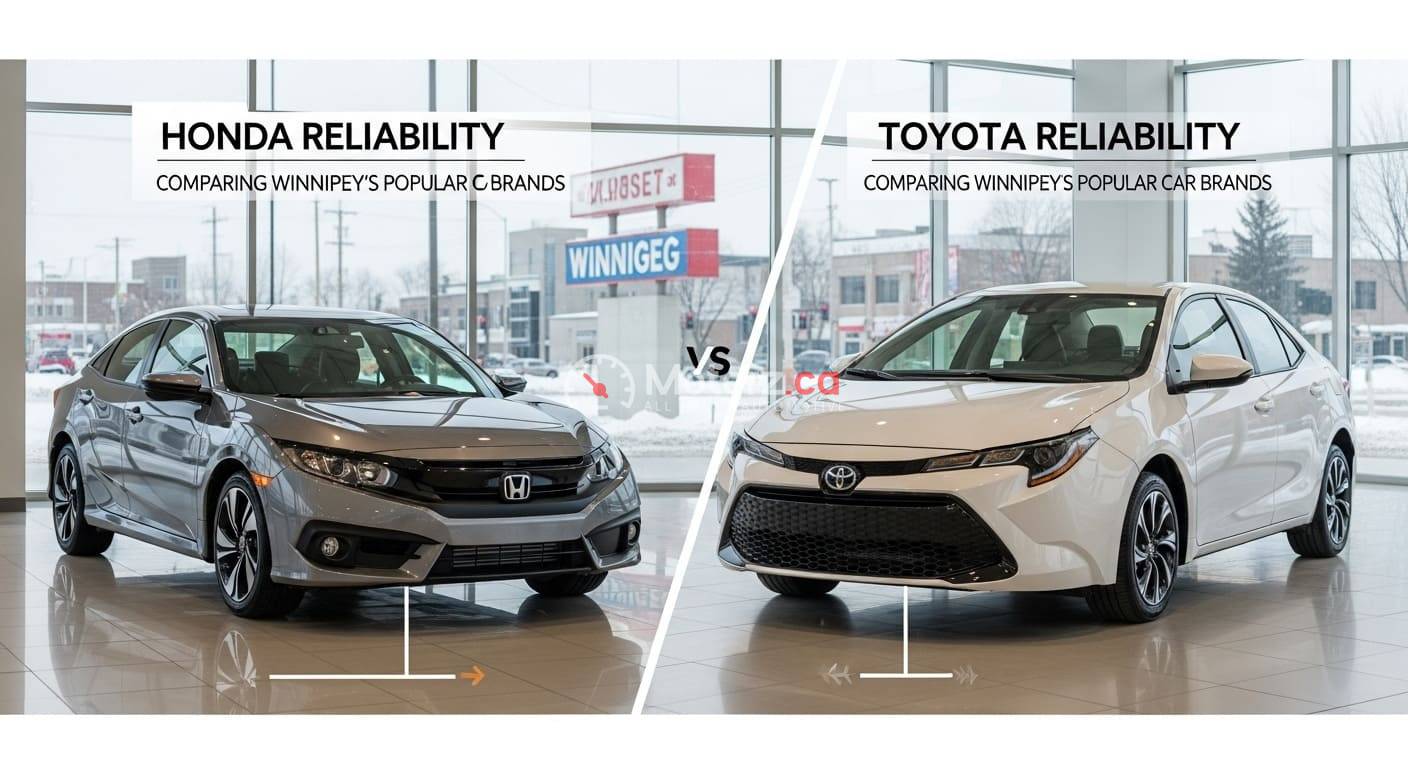
This comprehensive guide is dedicated to answering these Honda vs. Toyota Reliability by pitting the titans of reliability, Honda and Toyota, against each other specifically for the Winnipeg and Manitoba market. We’ll delve into the hard data on reliability scores, long-term maintenance costs, resale value, and the specific winter driving features that matter most on the Prairies. Our goal is to provide a clear, easy-to-read, 2000-word breakdown to help you navigate this pivotal purchase.
A Head-to-Head Honda vs. Toyota Reliability
When discussing Prairie reliability, we must look beyond initial Honda vs. Toyota Reliability and focus on the decades-long performance under stress. Both Honda and Toyota consistently dominate reliability rankings, but a slight edge often emerges, which can be critical for Manitoba reliability.
Industry Reliability Rankings: Toyota’s Slight Edge
According to recent Consumer Reports and J.D. Power surveys, the difference between the two brands is negligible, yet a pattern often emerges: Toyota typically holds a slight lead over Honda in overall brand dependability.
In some recent Consumer Reports rankings, Honda vs. Toyota Reliability was often placed higher (e.g., 3rd most reliable) with Honda following closely behind (e.g., 4th or 5th). This pattern holds true for many of their most popular models in Winnipeg:
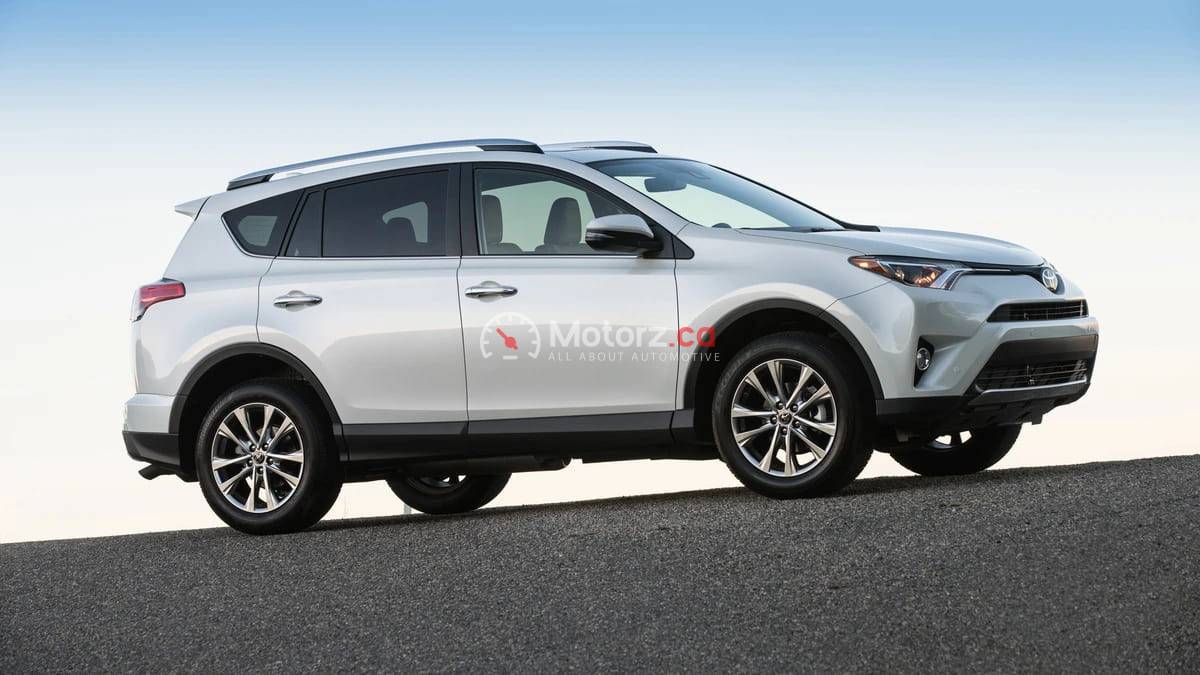
The Toyota Corolla and Toyota RAV4 are frequently cited as rock-solid performers, predicted to achieve above-average reliability due to their conservative, proven engineering and well-tuned powertrains. The focus is on longevity over cutting-edge Honda vs. Toyota Reliability.
The Honda Civic and Honda CR-V, while also highly reliable, sometimes rank just below their Toyota rivals. This is often attributed to Honda’s slightly more aggressive push for technology and performance—features that can sometimes introduce minor, more frequent issues, though typically nothing major.
The takeaway for a Winnipeg driver Honda vs. Toyota Reliability maximum peace of mind is that while both are outstanding, Toyota’s decades-long emphasis on “quality, durability, and longevity” through simple, robust engineering often gives it a fractional, but measurable, advantage in long-term reliability.
The Cold Start Challenge: Engines and Powertrains
Manitoba drivers know that the true test of reliability is the cold start. An engine that doesn’t turn over at -40°C is an expensive Honda vs. Toyota Reliability. Both brands’ standard four-cylinder engines are exceptionally robust, but their respective philosophies on engine design offer a subtle difference:
Toyota’s Powertrains: Often relying on naturally aspirated engines (engines without turbochargers), Toyota’s designs are fundamentally simpler. Fewer complex parts mean fewer points of failure in the severe cold. This simplicity is a major asset for Prairie cold starts.
Honda’s Powertrains: Honda has increasingly adopted smaller, turbocharged engines (like the 1.5L in the Civic and CR-V) for better fuel efficiency and performance. While modern turbos are reliable, they add complexity and require more careful maintenance, particularly with oil and fluid quality in extreme temperatures.
For drivers prioritizing absolute, guaranteed function in the most extreme Prairie winters, the proven, often non-turbocharged Toyota engine architecture provides a traditional margin of assurance.
Total Cost of Ownership: Maintenance and Longevity
Reliability is about more than just avoiding a Honda vs. Toyota Reliability; it’s about the total cost of keeping the vehicle running over a decade. In this area, the competition in the Winnipeg market is incredibly tight.
Routine Maintenance Costs: Marginal Differences
When comparing the average annual maintenance and repair costs, the difference between Honda and Toyota is marginal, and the data varies slightly depending on the source.
Some analyses suggest Honda drivers have a slightly lower annual maintenance cost on average (e.g., around $428 per year) compared to Toyota (e.g., around $441 per year). This difference is negligible and can often be attributed to specific model comparisons.
Other studies, looking at decade-long Honda vs. Toyota Reliability, suggest Toyota might have lower total costs (e.g., $4,900 over a decade for Toyota vs. $5,850 for Honda). This is often due to Toyota’s longer service intervals on certain fluids and parts, and potentially simpler repair procedures when issues do arise.
The most important factor for Honda vs. Toyota Reliability car repair is the widespread availability of parts. Because both brands are so popular in Manitoba, aftermarket parts are readily available, and a vast network of both specialized and general mechanics are familiar with their systems, which keeps labour costs competitive for both.
The Corrosion Battle: Rust Resistance in Manitoba
This is perhaps the most localized and critical test of long-term durability on the Prairies. Manitoba roads, particularly in and around Winnipeg, are heavily salted during the winter months. This is highly corrosive, and rust resistance becomes a key determinant of a vehicle’s lifespan and its resale value in Manitoba.
While specific data comparing the two brands’ metallurgy is proprietary, real-world experience and general engineering principles offer some insight:
Modern Era: Both manufacturers have vastly improved their anti-corrosion treatments, using better body coatings, rust-resistant materials, and drainage designs. A well-maintained, modern (post-2015) Honda or Toyota should resist major structural rust for many Honda vs. Toyota Reliability.
Best Practice: The choice of brand is less important than the driver’s diligence. Winnipeg drivers must routinely wash their vehicles in the winter, focusing on the undercarriage, to flush away the salt. Investing in yearly rust-proofing (oil-based or waxy treatments) is the single best way to protect either brand.
In this context, neither brand has a significant, widely acknowledged weakness compared to the other. Both the Honda Civic and the Toyota Corolla will last if properly cared for in the face of the intense chemical warfare waged by road salt on the Prairies.
Driving Experience and Winter Performance Features
Reliability isn’t just about avoiding the shop; it’s about confidently navigating a whiteout or an icy commute. This is where the specific models and their winter driving features come into play.
All-Wheel Drive (AWD) Availability
For Prairie driving conditions—especially on Honda vs. Toyota Reliability or deep snow—an efficient All-Wheel Drive (AWD) system can be a game-changer for traction and control. This comparison heavily favours their SUV lineups:
Toyota has historically offered more AWD options across its lineup, including models like the Toyota Highlander, which is a trusted favourite among Canadian drivers. Honda’s Real Time AWD in the CR-V is excellent, but for drivers prioritizing the absolute best grip in deep Manitoba snow, the slightly more robust nature of Toyota’s systems often gives it a nod in the SUV segment.
Performance vs. Comfort
The core driving characteristics reflect the brands’ philosophies:
Honda: Typically offers a more sporty driving experience. Models like the Civic are known for responsive handling, engaging steering, and a sense of road connection. For the driver who enjoys a lively feel, even during a commute, Honda is often the pick.
Toyota: Emphasizes a more comfortable, Honda vs. Toyota Reliability, and quiet ride. Models like the Corolla and Camry are designed for easy daily commuting and long, stable highway stretches—a huge benefit for long drives across the Prairies.
In the context of the Prairies, where comfort and stability over long, often monotonous stretches of highway are paramount, Toyota’s focus on a composed ride might appeal more to the average Winnipeg driver.
Long-Term Value: Resale and Depreciation in Manitoba
When you drive a car in Winnipeg, you eventually need to sell it or trade it in. The vehicle’s ability to retain its value is the ultimate testament to its perceived quality and reliability. Both brands excel in value retention, often outperforming almost all other non-luxury, non-truck competitors.
Used Market Demand and Depreciation Rate
Both Honda and Toyota are the darlings of the Honda vs. Toyota Reliability car market in Winnipeg. Their reputation for long-term durability means buyers are willing to pay a premium for a high-mileage model because they are confident it still has many reliable years left.
Toyota’s Edge: Industry data consistently shows that Toyota resale value is often marginally stronger. Models like the Tacoma, 4Runner, and RAV4 often top resale value rankings. On average, a Toyota depreciates slightly slower over five years (e.g., around 35%) compared to a Honda (e.g., around 38-40%).
Honda’s Strength: The Honda Civic Winnipeg market is extremely strong. The Civic, as a long-time Canadian bestseller, has a loyal following. Used Civic and CR-V models maintain excellent trade-in value, often retaining 60% to 65% of their original value after five years, making them phenomenal investments.
For a Prairie buyer, this slight margin isn’t the deciding factor, but it confirms the smart investment. Both brands offer some of the best depreciation rates in the industry. Choosing either is a far better financial move than almost any other non-premium brand.
Technology and Safety Suites
In the used market, safety and technology Honda vs. Toyota Reliability boost desirability. Both brands include excellent driver-assist systems:
Toyota Safety Sense (TSS): A comprehensive suite that includes Pre-Collision Systems, Lane Departure Alert, and Adaptive Cruise Control. Toyota has been aggressive in making TSS standard across many of its models.
Honda Sensing: Similarly robust, offering features like Collision Mitigation Braking and Lane-Keeping Assist. Honda has often received top marks in crash testing, with models like the Civic consistently earning high safety ratings.
The presence of these systems on a used model significantly enhances its resale value as buyers prioritize modern safety tech for their families navigating Winnipeg’s busy and often challenging streets.
Choose Toyota if:
You prioritize the absolute lowest potential long-term maintenance costs.
You want a vehicle with the simplest, most proven engineering for ultimate confidence in Prairie cold starts (especially in non-turbo models).
You seek a slightly more comfortable and composed ride for long highway stretches.
You are buying an SUV and want the most widely available and proven AWD system (like the RAV4).
Choose Honda if:
You prefer a more engaging and sporty driving experience.
You value slightly more premium or refined interior design and technology in certain models.
You are purchasing a compact Honda vs. Toyota Reliability (like the Civic) and value its marginally larger cargo space (hatchback variants).
You want some of the best safety ratings and crash test scores in the industry.
The truth for the Winnipeg consumer is that there is no wrong Honda vs. Toyota Reliability. The data confirms that both Honda and Toyota are unparalleled leaders in durability, reliability, and value retention in Manitoba. Your final decision should come down to which specific model (Civic vs. Corolla, CR-V vs. RAV4) best suits your family’s size, cargo needs, and personal driving preference for performance versus comfort.
In the end, by choosing either of these two Honda vs. Toyota Reliability leaders, a Winnipeg driver is making one of the smartest long-term vehicle investments possible, ensuring years of dependable and affordable transportation across the vast, beautiful, and sometimes brutally challenging Prairie landscape.