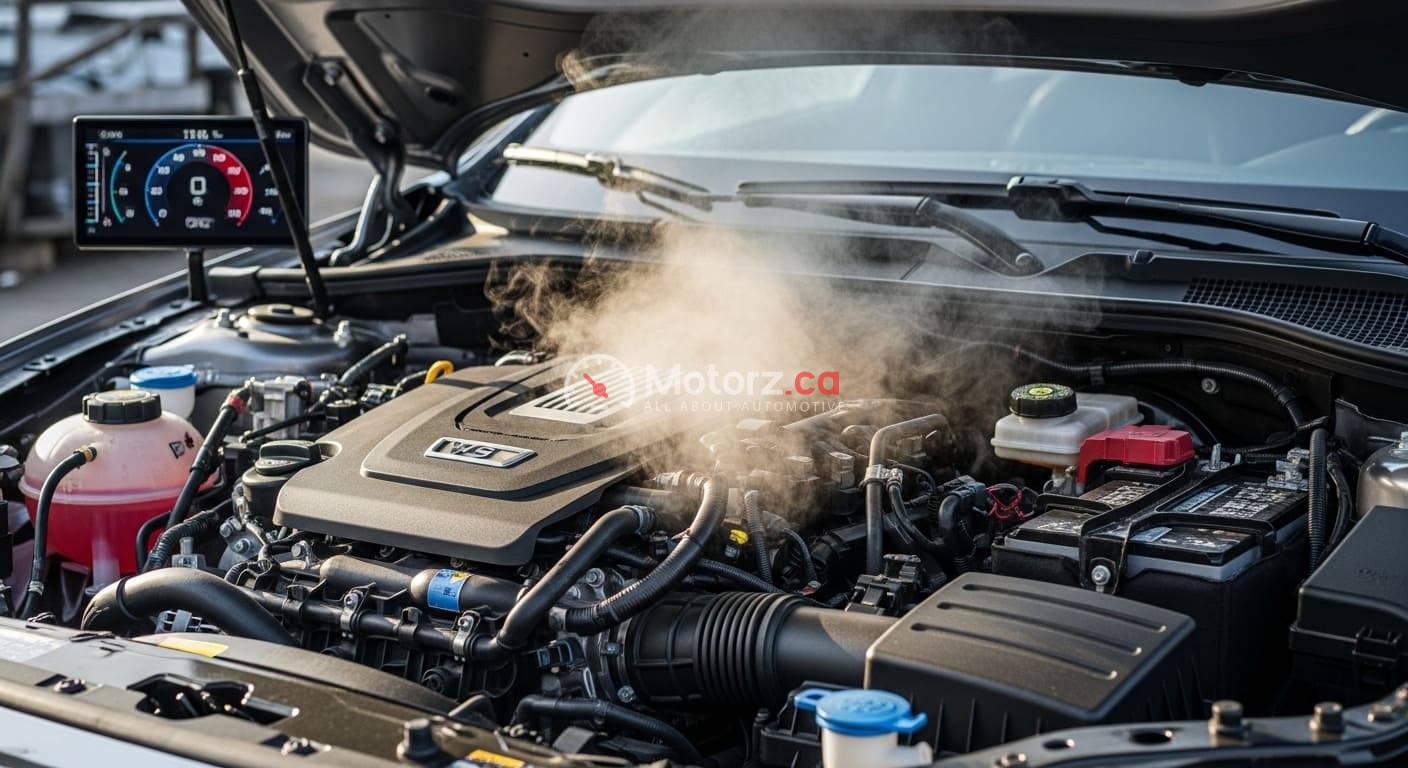
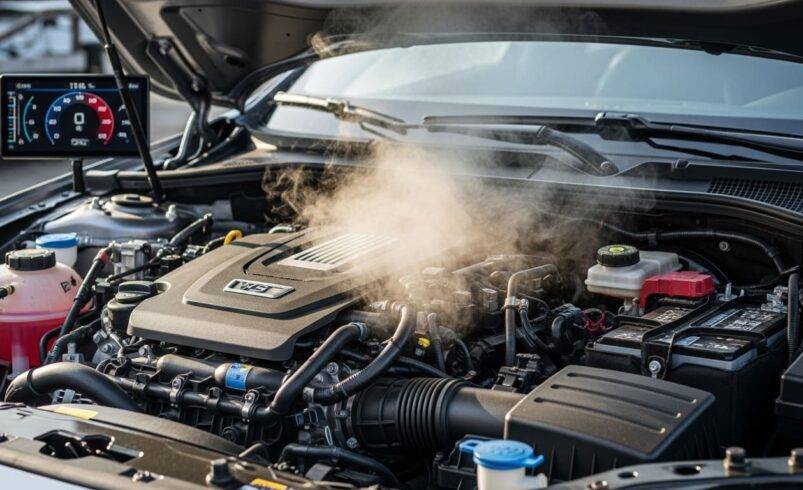

It’s a scenario every Engine Overheating. You’re cruising down the highway, perhaps on a hot summer afternoon or stuck in gridlock traffic, when you notice it: the needle on your temperature gauge is creeping steadily into the red zone. Or worse, the dreaded “Engine Overheated” warning light flashes on your dashboard, accompanied by the sight of steam pluming from beneath your hood.
An overheating engine is a critical emergency. It is not something you can ignore or “hope goes away.” Your car’s internal combustion engine operates at very high temperatures, controlled by a precise cooling system. When that system fails, the resulting heat can cause catastrophic damage within minutes—warping metal components, blowing gaskets, and effectively destroying your vehicle’s powerplant.
Knowing exactly what to do—and just as importantly, what not to do—in those first critical moments is essential. This guide covers the most important things to know if your engine overheats, providing actionable steps to protect yourself and your car.
The Immediate Response (The First 60 Seconds)
When your Engine Overheating, your priority is to minimize the time the engine runs while it is hot. Every extra second of operation risks severe damage. Here is the immediate protocol.
Do Not Panic, but Act Quickly
Panicking leads to mistakes. If you see the warning signs, understand that you have a limited window to act. Your goal is to get the vehicle off the road safely.
Turn Off the Air Conditioning and Blast the Heat
This may seem counterintuitive on a hot day, but it is one of the quickest ways to soothe a stressed engine.
Why it works: The vehicle’s heater works by using a small radiator called a heater core. It draws warmth from the hot coolant flowing through the engine to heat the cabin. By turning the heat on full blast with the fan high, you are essentially creating a second, albeit small, radiator that helps dissipate heat away from the engine.
Why the AC must go: Operating the AC compressor puts a significant mechanical load on the engine, increasing the heat it generates.
Find a Safe Place to Pull Over
Do not attempt to drive to the next exit or “just a bit further.” The damage can happen exceedingly fast.
Safety First: As soon as you can do so safely, pull over to the shoulder of the road, into a parking lot, or any location out of the flow of traffic. Use your turn signals and be mindful of surrounding vehicles.
Shift to Neutral (or Park) and Rev the Engine Gently
If you are completely stopped but cannot safely pull over immediately (e.g., stuck in stopped traffic), shift the transmission into Neutral or Park and gently rev the engine.
Why it works: Revving the engine slightly (around 1500-2000 RPM) speeds up the water pump and the cooling fan. This increases the flow of both coolant and air through the radiator, which may provide a few precious moments of temperature reduction while you wait for a chance to pull over.
Shut Down the Engine Immediately
Once you are safely off the road, turn the engine off. This stops the generation of heat.
The Engine Overheating: What NOT to Do
Knowing what not to do when an engine overheats is perhaps even more important than knowing what to do. Making a common mistake can lead to severe burns and serious, irreversible engine damage.
Do Not Attempt to Open the Hood Immediately
If you see steam or smell the sweet aroma of coolant, the area under the hood is extremely dangerous.
The Danger: If a radiator hose has burst or a pressure relief valve has opened, highly pressurized, boiling coolant and steam can spray out unpredictably. This can cause devastating burns to your face, hands, and body.
What to do instead: Stay in or near your vehicle. Do not attempt to pop the hood latch until the steam has completely stopped and the engine has had significant time to cool (at least 20 to 30 minutes).
Do Not Open the Radiator Cap or Coolant Reservoir Cap on a Hot Engine
This is the single most dangerous mistake a driver can make. The cooling system is pressurized when hot.
The Danger: A hot radiator is like a giant, dangerous pressure cooker. If you twist the cap, the pressure release will cause the boiling coolant to instantly erupt from the radiator or reservoir, showering you with scalding liquid.
What to do instead: Never open the cap unless the engine is completely cool to the touch. It is better to wait too long than to risk injury.
Do Not Add Cold Water to a Hot Engine
This is a very common mistake that stems from good intentions.
The Danger: When an engine overheats, its internal metal components are incredibly hot and expanded. If you introduce cold water (or even room-temperature coolant) into a boiling engine block, the sudden, extreme temperature difference will cause the metal to contract rapidly. This thermal shock is a major cause of cracked engine blocks and warped cylinder heads.
What to do instead: If you must add coolant to a system, you must wait until the engine has cooled to a point where you can comfortably touch the engine block.
Assessing the Situation (After the Engine Has Cooled)
Once you have followed the safety protocol and the engine has been off for at least 30 minutes, you can carefully begin to assess the potential cause.
Identifying the Major Causes of Overheating
A vehicle’s cooling system is complex, and many different failures can lead to overheating. Here are the most common culprits:
Low Coolant Level or a Coolant Leak
This is the most frequent reason. The coolant (or antifreeze) is the fluid that transfers heat from the engine to the radiator. If there isn’t enough fluid, heat cannot be moved efficiently.
Identifying a leak: Check under the car for puddles of bright green, orange, or pink fluid. Coolant also has a distinctly sweet, almost maple-syrup-like smell, especially when it burns off a hot engine.
Failing Thermostat
The thermostat is a simple valve that acts as the “gatekeeper” of the cooling system. It stays closed when the engine is cold to help it warm up quickly, and opens when the engine reaches operating temperature to allow coolant to flow to the radiator.
If it fails: If a thermostat fails in the “closed” position, the coolant is trapped inside the engine block and cannot circulate to the radiator to be cooled, leading to rapid overheating.
Broken Water Pump
The water pump is the “heart” of the cooling system. It is a pump driven by an engine belt (the serpentine or timing belt) that constantly circulates coolant.
If it fails: If the pump malfunctions or the belt driving it breaks, coolant flow stops completely, and the engine will overheat immediately.
Radiator Issues (Clogs or Clogged Fins)
The radiator’s job is to transfer heat from the coolant to the outside air.
Internal clogs: Over time, sediment can build up inside the radiator, blocking the small tubes that coolant flows through.
External clogs: Debris like dirt, leaves, or bugs can accumulate on the outside of the radiator, blocking essential airflow through the cooling fins.
Malfunctioning Cooling Fan
When the car is stopped or moving slowly, there isn’t enough natural airflow to cool the radiator. An electric fan (or a clutch-driven mechanical fan) pulls air through the radiator.
If it fails: This is a very common cause of overheating in stop-and-go traffic or at a stoplight.
Can You Drive an Overheated Car? (The Short Answer: No)
This is a question many people ask, often because they are stranded in an inconvenient or potentially unsafe location. The emphatic answer is: No, you should not continue to drive an overheated car.
How to Check and Add Coolant (Once Cool!)
If you have safely waited 30 to 45 minutes and the engine is cool, you can take a look under the hood.
The Correct Procedure for Adding Coolant
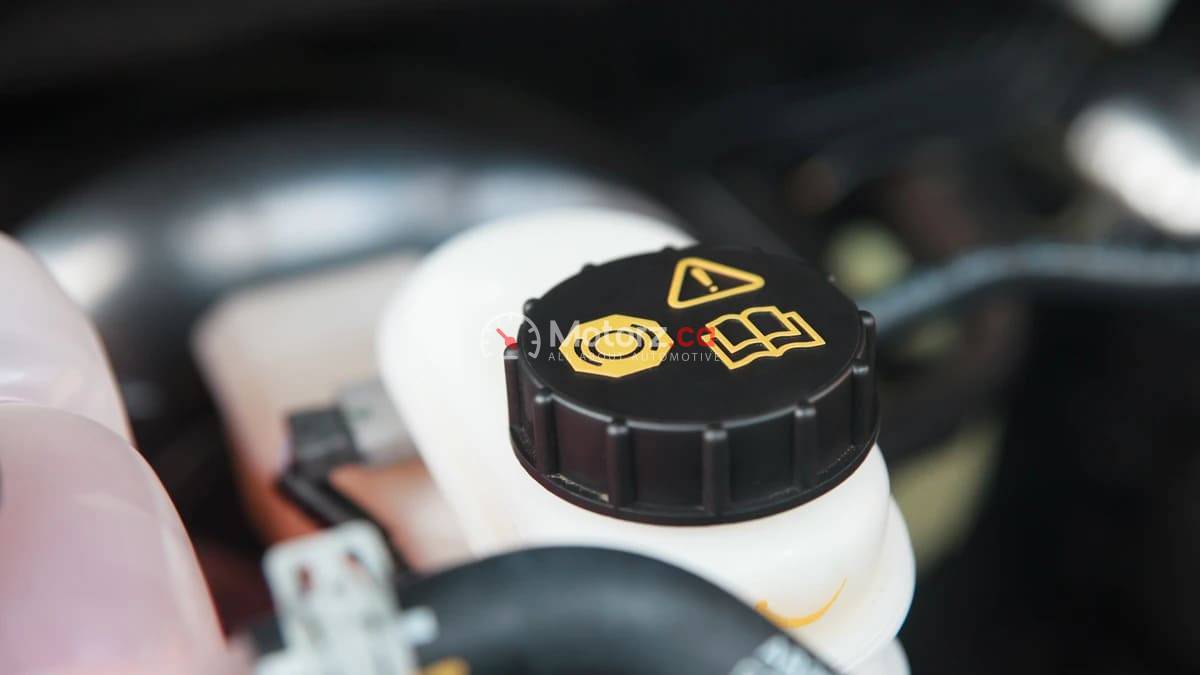
Locate the Coolant Reservoir: This is typically a translucent plastic tank with markings for “FULL COLD” and “FULL HOT.” (Check your owner’s manual).
Verify the Level: Do not add coolant just based on your intuition. Observe the fluid level against the “FULL COLD” line. If it is below this, you can add fluid.
Use the Right Coolant: Not all coolants are the same. Using the wrong type can cause gelling or corrosion inside the system. Consult your owner’s manual for the specific type (e.g., green, orange OAT, etc.).
Wait for the Engine to Be Cool: We will repeat this for emphasis. The engine and radiator cap must be cool to the touch.
Remove the Cap Slowly: For a radiator cap, use a thick rag to protect your hand. Rotate the cap a quarter turn to release any residual pressure (you may hear a hiss), then continue to remove it.
Add the Correct Coolant Mixture: Most coolant is sold as a 50/50 mixture of antifreeze and distilled water. If you have “full strength” antifreeze, you must mix it with distilled water before adding. Never use tap water or pure antifreeze.
Fill to the Correct Level: Fill the reservoir or radiator to the “FULL” or “COLD” mark. Do not overfill.
Reinstall the Cap Securely: Make sure the cap is screwed on tightly until it clicks.
A Note on Temporary “Hacks” (Use at Your Own Risk)
If you are in a true emergency situation, far from help and in potential danger, and you have determined the engine is cool, you may consider these temporary, highly discouraged measures, but understand they carry risks.
Adding Water: Pure water provides very little boil-over protection compared to coolant. It also has no corrosion resistance. It can be used only to limp to the nearest service station in a serious emergency, after which the entire system will need to be flushed.
Driving a Short Distance: If you must move the car a few hundred meters (e.g., off a dangerous highway median), do so, but monitor the temperature gauge like a hawk and shut the engine down before it gets into the red.
When to Call for a Tow: Playing it Safe
For the vast majority of drivers, the safest, smartest, and most cost-effective solution to an overheating engine is to call for a professional tow.
Why Calling a Tow Truck is the Best Option
Even if you manage to add coolant and the engine seems to be operating at a lower temperature, you have not fixed the underlying problem. Driving further simply delays the inevitable and risks more expensive damage.
Call a tow truck if:
The “Engine Overheated” light or red temperature gauge warning occurred, even for a moment.
You see any visible steam or smoke from the engine bay.
You identify a significant coolant leak (a puddle under the car).
The engine makes unusual sounds (e.g., pinging, knocking, or a “marbles in a tin can” noise) which are signs of severe stress or pre-ignition.
You cannot easily identify or temporarily address the cause (e.g., you can’t tell if the fan is working).
A tow is a small, manageable cost compared to the price of a replacement engine. Consider it insurance for your vehicle’s long-term health.
The Diagnosis: What Happens Next?
Once your car arrives at a service station, the technician will perform a series of diagnostics to pinpoint the failure. Understanding what they are doing can help you make informed decisions about repairs.
Common Diagnostic Tests
Pressure Test: The mechanic will use a special pump to pressurize the entire cooling system (when it is cool). This will quickly reveal leaks from hoses, the radiator, water pump, or gaskets that might not be visible under normal pressure.
Testing the Thermostat: The thermostat can be removed and placed in boiling water to see if it opens correctly.
Checking for Combustion Gasses in Coolant: This test uses a chemical fluid that changes color if it detects exhaust gases in the coolant. A positive result is a strong indicator of a blown head gasket or cracked cylinder head.
Verifying Fan Operation: The technician will check the electrical circuits and the fan clutch to ensure the cooling fan(s) engage properly at high temperatures.
A professional diagnosis ensures the correct component is replaced, rather than guessing with part replacements.
The Cost of Neglect vs. Repair
This section is for those who are tempted to “risk it” by continuing to drive an overheating car. Let’s compare the potential costs.
Prompt Repair
The Cause: A burst radiator hose or a stuck thermostat.
Action: Pull over safely, shut down the engine, and call for a tow.
Repair: Replace the hose/thermostat, flush the cooling system, and refill with fresh coolant.
Estimated Cost (Towing + Parts + Labor): Low (e.g., 200 to 500 dollars)
Driving with a Defective Cooling System
The Cause: The same stuck thermostat.
Action: Decide to drive “just 10 more minutes” to get home.
The Result: The temperature spikes. The metal of the cylinder head expands rapidly. The head gasket is compromised, allowing engine oil and coolant to mix and combustion gasses to escape into the coolant system. The metal warps.
Repair: Remove the cylinder head, “mill” it flat (if possible), replace the head gasket, and rebuild the engine. If the warp is severe, the entire engine may need replacement.
Estimated Cost: Extremely High (e.g., 2,500 to 5,000 dollars or more)
The financial implication is clear. The decision to pull over immediately is the only rational one.