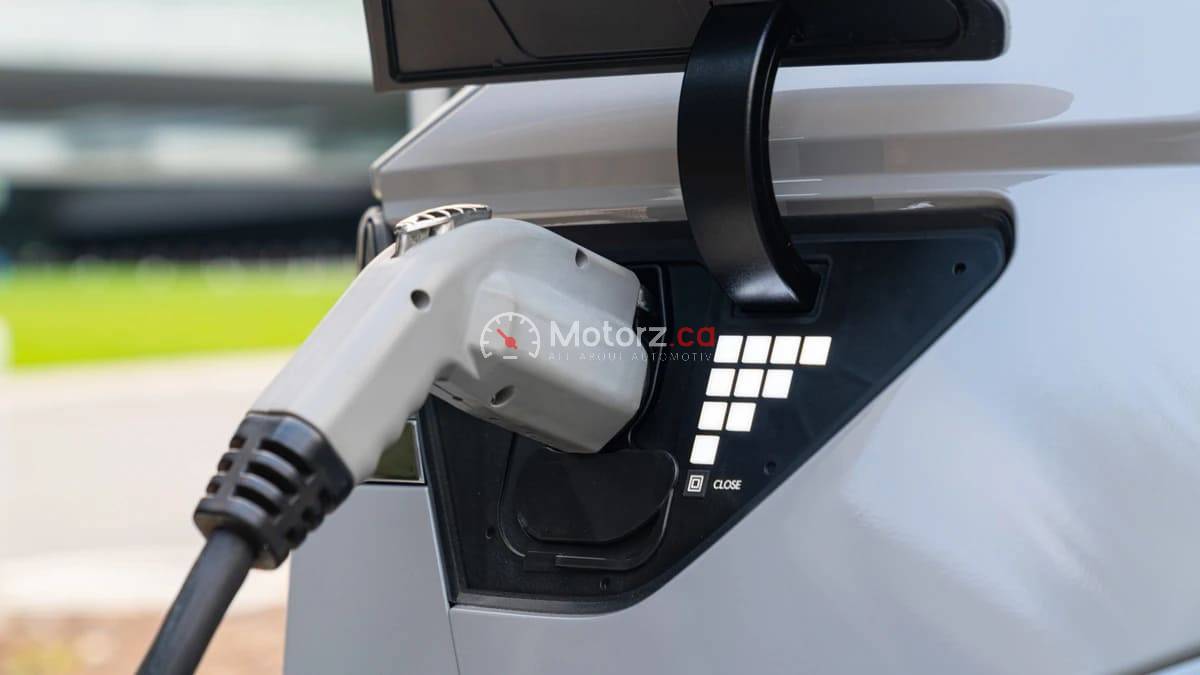

Imagine the scene: a severe storm rolls through your neighborhood, the lights flicker, and then—total darkness. The power grid is down, and the utility company says it could be days before the electricity is restored. You look out into your driveway at your Electric Vehicle (EV). Sitting there is a massive lithium-ion battery with enough stored energy to power a typical household for several days.
The question is: Can you actually use it?
As battery technology evolves, the concept of using an EV as an emergency power source has moved from science fiction to a practical reality. Whether it is keeping the refrigerator running, charging your phones, or powering medical equipment, your car is essentially a “giant power bank on wheels.” In this Troubleshooter guide, we will explore the different ways to extract power from your Electric Vehicle, the technical limitations you need to know, and the vital safety steps to prevent damaging your car or your home.
Understanding the Terms: V2L, V2H, and V2G
Before you try to plug a toaster into your car, you need to understand the three main technologies that allow electric vehicles to share their energy. Not every EV supports every method.
Vehicle-to-Load (V2L)
This is the simplest form of power sharing. Vehicles equipped with V2L have standard AC outlets built directly into the car (either in the cabin or the trunk).
How it works: You simply plug an extension cord into the car and run it to your appliances.
Best for: Powering a laptop, a coffee maker, or a small space heater during a short outage.
Examples: Hyundai Ioniq 5, Kia EV6, and Ford F-150 Lightning.
Vehicle-to-Home (V2H)
This is a much more robust system that allows the car to power your entire house through your electrical panel.
How it works: It requires a specialized bi-directional charger and a transfer switch installed at your home. When the grid goes down, the car automatically takes over the electrical load of the house.
Best for: Long-term outages where you need to run lights, HVAC systems, and kitchen appliances.
Vehicle-to-Grid (V2G)
This technology allows EV owners to sell energy back to the utility company during peak demand. While great for the environment and your wallet, it is less about “emergency backup” and more about grid stability.
How Much Power Does an EV Actually Hold?
To put things in perspective, let’s look at the numbers. A standard home backup battery (like the Tesla Powerwall) holds about 13.5 kilowatt-hours (kWh) of energy.
By comparison:
A standard Nissan Leaf has a 40 to 60 kWh battery.
A Hyundai Ioniq 6 has a 77.4 kWh battery.
A Ford F-150 Lightning can have up to a 131 kWh battery.
This means a fully charged electric truck could potentially power an average American home (which uses about 30 kWh per day) for three to four days without any rationing. If you only power the essentials—the fridge and a few lights—that time could extend to a week or more.
The “Low-Tech” Way: Using an Inverter
What if your EV doesn’t have built-in V2L outlets? Some owners attempt to use a 12-volt Power Inverter connected to the car’s accessory battery.
How the Inverter Method Works
In an EV, there is a small 12-volt battery (just like in a gas car) that runs the lights and computer systems. This battery is constantly topped up by the large high-voltage battery pack through a DC-to-DC converter. By connecting an inverter to the 12-volt battery, you can pull a limited amount of power (usually 1,000 to 1,500 watts).
The Risks and Limitations
Warranty Issues: Many manufacturers explicitly forbid connecting high-draw inverters to the 12-volt battery. Doing so could void your warranty.
DC-to-DC Limits: If you pull more power than the car’s internal converter can provide, you will drain the 12-volt battery and “brick” the car, even if the main battery is full.
Efficiency: This is the least efficient way to move energy, as much is lost in the conversion process.
Safety First: Avoiding Backfeeding and Damage
Using your EV as a generator is not without risks. Safety is paramount to protect both the vehicle and the people working on power lines.
The Danger of Backfeeding
If you are using a V2H system, you must have a professionally installed Transfer Switch or an “Interlock Kit.” Never, under any circumstances, try to power your home by plugging a “male-to-male” cord from your car into a wall outlet. This is called backfeeding. It can send electricity back out into the utility lines, potentially electrocuting line workers who are trying to fix the power grid.
Battery Degradation
Modern EV batteries are designed for thousands of charge cycles. While using your car as a backup source once or twice a year during an emergency will have a negligible effect on battery health, using it daily to offset high electricity costs could accelerate the wear and tear on the lithium-ion cells.
Preparing Your EV Backup Strategy
If you want to be ready for the next blackout, follow this preparation checklist:
Check Your Specs: Read your owner’s manual to see if your car supports V2L or V2H. Look for the maximum “discharge rate” (measured in kilowatts).
Invest in Heavy-Duty Cords: If using V2L, buy high-quality, outdoor-rated 12-gauge or 10-gauge extension cords. Low-quality cords can overheat and melt when running a refrigerator.
Maintain a “Buffer”: Most EVs allow you to set a limit on how much power the car will share. Set it to 20 percent so you always have enough range to drive to a working charging station or an emergency center if needed.
Test Before the Storm: Don’t wait for a blizzard to figure out how the V2L menu works on your touchscreen. Do a “dry run” on a sunny afternoon.
Frequently Asked Questions
Will using my EV as a backup drain the battery too fast?
It depends on the load. A refrigerator uses about 1 to 2 kWh per day. Even a small EV battery (40 kWh) could run that fridge for weeks. However, running an electric heater or an oven will drain the battery in hours.
Can Tesla cars do V2L?
Historically, Tesla has not supported V2L or V2H. However, the Cybertruck is the first Tesla model to officially support bi-directional charging and includes built-in power outlets for external use.
Is it better than a gas generator?
EV backup is silent, produces zero exhaust fumes (safe for a garage), and requires no fuel storage. However, once the battery is empty, you cannot simply “refill” it with a gas can; you must find a working charging station.
The Ultimate Emergency Tool
The electric vehicle in your driveway is no longer just a mode of transportation; it is a sophisticated energy storage device. While using an EV as an emergency power source requires the right hardware and a clear understanding of safety protocols, it provides a level of security that gas vehicles simply cannot match.
By understanding your vehicle’s capabilities today, you can ensure that the next time the grid goes dark, your home stays bright, safe, and connected.