


In Canada, Canadian Winter is more than just a season of changing leaves and pumpkin spice—it is a critical countdown. One morning you are driving to work in a light jacket, and the next, you are scraping a thick layer of frost off your windshield while your engine groans in the cold.
Winter doesn’t play fair. It attacks your battery, hardens your tires, and coats your underbody in corrosive salt. If you wait until the first blizzard to think about maintenance, you are already behind. The “shoulder season” of September and October is your golden window to ensure your vehicle remains a reliable sanctuary rather than a frozen liability.
In this edition of Your Corner Wrench, we are providing a masterclass in winter preparation. We will go beyond the basic “check your oil” advice and dive into the technical specifics of battery health, tire chemistry, and the emergency supplies that could quite literally save your life on a remote highway.
The 7-Degree Rule: Timing Your Canadian Winter Tire Swap
The most common question in the fall is, “When is it too early for winter tires?” If you swap them while it is still 20 degrees out, you will wear down the soft rubber compound prematurely. If you wait for the snow, the tire shops will be booked for a month.
The Science of 7 Degrees
Winter tires are not just about the “tread” or the “snowflakes.” They are about chemistry. Summer and all-season tires are made of a rubber compound that begins to stiffen and lose grip once the temperature consistently stays below 7 Celsius.
Winter tires, conversely, are engineered with high-silica compounds that stay soft and “grippy” even at minus 30. A good rule of thumb is to book your swap once the daytime highs are consistently hovering around that 7-degree mark.
Inspecting Your Winter Rubber
Before you mount last year’s tires, check two things:
Tread Depth: For winter safety, you want at least 6/32 of an inch. Anything less and the tire cannot effectively “evacuate” slush, leading to hydroplaning.
The Age: Check the DOT date code on the sidewall. If your winter tires are more than six years old, the rubber has likely hardened significantly, even if the tread looks deep.
Battery Health: The Cold Weather “Capacity Crush”
Your battery is a chemical factory, and like most chemical processes, it slows down when it gets cold. At 0 Celsius, a battery loses about 20% of its cranking power. At minus 18, that loss jumps to 50%.
The Load Test
A battery that starts your car perfectly in September might fail completely on a morning in December. During your fall tune-up, ask your mechanic for a load test. This measures the battery’s ability to hold a charge under stress. If your battery is more than three to four years old, the safest move is to replace it in October rather than waiting for a “no-start” emergency in a snowstorm.
Cleaning the Terminals
Corrosion (that white, crusty powder) acts as an insulator, preventing the alternator from fully charging the battery. Clean the terminals with a mixture of baking soda and water, then apply a thin layer of dielectric grease to prevent future oxidation.
Visibility and Fluids: Seeing Through the Storm
Winter driving is often “blind” driving. Between shorter days and road spray, your visibility is constantly under attack.
Winter-Grade Washer Fluid
Flush out your summer “bug wash” before the first freeze. Summer fluid is mostly water and will freeze solid in your reservoir and lines, potentially cracking the plastic tank. Switch to a minus 35 or minus 45 rated winter formula that contains de-icer.
Wiper Blade Replacement
If your wipers are streaking or “chattering” in the fall rain, they will be useless in the winter snow. Consider “Winter Blades,” which feature a protective rubber boot that prevents ice from building up in the wiper’s skeletal frame, ensuring the blade stays flat against the glass.
The Lighting Check
Ensure all your exterior lights are working. In winter, you should drive with your full headlight system on (not just DRLs) to ensure your tail lights are active. This makes you visible to drivers behind you in “whiteout” conditions.
Underbody Protection: Fighting the Salt War
In regions like Ontario and Quebec, road salt is a car’s worst enemy. It gets into every crevice of your frame and suspension, triggering rust that can structurally compromise your vehicle over time.
Oil-Based Undercoating
Fall is the ideal time for an oil-based rust protection treatment (like Krown or Rust Check). Unlike “rubberized” coatings which can actually trap moisture against the metal, thin oil sprays creep into welds and seams, displacing water and salt.
Wax and Sealant
Give your car’s paint a thick coat of high-quality wax or a ceramic sealant in November. This creates a sacrificial barrier that makes it harder for salt and road grime to bond to your clear coat, making your weekly winter car washes much more effective.
The Winter Emergency Kit: Your Life-Support System
If you go off the road in a rural area, your car can get cold very quickly once the engine stops. Every Canadian vehicle should carry a “Survival Bag” in the trunk from November to April.
Essential Items for Your Kit:
Warmth: A thermal blanket, extra gloves, and a winter hat.
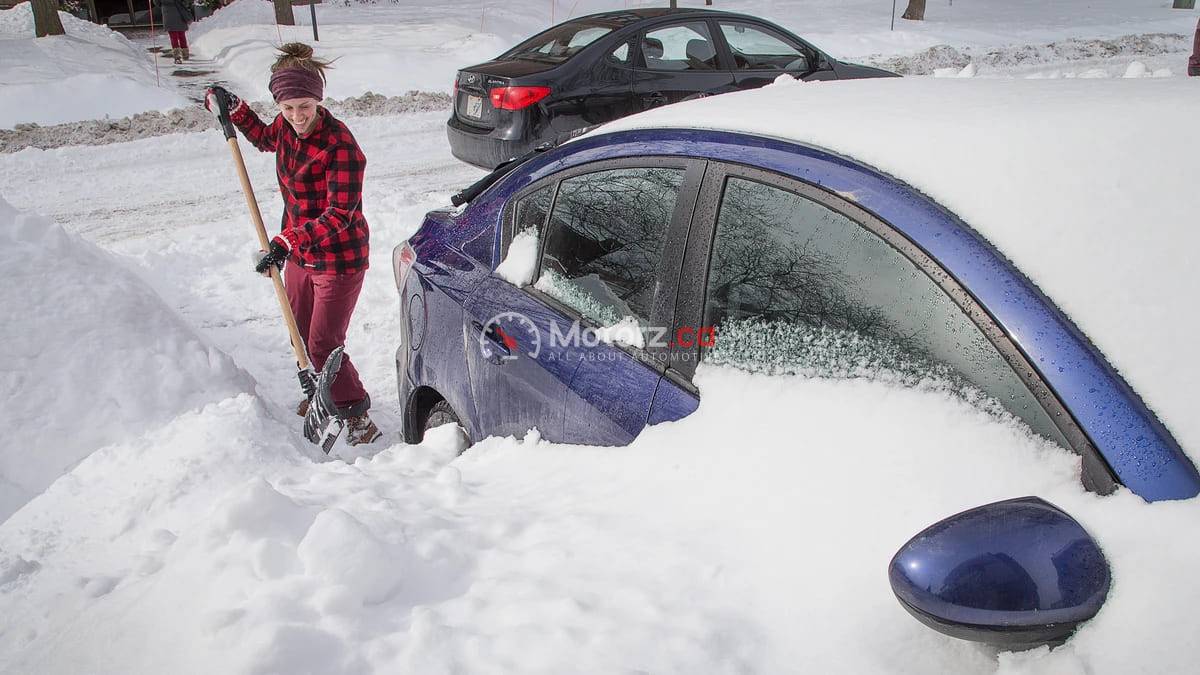
- Traction: A small shovel and a bag of sand or non-clumping kitty litter.
Power: A portable jump-starter pack (ensure it is charged) and a long-lasting LED flashlight.
Sustenance: Energy bars and a bottle of water (leave room for expansion if it freezes).
- Signaling: Reflective triangles or a high-visibility vest.
Preparation is the Best Winter Defense
The difference between a stress-free winter and a season of expensive repairs is what you do while the weather is still mild. By checking your battery, timing your tire swap, and protecting your undercarriage in the fall, you are not just maintaining a machine—you are ensuring your safety.
Don’t wait for the first “Special Weather Statement” from the news. Take an afternoon this weekend to go through this checklist. Your car—and your future self, shivering on the side of the road—will thank you.