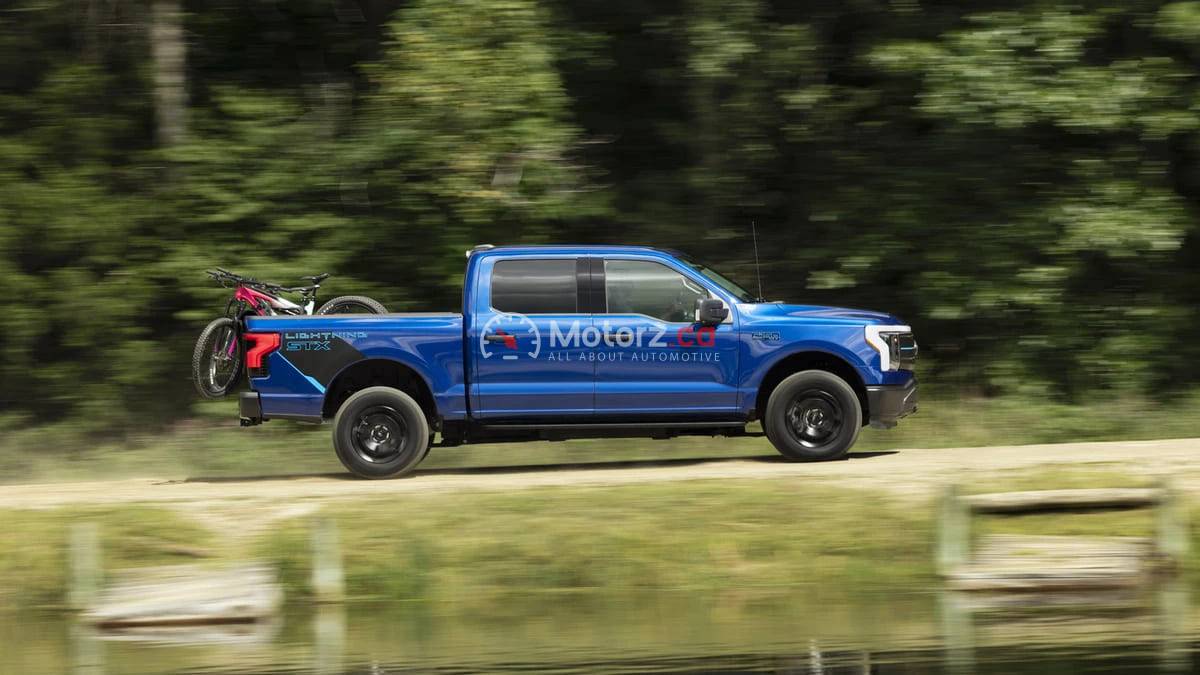

In a move that has sent shockwaves through the Ford F-150 Lightning EV industry, Ford Motor Company has officially pulled the plug on the all-electric F-150 Lightning. Announced in late 2025, this decision marks a definitive end to Ford’s first-generation electric truck experiment and a massive shift in the brand’s “Ford+” strategy.
While the Lightning arrived with immense fanfare and a “Truck of the Year” trophy, the reality of high production costs, slower-than-expected infrastructure growth, and a shifting regulatory landscape forced the Blue Oval’s hand. But Ford isn’t giving up on the Lightning nameplate. Instead, they are reinventing it as a range-extended electric vehicle (EREV)—a “gas-assisted” powerhouse that promises to solve the range and towing anxieties that hampered the original EV.
Why Ford Is Canceling the All-Ford F-150 Lightning EV Lightning
The cancellation of a flagship vehicle like the F-150 Lightning is a rare admission of a “misread” market. Despite its impressive performance, several factors led to the conclusion of the current generation in December 2025.
The Profitability Gap
Ford’s “Model e” division—the part of the company dedicated to electric vehicles—has faced significant financial headwinds. Building a full-size truck with a massive 131-kWh battery is an expensive endeavor. As battery material costs remained volatile and consumer demand for premium-priced EVs cooled, Ford reportedly struggled to find a path to profitability with the current Lightning architecture.
Range and Towing Realities
For many truck owners, the “Lightning experience” was a mixed bag. While the truck offered blistering speed and innovative features like the “Mega Power Frunk,” its range dropped significantly when hauling heavy trailers or driving in extreme cold. For a workhorse vehicle like the F-150, “range anxiety” wasn’t just a minor inconvenience; it was a barrier to getting the job done.
The Rise of the EREV (Extended Range Electric Vehicle)
Ford CEO Jim Farley recently stated that the company is following the customer. Drivers want the smoothness and torque of an electric motor without the fear of a dead battery. By pivoting to an EREV architecture, Ford can use a smaller battery paired with a gasoline generator, offering the “best of both worlds.”
Meet the Successor: The 2027 Ford F-150 Lightning EREV
The “all-electric” tag is gone, but the performance isn’t. Ford has confirmed that the next-generation Lightning will return for the 2027 model year (expected to launch in late 2026) with a revolutionary new powertrain.
How the Gas-Assisted Successor Works
Unlike a traditional hybrid (like the current F-150 PowerBoost) where the gas engine helps turn the wheels, the F-150 Lightning EREV uses a “series hybrid” setup:
Electric Motors Only: The wheels are driven exclusively by electric motors, retaining that signature sub-5-second 0–60 mph acceleration.
On-Board Generator: A small, efficient gasoline engine acts solely as a generator. It doesn’t drive the wheels; it only recharges the battery while you drive.
Massive 700-Mile Range: Ford estimates the new EREV will offer over 700 miles of total range—more than double the 320-mile max of the current all-electric version.
“Tows Like a Locomotive”
One of the most exciting claims from Dearborn is that the new EREV will “tow like a locomotive.” By utilizing the constant torque of electric motors and a steady supply of power from the on-board generator, the 2027 Lightning aims to eliminate the massive range drop-off that currently happens when a trailer is attached to an EV.
What Happens to the Tennessee Electric Vehicle Center?
One of the biggest physical shifts in this pivot involves Ford’s massive BlueOval City campus in Tennessee. Originally dubbed the “Tennessee Electric Vehicle Center,” the facility is being renamed the Tennessee Truck Plant.
Instead of producing only next-gen electric trucks (formerly known as “Project T3”), the plant will now focus on a more diverse lineup, including new affordable gas-powered trucks and hybrid variants starting in 2029. This ensures the facility remains high-volume and profitable, even if the transition to full EVs takes longer than the industry originally predicted.
The New “Universal EV Platform” and a $30,000 Pickup
While the full-size Lightning is going EREV, Ford isn’t abandoning “Pure EVs” entirely. The company is shifting its all-electric focus to smaller, more affordable vehicles.
The Louisville Project
Starting in 2027, Ford’s Louisville Assembly Plant will begin production on a fully connected midsize electric pickup. This truck will be built on the new “Universal EV Platform,” which is designed to be:
High Volume: Targeting millions of customers globally.
Affordable: Aiming for a price point near 30,000.
Efficient: Utilizing LFP (Lithium Iron Phosphate) batteries, which are cheaper to produce and more durable over time.
Should You Buy a 2025 F-150 Lightning Now?
With production of the current generation concluding in December 2025, you might be wondering if you should grab a leftover 2025 model.
Pros: The 2025 Lightning is one of the best-driving trucks ever made. With its low center of gravity and independent rear suspension, it handles like a much smaller vehicle. It also features the legendary 9.6-kW Pro Power Onboard, which can power your house during an outage.
Cons: Resale values may be impacted by the cancellation news. Furthermore, the 2027 EREV will arguably be more practical for long-distance towing and rural owners who lack easy access to fast chargers.
A Pragmatic Move for a Rugged Future
Ford’s decision to cancel the F-150 Lightning EV in favor of a gas-assisted EREV is a masterclass in automotive pragmatism. By acknowledging that the current “Pure EV” truck business case has eroded, Ford is repositioning itself to lead the market with a truck that offers electric performance without the “charging leash.”
The 2027 Lightning EREV isn’t a retreat—it’s a refinement. It keeps the “Built Ford Tough” DNA while embracing a powertrain that makes sense for the way people actually use their trucks in 2026 and beyond.