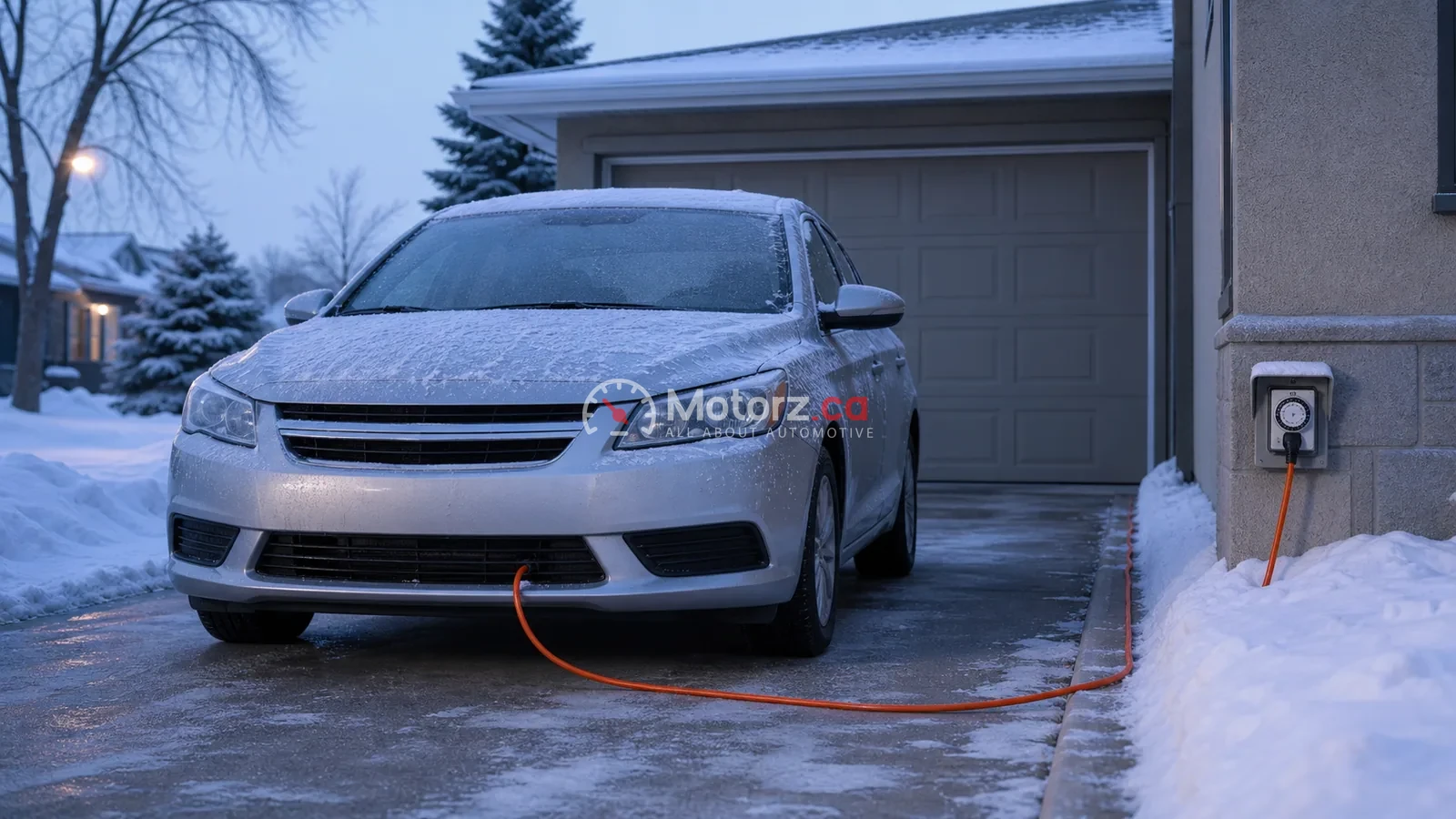
A block heater can still help some Winnipeg vehicles in severe cold, but the correct decision and operating instructions are vehicle-specific.
The direct answer
Yes, a block heater remains useful for some gasoline and diesel vehicles during Winnipeg cold spells, but not every modern vehicle needs one at the same temperature or for the same length of time. Check the owner’s manual first. Vehicle design, oil specification, battery condition, parking exposure and weather all matter, and a block heater cannot correct an existing starting or electrical fault.
What a block heater does
An engine block heater pre-warms part of a combustion vehicle’s engine or coolant system before startup. Depending on the factory design, that can make a cold start easier and shorten the period in which the engine is warming. It is not a battery charger, cabin heater or substitute for the correct coolant, oil, battery condition and scheduled maintenance.
Designs and instructions vary. This guide does not cover installation, wiring, diagnosis or aftermarket product selection. If the vehicle did not come with a heater, consult its manufacturer information and a qualified service provider rather than assuming a universal accessory will fit.
Let the vehicle manual control the decision
Transport Canada directs drivers to the owner’s manual for vehicle-specific winter information. Look for the manufacturer’s recommended temperature range, connection instructions, maximum operating time and warnings. A generic online threshold should not override those directions.
- Confirm that the vehicle has an approved block heater and intact factory cord.
- Use the oil and coolant specifications in the manual.
- Consider whether the car is parked outdoors or in a protected location.
- Check the forecast and planned departure time.
- Have repeated hard starting or a warning condition assessed rather than masking it with longer heater use.
A timer can avoid all-night operation
Natural Resources Canada’s general winter-driving guidance recommends using a timer to switch a block heater on about two hours before starting. That advice is a general efficiency reference, not a universal manufacturer specification. Follow a different period when the owner’s manual requires it.
Leaving a heater energized longer uses more electricity, while the additional warming benefit may diminish. Any cost example must use the actual heater wattage, operating hours and current electricity rate. Manitoba Hydro’s residential energy rate can provide one input, but heater power is vehicle-specific and taxes or other billing details may apply.
Electrical and fire safety are essential
The Winnipeg Fire Paramedic Service says not to plug in a vehicle when it is parked inside a garage because a cord or heater failure can start a fast-spreading fire. Its guidance also says to inspect cords and replace them if they are frayed, nicked, run over or damaged after the vehicle was driven away while connected.
Use only equipment approved for its intended outdoor conditions and within its rating. Fully uncoil an extension cord, keep connections clear of damage and do not overload an outlet or cord. Do not tape over exposed conductors or continue using a connection that becomes hot, trips protection or shows corrosion. Stop using damaged equipment and seek qualified mechanical or electrical help as appropriate.
Apartment parking outlets may be controlled
Some Winnipeg and Manitoba parking facilities cycle block-heater outlets with a timer or load-control system. The Manitoba Residential Tenancies Branch recognizes that a landlord may use a timer system for parking-lot outlets, subject to its tenancy policy. Ask the property manager how an outlet operates instead of assuming it supplies continuous power.
Do not modify a shared outlet, defeat a timer or add multiple loads. If a receptacle appears damaged or unreliable, report it to the property manager. Electrical installation and code compliance are outside this article’s scope.
Block heaters are not EV preconditioning
Battery-electric vehicles do not use an engine block heater. Many EVs and plug-in hybrids can precondition the cabin or battery while connected to suitable charging equipment, but the process is model-specific. Manitoba Hydro warns that some parking-lot outlets operate on a block-heater timer, which may provide reduced or no EV charging.
Follow the EV manufacturer’s charging and winter instructions and confirm the facility is designed for EV charging. A block-heater receptacle should not be treated as one merely because the plug fits.
Separate plugging in from warming up
A block heater’s pre-start role is different from idling after the engine starts. Motorz.ca’s winter warm-up guide addresses that separate question. Before driving, clear the entire vehicle as described in the snow-and-ice guide, and keep a Canadian winter emergency kit.
When to stop and get help
Disconnect and stop using the equipment if a cord is damaged, a connection overheats, protection trips repeatedly or there is a burning smell. A vehicle that repeatedly cranks slowly, fails to start or displays a warning needs qualified assessment. Do not use a block heater to avoid diagnosing a battery, charging, fuel or engine problem.
For a frozen door, control or other winter problem, avoid force and improvised heat; see the guide to frozen-vehicle mistakes. This article provides general awareness, not repair or electrical-installation instructions.
Sources
- City of Winnipeg: Block-heater and extension-cord fire safety
- Transport Canada: Preparing a vehicle for winter
- Natural Resources Canada: Winter driving tips
- Manitoba Residential Tenancies Branch: Parking and block-heater outlets
- Manitoba Hydro: EV charging and winter operation
- Manitoba Hydro: Current rates and charges
Updated August 2026: Rewritten with Winnipeg fire-safety, Manitoba utility and federal winter guidance. Universal temperature thresholds and repair procedures were removed.