



Buying used tires can be a brilliant way to save a significant amount of money, especially if you are on a tight budget or only need a temporary replacement. However, it is a high-stakes game. Unlike a used coat or a second-hand bookshelf, a faulty tire is a major safety risk.
If you don’t know what to look for, you might end up with “zombie tires”—rubbers that look fine on the surface but are structurally compromised. In this comprehensive guide, we will walk you through every step of the inspection process so you can distinguish a hidden gem from a dangerous blowout waiting to happen.
Why Buy Used Tires? The Pros and Cons
Before we dive into the “how,” let’s look at the “why.” Understanding the market helps you set realistic expectations.
The Benefits
Cost Savings: You can often find premium brands at 30 percent to 50 percent of the retail price.
Environmental Impact: Buying used keeps rubber out of landfills for longer.
Lease Returns: If you are returning a leased car and the tires are worn, buying a matching set of used tires can save you from high dealership fees.
The Risks
Hidden Damage: Internal belt separations aren’t always visible.
No Warranty: Most used tire sales are final.
Older Rubber: Even with “good tread,” old rubber loses grip.
Check the Age (The DOT Code)
The single most important thing to check is not the tread, but the age. Rubber degrades over time through a process called oxidation. A tire with deep tread that is ten years old is more dangerous than a tire with less tread that is only two years old.
How to Read the Date Code
On the sidewall of every tire, look for a sequence starting with the letters “DOT.” At the end of this string, there will be a four-digit number.
The first two digits represent the week of manufacture.
The last two digits represent the year.
For example, if the code is 1221, the tire was made in the 12th week of 2021.
Pro Tip: Avoid any tire older than six years, regardless of how “new” the tread looks. Most experts recommend replacing tires by their sixth birthday for maximum safety.
Measure the Tread Depth
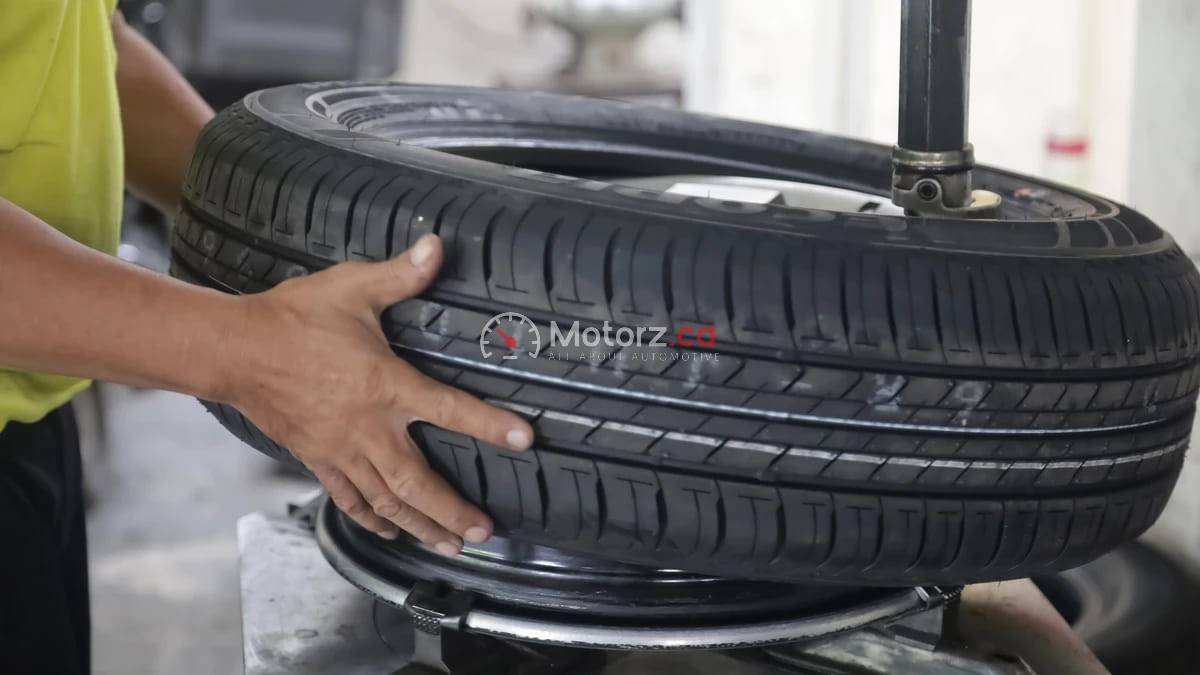
Tread depth is what allows your car to grip the road and channel water away to prevent hydroplaning. New tires typically come with a tread depth of 10/32 to 11/32 of an inch.
The Penny Test
If you don’t have a professional tread depth gauge, use a simple copper penny.
Insert the penny into the tread grooves with the head facing down.
If you can see the top of the head, the tire is legally bald (2/32 of an inch) and should be rejected immediately.
Ideally, you want to see a significant portion of the head covered, indicating at least 6/32 or 7/32 of an inch of life left.
Check the Wear Bars
Look for the “tread wear indicator bars.” These are small bridges of rubber located deep within the grooves. When the tread is flush with these bars, the tire has reached its legal limit and is no longer safe to use.
Inspect for Uneven Wear
Uneven wear is a red flag. It tells a story about the car the tire previously lived on. If a tire is worn more on one side than the other, it indicates poor alignment or suspension issues.
While the tire might still have tread, the uneven surface can cause:
Vibrations in your steering wheel.
Decreased fuel efficiency.
Shortened lifespan once installed on your vehicle.
Feel the tread with your hand. Run your palm across the surface. If it feels “choppy” or like a saw blade (often called feathering), walk away.
Look for “Dry Rot” and Cracking
Tires that have been sitting in the sun or in a hot warehouse develop dry rot. This makes the rubber brittle and prone to shattering at high speeds.
Where to Look
Sidewalls: Look for tiny spiderweb-like cracks.
Grooves: Look deep inside the tread valleys for signs of splitting.
Bead Area: Check the inner circle where the tire meets the rim for any crumbling rubber.
If the rubber looks greyish, dull, or has visible cracks, the structural integrity is compromised.
Check for Repairs and Patches
It is common for used tires to have had a puncture. A properly repaired tire is generally safe, but a “plug” is not a permanent fix.
Look Inside: Always ask the seller to let you see the inside of the tire.
Patches vs. Plugs: A safe repair involves a “patch-plug” combination applied from the inside. If you see a gooey string (a plug) sticking out from the outside without a corresponding patch inside, it is a temporary fix that could fail.
The Sidewall Rule: Never buy a tire that has a repair on the sidewall or the “shoulder” (where the tread meets the side). These areas experience too much flex for repairs to hold safely.
Identify Bubbles and Bulges
A bulge in the sidewall is a “bruise” on the tire. It usually means the internal fabric or steel belts have snapped, likely from hitting a pothole or a curb.
These bulges are extremely dangerous because they represent a weak spot in the tire’s structure. Under the pressure of driving, these spots can suddenly burst. If you see even a small, marble-sized lump on the sidewall, do not buy the tire.
The “Bead” Inspection
The bead is the inner edge of the tire that seals against the metal rim. If this area is damaged, the tire will never hold air properly.
Look for:
Chunks of rubber missing from the inner ring.
Exposed wire or frayed fabric.
Kinks in the metal ring inside the bead.
Tire shops often damage the bead when removing tires from rims using old machinery. If the seal isn’t perfect, you’ll be dealing with a “slow leak” that will haunt you for months.
Frequently Asked Questions
Is it safe to buy used tires?
Yes, it can be safe if you follow a strict inspection protocol. However, always prioritize tires with a known history or those from reputable sellers who pressure-test their stock.
How much should I pay for used tires?
Prices vary by size and brand, but typically, you should aim to pay between 30 percent and 50 percent of the price of a new tire of the same model.
Can I buy just one used tire?
It is best to buy tires in pairs (for the same axle) or sets of four. Mixing different tread depths or brands on the same axle can interfere with your vehicle’s traction control and ABS systems.
Safety First
Saving money is great, but your tires are the only thing connecting your vehicle to the pavement. When in doubt, pass on the deal. There are millions of used tires on the market; don’t settle for a pair that makes you feel uneasy.
If you are buying from a local shop, ask if they offer a “mounting guarantee.” A reputable shop should be willing to swap the tire out if it shows a balance issue or a leak within the first 24 hours.