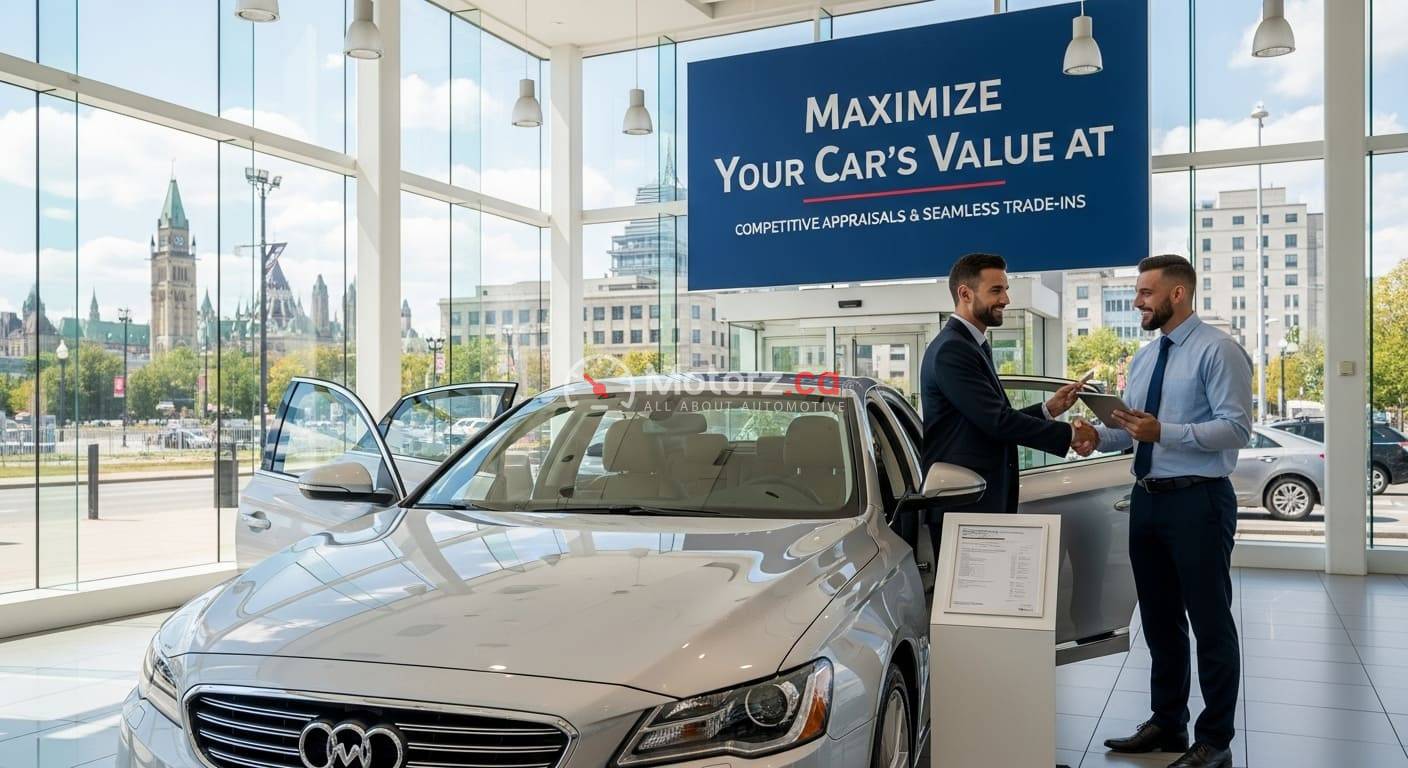

Trading in your current Maximize Your Car’s Value is the single easiest way to reduce the price of your next car. In the competitive landscape of Ottawa car dealerships, from Hunt Club Road to the Palladium Drive Auto Park in Kanata, a well-prepared trade-in is your most powerful negotiating chip.
Many Ottawa drivers leave thousands of dollars on the table simply because they don’t understand the dealer’s valuation process or how to effectively present their vehicle. A dealership’s trade-in appraisal is more than just a quick look—it’s a detailed assessment of your car’s marketability, and every single factor, no matter how small, can either add or subtract value.
This 2000-word comprehensive guide will walk you through a proven, step-by-step strategy to boost your car’s appeal, armed with Ottawa-specific tips to combat the unique challenges of the National Capital Region’s climate and market demand. By the time you hand over your keys for appraisal, you’ll be positioned to maximize your trade-in value and secure the best possible deal on your new ride.
Strategic Preparation – The Golden Rule of Dealership Appraisals
The dealer appraiser is looking for reasons to lower their offer. Your primary goal is to eliminate those reasons before they even open the hood. This means investing a small amount of time and potentially money into presentation and documentation.
Maximize Your Car’s Value: Know Your Car’s True Worth
Never walk into a negotiation without a clear understanding of your vehicle’s fair market value. Dealers rely on consumers accepting lowball offers based on ignorance.
Get Three Independent Valuations
Use reliable Canadian resources to establish a pricing Maximize Your Car’s Value:
Canadian Black Book (CBB): Provides wholesale (dealer trade-in) and retail pricing. The wholesale value is your floor.
Kelley Blue Book (KBB): Offers a good general valuation estimate.
Local Listings: Search Ottawa-specific classifieds (AutoTrader, Kijiji) for identical make, model, year, and mileage vehicles currently for sale. Look at both private and dealer asking prices.
Ottawa Pro-Tip: The local market often dictates demand. If SUVs and trucks are flying off the lots on Carling Avenue due to demand for winter-capable vehicles, the dealer may offer slightly more for those types of vehicles, especially in the fall.
Understand the Tax Advantage
Trading in a vehicle offers a significant, immediate tax saving in Maximize Your Car’s Value. You only pay HST on the difference between the price of the new car and the trade-in value.
Example:
New Car Price: $40,000
Trade-In Value: $10,000
Taxable Amount: $30,000
Benefit: The $10,000 is effectively worth 13% more, as you save $1,300 in HST compared to selling it privately and using the cash for the down payment.
The Power of Presentation: Detail Your Car for Dollars
A clean car suggests a well-cared-for Maximize Your Car’s Value. Appraisers instinctively offer less for a vehicle that looks neglected.
The Deep Interior Detail
Remove All Personal Items: Clear out all trash, sports gear, toys, and clutter from the trunk, glove box, console, and door pockets.
Tackle Stains and Odours: Stains on upholstery and lingering odours (smoke, pets, food) are major red flags that instantly lower value. Shampoo carpets and seats, and use an odour neutralizer.
Clean the Nooks and Crannies: Wipe down the Maximize Your Car’s Value, clean all vents, and use a toothbrush to clear dirt from cup holders and seams. Clean the windows inside and out.
Ottawa Salt Check: Ensure all white salt residue is scrubbed from the carpets and floor mats. This is a common giveaway of heavy use in an Ottawa winter.
The Exterior Shine
Wash, Wax, and Polish: Give the exterior a thorough wash and a light wax. A shiny coat signals pride of ownership.
Tire and Wheel Detailing: Clean the rims and dress the Maximize Your Car’s Value. They are a significant part of the visual first impression.
Headlight Restoration: If the headlights are cloudy, an inexpensive restoration kit can make the car look years newer and is often worth the minimal investment.
Minor Paint Touch-Ups: Use a matching paint pen to cover small chips or scratches. Don’t attempt major repairs, but address the inexpensive ones.
The Documentation Portfolio: Proof of Maintenance
This is arguably more important than detailing. A comprehensive service history proves the mechanical well-being of the vehicle.
Organize Everything: Create a folder with all Maximize Your Car’s Value, service records, and warranty papers. Arrange them chronologically.
Highlight Key Services: Point out recent major maintenance, such as brake jobs, new tires, transmission fluid flushes, or new timing belts.
Owner’s Manual and All Keys: Ensure the owner’s manual is present and accounted for. Crucially, gather all sets of keys and fobs. Losing a single smart key can cost the dealer hundreds of dollars, which they will deduct from your trade-in offer.
Vehicle History Report: Run your own up-to-date CARFAX Canada report. Handing it to the dealer first preempts them from using a small, undisclosed incident to lowball the Maximize Your Car’s Value.
Addressing Ottawa’s Mechanical Liabilities
Ottawa’s harsh climate and road conditions are hard on vehicles. The appraiser will scrutinize specific areas for damage commonly associated with Canadian winters.
The Rust and Corrosion Audit
Road salt used heavily on Ottawa roads is the number one cause of premature corrosion.
Inspect the Undercarriage: While you can’t fully inspect the frame, give the wheel wells, brake lines, and exhaust system a visual check. Maximize Your Car’s Value, widespread rust is a massive deal-breaker for a dealer and severely limits the car’s resale value.
Surface Rust Fixes: If you have small spots of surface rust on the body, treating and touching them up before the appraisal can minimize the visual damage.
The Muffler Telltale: Check the exhaust system. If the muffler is severely rusted, it suggests neglect in winter washes and could signal more severe issues underneath.
The Mechanical Triage: Fix the Cheap, Skip the Costly
Dealerships will often deduct the full retail cost of a repair plus profit margin from your trade-in value. You need to decide which fixes offer the best return on investment (ROI).
Must-Fix Minor Issues (High ROI)
These fixes are cheap, eliminate immediate Maximize Your Car’s Value points, and show the car is ready to go:
Burnt-out Light Bulbs: Fix headlights, taillights, and dash lights.
Wiper Blades: Replace worn-out blades (especially if they are the basic summer type).
Top Up Fluids: Ensure oil, coolant, and washer fluid are topped up.
Check Engine Light (CEL): ABSOLUTELY NECESSARY. If the CEL is on, get the code read (at an auto parts store) and fix the underlying issue if it’s cheap (e.g., a loose gas cap or faulty sensor). An active CEL is the single easiest way for a dealer to dock over $1,000 from the value.
Skip the Major Repairs (Low ROI)
Do not replace an engine, transmission, or major brake system Maximize Your Car’s Value. The dealer can perform these repairs at a much lower wholesale cost than you can at a retail mechanic. The increase in trade-in value will almost never cover your repair expense.
Winter Tires and Accessories: An Ottawa Bonus
While a dealer may not add the full retail price of accessories, they can sweeten the deal.
Winter Tire Set: Having a full set of quality winter tires (especially on separate rims) included is a significant value-add for an Ottawa used car. The dealer doesn’t have to source them, making the car more attractive for immediate resale. Make sure they are in good condition and present all four (or eight) tires and rims cleanly.
Vehicle Accessories: Include any factory or high-quality aftermarket accessories like roof racks, cargo nets, floor liners (especially the heavy-duty weather mats common in Ottawa), or tonneau covers for trucks.
The Trade-In Negotiation Strategy
The trade-in valuation is a separate Maximize Your Car’s Value from the purchase price of your new car. Treat them as two distinct negotiations.
Separate the Negotiation Process
This is the most critical tactical step: Negotiate the price of the new vehicle first.
The Goal: Lock in the best possible price on your new car without mentioning the trade-in. If you combine them, the dealer can give you a high trade-in value but mark up the new vehicle price, resulting in a poor overall deal.
The Script: When asked about a trade-in, simply state: “I’d prefer to finalize the purchase price on the new vehicle first. Assuming we can agree on a fair price for the new car, I’m open to discussing the trade-in value afterwards.”
The Appraisal and Counter-Offer
Once the new car price is set, the dealer will appraise your trade-in.
Listen and Record: Pay close attention to what the appraiser points out. If they mention a small scratch or a minor issue, use that opportunity to present your evidence of care (e.g., “Yes, that’s a small chip, but I’ve kept up with every major service on time, as Maximize Your Car’s Value in my folder here”).
Present Your Portfolio: Hand over your organized maintenance records and your independent market valuations (CBB, KBB, etc.). This shows the dealer you are serious and knowledgeable.
The Counter: The dealer’s first trade-in offer will likely be low. Counter with a value based on the higher end of your wholesale research (CBB/KBB) and your strong documentation. Do not use the retail price as a counter.
The Walk-Away Option
Always have a Plan B—the private sale option.
Private Sale Value: Your Maximize Your Car’s Value is worth 15-30% more in a private sale than as a trade-in. Remind the dealer that you are prepared to sell the vehicle Maximize Your Car’s Value if the trade-in offer is too low.
Set a Non-Negotiable Floor: Know the absolute minimum trade-in value you will accept. If the dealer can’t meet it, stick to your guns. You can always ask the dealer to finalize the new car deal, take your keys, and sell your old car privately the following Maximize Your Car’s Value.