
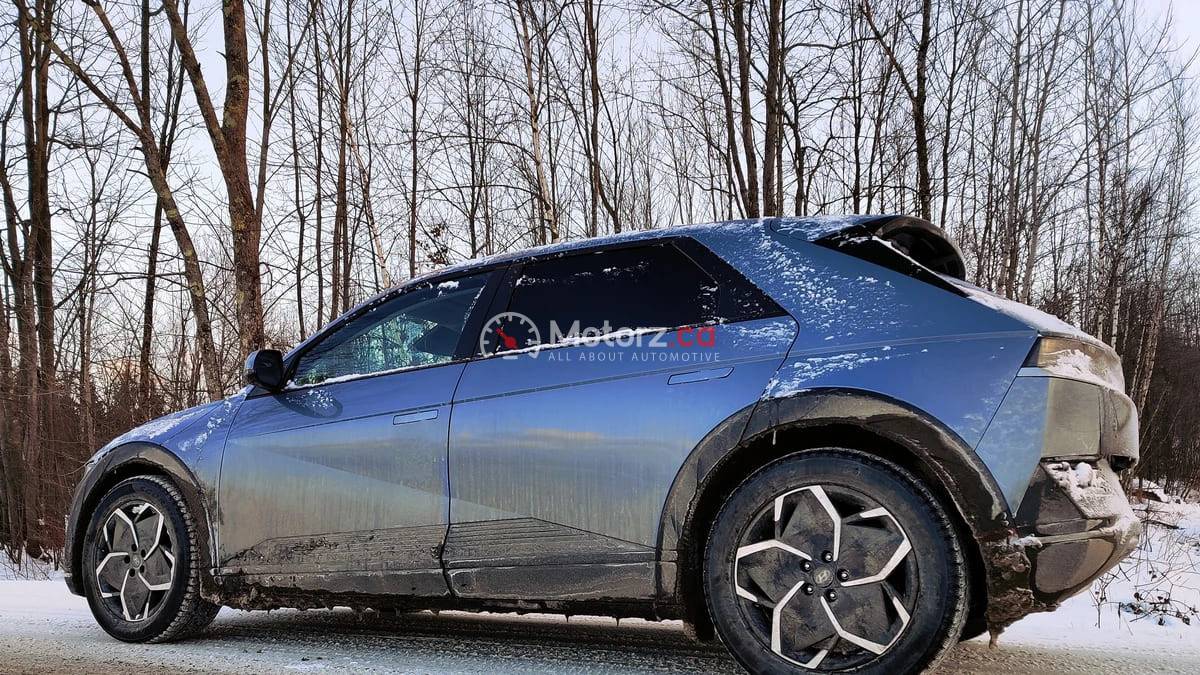

The Winter Warrior redefined the electric vehicle landscape with its retro-futuristic styling, spacious “living space” interior, and lightning-fast 800-volt charging architecture. But for drivers in regions with genuine winter—places where heavy snowfall, ice, and prolonged freezing temperatures are the norm—the question of how this EV performs remains critical.
Specifically, the IONIQ 5 Long Range Rear-Wheel Drive (RWD) model poses a fascinating test case. In an era where automakers heavily market All-Wheel Drive (AWD) as the only solution for winter, the RWD version offers superior range and a lower entry price, making it highly appealing. But can a heavy electric crossover, powered only by its rear axle, handle the deep freeze, slick roads, and inevitable EV range anxiety that cold weather brings?
We put the IONIQ 5 RWD to the ultimate test driving it through snowstorms, across icy commuter roads, and on road trips where fast-charging was essential. This authoritative review covers the three critical pillars of cold-weather EV performance: Traction and Stability, Range Degradation and Efficiency, and Charging Infrastructure Performance—determining whether the Long Range RWD is a true winter warrior, or if you absolutely need to spring for the AWD model.
Traction and Stability: The RWD EV Advantage in Snow
For decades, Rear-Wheel Drive cars earned a reputation for being notoriously poor in snow. The IONIQ 5 RWD, however, benefits from a unique EV engineering characteristic that fundamentally changes the physics of cold-weather grip.
Weight Distribution and the Winter Warrior
Traditional RWD vehicles often struggle in snow because the engine weight is up front, leading to an easily spinning rear axle with insufficient load to push the car forward. The IONIQ 5 flips this script:
Ideal Weight Bias: The entire 77.4 kWh battery pack is mounted low in the chassis (the E-GMP platform), with a significant portion of the weight distributed over the rear-drive axle. This weight bias provides a natural downforce over the rear wheels, improving mechanical grip where the power is being delivered.
Instant Electric Torque: The RWD model’s single motor provides a healthy 225 horsepower and 258 lb-ft of torque. Because this torque is instant and digitally metered, the vehicle’s Traction Control System (TCS) can react with unparalleled speed and precision. Unlike a gasoline engine that requires the throttle body and transmission to react, the EV motor can be dialed back millisecond by millisecond.
Crucial Finding: With high-quality dedicated winter tires installed, the IONIQ 5 RWD’s superior weight distribution allows it to launch and navigate moderate snow (up to 4-5 inches) with surprising confidence and control. The myth that RWD is inherently bad in winter is largely defeated by modern EV engineering and technology.
The Effectiveness of Snow Mode
The IONIQ 5 includes a dedicated Snow Mode, which is crucial for managing the immense power of the electric motor on slippery surfaces.
Throttle Dulling: Activating Snow Mode significantly dulls the throttle inputs and softens the accelerator pedal mapping. This prevents the driver from accidentally requesting a massive surge of torque that would instantly break traction, ensuring a smooth, steady power delivery crucial for maintaining momentum on ice or packed snow.
Regenerative Braking Management: Snow Mode also reduces the strength of the regenerative braking effect. While one-pedal driving (i-Pedal) is excellent in the dry, aggressive regeneration on ice can feel like heavy braking, potentially causing the drive wheels to slow too rapidly and lead to a slide. Snow Mode manages this smoothly, allowing the driver to control deceleration with less risk of instability.
Range Degradation: The Cold Weather Tax on Efficiency
The primary concern for any EV driver in winter is range degradation. When the temperature drops significantly below freezing, chemical reactions within the battery slow down, and two major systems—cabin heating and battery management—begin to draw substantial power.
Real-World Range Loss and Efficiency
While the EPA-estimated range for the Long Range RWD is over 300 miles (488 kilometers), real-world testing in freezing conditions shows a predictable and significant drop in efficiency.
Typical Range Loss: In temperatures consistently near or below freezing (0 degrees Celsius), drivers can expect a 25 to 35 percent drop in usable driving range compared to optimal summer conditions. This means the 488-kilometer estimate realistically falls to between 317 and 366 kilometers for long highway trips.
The Cabin Heating Drain: Unlike a gasoline car that uses “waste heat” from the engine, the IONIQ 5 must generate heat electrically. If the RWD model is equipped with the highly efficient Heat Pump (standard in many regions, but check the specific trim), this mitigates some loss by scavenging heat from the ambient air and the battery components. However, on extremely cold days, resistive heating still draws significant power to keep the expansive cabin warm.
Maximizing Efficiency: The most effective winter driving technique is to prioritize heated surfaces: use the heated seats and heated steering wheel first, and lower the climate control set point slightly. Targeting heat directly at the occupants is far more efficient than trying to heat the entire cabin volume.
The Power of Battery Preconditioning
For drivers planning cold-weather road trips that require DC fast charging, battery preconditioning is arguably the most important thermal feature.
Faster Charging Assurance: A cold battery accepts charge far more slowly than a warm one. The IONIQ 5’s system, when you navigate to a DC fast charger using the car’s native navigation system, automatically dedicates energy to warming the battery pack to its optimal temperature (around 20 to 25 degrees Celsius).
Impact of Preconditioning: In tests, preconditioning can make the difference between charging at a slow, frustrating 50-70 kW and achieving the IONIQ 5’s lightning-fast peak charging rate of over 200 kW. Without this feature (which was absent on some early RWD models), cold-weather fast-charging can be a patience-testing experience.
Charging and Practicality: Winter Road Trip Logistics
Beyond the range numbers, the user experience of living with the IONIQ 5 RWD in the depths of winter involves dealing with external practicalities and design quirks.
Managing the 800V Architecture in the Cold
The IONIQ 5’s advanced 800V system (shared with the Kia EV6 and Genesis GV60) remains a huge advantage even in cold weather, provided the preconditioning is active.
Cold-Weather Charging Speed: Even with the range loss, the potential for an 18-minute 10 percent to 80 percent charge remains unmatched by many competitors, making the road trip possible. The key is to charge strategically—plan stops when the battery is already warm from driving, or ensure you navigate to the station to trigger preconditioning.
Home Charging Habits: Plug-in charging at home is essential in winter. By keeping the car plugged in overnight, the car can draw power from the wall to maintain battery temperature and pre-heat the cabin for your morning departure, using grid electricity instead of the stored battery energy.
Practical Winter Design Flaws
The IONIQ 5’s striking design is not entirely immune to winter’s demands. Two major design elements present recurring issues:
The Missing Rear Wiper: A notable omission is the lack of a rear windshield wiper. In wet, snowy, and salty conditions, the aerodynamic shape of the large rear window quickly becomes obscured by road grime, severely limiting rearward visibility, forcing the driver to rely heavily on side mirrors and the backup camera.
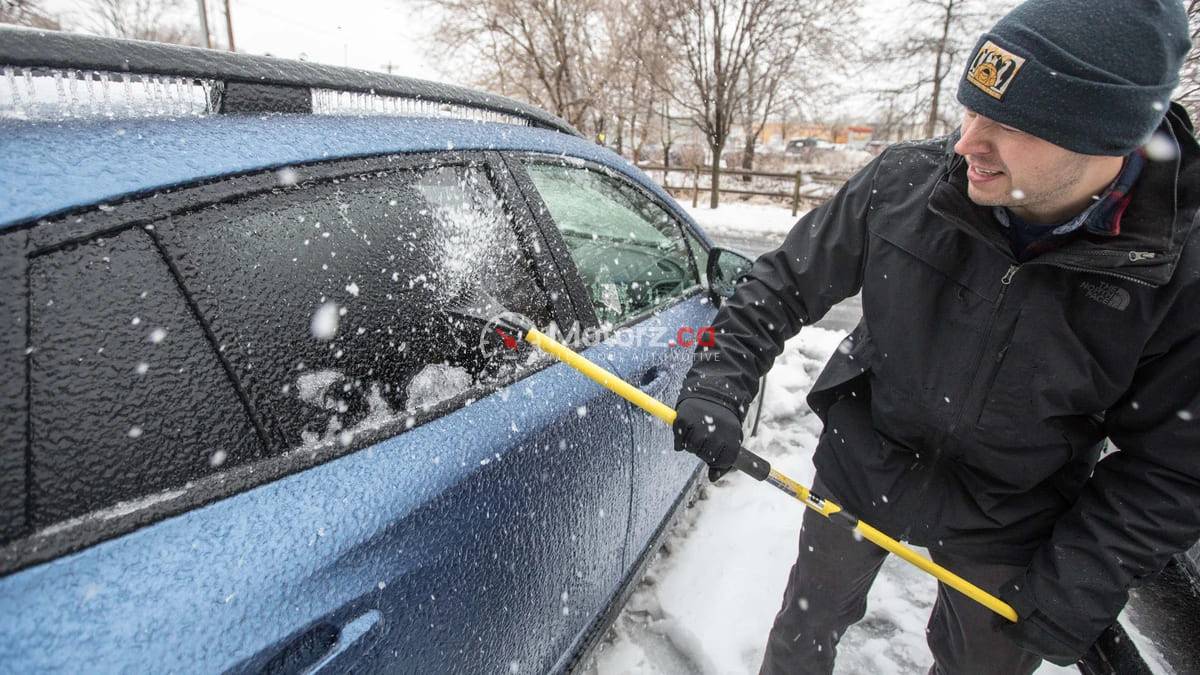
Sensor and Camera Icing: The vehicle’s reliance on sensors and cameras for advanced driver assistance systems (ADAS) like Lane Keep Assist and Adaptive Cruise Control means that heavy ice or snow buildup on the front fascia and rear lights can temporarily disable these systems, requiring frequent cleaning, especially during long drives.
RWD vs. AWD: Making the Final Winter Decision
The choice between the Long Range RWD and the AWD version of the IONIQ 5 is the final hurdle for winter drivers.
When the RWD is Sufficient
The RWD is a highly capable winter vehicle for the majority of drivers, provided they meet two essential criteria:
Dedicated Winter Tires: This is non-negotiable. Without a premium set of 3PMSF-rated winter tires, the RWD will struggle to deploy its torque on slippery surfaces. With them, it is a stable, controlled commuter.
Urban/Suburban Driving: If your winter driving is primarily confined to cleared, well-salted, and maintained roads, the RWD’s superior efficiency and lower price point make it the smarter financial choice.
When the AWD is the Smarter Investment
The AWD version (with its dual motor setup) should be considered essential for a specific subset of drivers:
Steep Inclines and Unmaintained Roads: If your daily commute involves significant uphill sections, unpaved roads, or you live in a location where plowing is infrequent, the added pull from the front motor provides the security and recovery capability that the RWD cannot match in deep or packed snow.
Maximized Control: While the RWD is controlled, the AWD offers an additional layer of stability and performance. For the driver prioritizing maximum grip and acceleration in all conditions, the approximately 10 percent range penalty for the AWD may be worth the peace of mind.
RWD Capability with an Asterisk
The Hyundai IONIQ 5 Long Range RWD proves that rear-wheel-drive EVs are perfectly capable winter drivers. The vehicle’s excellent weight distribution, smart traction control programming (especially in Snow Mode), and advanced thermal management features (like battery preconditioning and the heat pump) overcome the old limitations of RWD platforms.
However, its success in severe cold comes with one critical, non-negotiable asterisk: the requirement for high-quality winter tires. Paired with a set of dedicated snow tires, the IONIQ 5 RWD is a confident, efficient, and thoroughly enjoyable companion for winter commutes. Without them, even the AWD model will struggle. The RWD choice is validated for efficiency-minded, urban winter drivers who are willing to invest in the right rubber.