


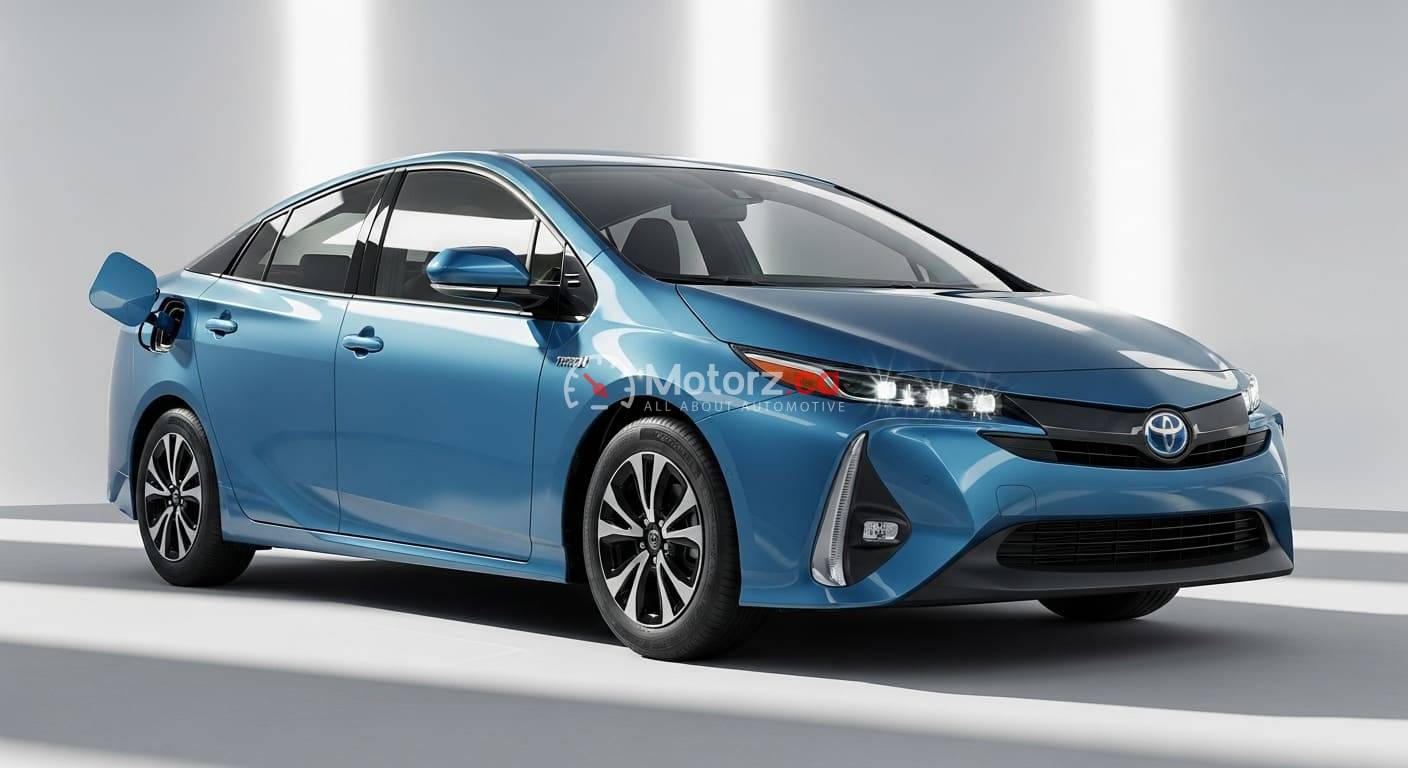

The 2025 Toyota Prius Prime is more than just a plug-in hybrid electric vehicle (PHEV); it’s a stylish statement and a testament to modern fuel efficiency. With its dramatic redesign, enhanced electric-only range, and bulletproof Toyota reliability, it has quickly become one of the hottest cars in the eco-conscious market.
However, once you decide that the Prius Prime is the right vehicle for you, the next and perhaps most critical financial decision awaits: Should you lease or buy it?
This choice is more complex than a simple cash-versus-finance comparison, especially with a PHEV. The financial landscape includes factors like state and federal EV tax credits, rapidly changing battery technology, and the renowned residual value of a Toyota. To help you navigate this high-stakes decision, we’ve broken down the comprehensive financial analysis of both options for the 2025 Prius Prime.
The Financial Fundamentals of Buying the Prius Prime
Choosing to buy the 2025 Toyota Prius Prime committing to long-term ownership and assuming all the responsibilities—and rewards—that come with it. This path is ideal for those who drive high mileage or see themselves keeping the vehicle for five years or more.
Calculating the Total Cost of Ownership
When you purchase the Prius Prime, your financial calculation must look beyond the initial sale price (MSRP). The Total Cost of Ownership (TCO) is the key metric.
Purchase Price and Financing: Buying requires either paying cash upfront or securing a loan. The total cost includes the final vehicle price, Toyota Prius Prime, registration fees, and, most significantly, the interest paid over the life of the loan. Even if you secure a competitive Annual Percentage Rate (APR) from Toyota Financial Services or a third-party lender, the interest can add up to thousands over a five- or six-year term.
Incentives and Tax Credits: For PHEVs like the Prius Prime, purchasing often unlocks a powerful incentive: the Federal Clean Vehicle Tax Credit. In 2025, the size of this credit is subject to change based on battery size and final assembly, but it can significantly reduce your effective purchase price. It is crucial to confirm the exact credit Toyota Prius Prime the 2025 model qualifies for, as the vehicle’s battery sourcing impacts eligibility. This credit is realized when you file your taxes, essentially acting as a deferred discount on your vehicle.

Battery Warranty and Maintenance: One of the core strengths of Toyota is its reliability and robust warranty. For the Prius Prime, the battery is covered by a reassuringly long warranty, often 10 years or 150,000 miles for the hybrid components. This exceptional coverage mitigates the biggest long-term cost fear associated with electrified Toyota Prius Prime—expensive battery replacement—making the buy option far more appealing for a decade or more.
The Strategic Advantages of Leasing the Prius Prime
Leasing a vehicle is essentially paying for its depreciation during the term you drive it. This path offers lower monthly payments and a simplified transition to a new car every few years, which is particularly attractive for technology-focused vehicles like a PHEV.
The Mathematics of Leasing
The entire financial structure of a lease is determined by two main factors:
Residual Value (RV): This is the projected Toyota Prius Prime of the Prius Prime at the end of the lease term (e.g., 36 months). Toyota’s reputation for reliability and high resale value directly translates to a high residual value for the Prius Prime. A higher RV means you are paying for less depreciation, resulting in a lower lease payment. Toyota vehicles consistently rank high in RV, making them excellent lease candidates.
Money Factor (MF): This is the lease equivalent of the interest rate on a loan. It represents the cost of borrowing the vehicle. A lower MF means a lower total cost. Lease deals are often driven by Toyota’s decision to subsidize the MF to make the monthly payment more attractive.
The Immediate Incentive Advantage
One of the largest, yet least understood, advantages of leasing a PHEV is how it handles the Federal Tax Credit. Unlike a purchase, where the Toyota Prius Prime must wait to claim the credit, when you lease the Prius Prime, the leasing company (often Toyota Financial Services) claims the credit and typically passes the entire value directly to you in the form of a capitalized cost reduction. This immediate discount lowers the amount you finance and results in a significantly reduced monthly payment from day one. This instant incentive can often make leasing the financially superior option for a plug-in hybrid.
Comparing the Key Financial Trade-offs
The decision ultimately comes down to your personal driving habits, financial goals, and how you view the future of hybrid electric technology.
Mileage and Customization Restrictions
A major consideration for the lease option is the mileage cap, typically set at 10,000 or 12,000 miles per year. If you are a high-mileage driver, exceeding this cap can trigger punitive fees (often 20 to 25 cents per mile), which can wipe out any Toyota Prius Prime. Buying the Prius Prime eliminates this restriction, allowing you to drive as much as you need without penalty.
Furthermore, leasing imposes strict rules on customization and wear-and-tear. You cannot permanently modify a leased Prius Prime (e.g., custom wraps or serious body kits), and you are financially liable for damage exceeding “normal wear and tear.” When you buy, you are the owner; the vehicle is yours to modify or use as you see fit.
The Technological Depreciation Risk
For vehicles with rapidly evolving technology, like PHEVs and battery electric vehicles (BEVs), leasing offers a valuable hedge against technological obsolescence. Battery technology and charging infrastructure are improving rapidly. If a significantly better version of the Prius Prime or a full EV with a massive range is released in three Toyota Prius Prime, a lease allows you to simply turn in your current vehicle and upgrade to the latest model without the hassle of selling or trading in.
When you buy, you face the full brunt of technological depreciation. Your current Prius Prime might still be a great car, but its market value could drop faster than anticipated if battery ranges double in the coming years.
Financial Scenarios: A Practical Illustration
To make the comparison concrete, let’s consider two hypothetical buyers of a 2025 Prius Prime XSE Premium trim with an MSRP of thirty-eight thousand, assuming current market conditions.
Scenario A: The Long-Term Owner
Goal: Keep the car for 8 to 10 years and Toyota Prius Prime 15,000 miles annually.
Initial Cost: Down payment of two thousand plus taxes and fees.
Monthly Commitment: Higher monthly loan payment (say, six hundred fifty) over 60 months.
Financial Outcome: After five years, the car is paid off. The owner enjoys three to five years of payment-free driving and benefits from the robust Toyota battery warranty. The total long-term cost, despite the initial tax credit, will be higher due to interest Toyota Prius Prime, but the owner retains the full equity and asset value of the vehicle for a decade.
Scenario B: The Tech Enthusiast
Goal: Drive a new car every three years and limit mileage to 10,000 per year.
Initial Cost: Smaller out-of-pocket payment, potentially just the first month and fees, as the tax credit is applied up-front.
Monthly Commitment: Significantly lower monthly lease payment (say, four hundred fifty) over 36 months.
Financial Outcome: After three years, the Toyota Prius Prime has paid substantially less overall in payments. They can either return the car, buy it at the pre-determined residual value, or sign a new lease for the latest model. This option provides flexibility and a consistently lower monthly vehicle expense.