

Every year, the promise of the self-driving car seems to get closer. For 2026, the arrival of widespread Level 3 autonomous driving—spearheaded by BMW’s expansion of its Personal Pilot L3 system in models like the new iX3 and 7 Series—marks a genuine turning point. This is not just an incremental update to cruise control; it represents the first time the vehicle, under specific conditions, takes legal responsibility for the act of driving.
This is the most complex and potentially confusing level of automation to date. It is not Level 4 (fully autonomous in specific areas), nor is it the “eyes-on” assistance you may be using today (Level 2). Level 3 is defined as Conditional Automation, a delicate blend of machine control and human supervision that allows drivers to shift their attention away from the road for the first time.
So, what does this pivotal shift from Level 2 to Level 3 actually mean for the 2026 BMW owner? It means the difference between assisting the driver and replacing the driver—but only until the car says otherwise. Understanding the boundaries, the legal implications, and the technology behind BMW’s system is essential before you lean back and watch a movie in a traffic jam.
Delineating the Levels of Autonomous Driving
To truly grasp the significance of BMW’s Level 3 Autonomous Driving, we must start with the framework used by the entire industry: the SAE J3016 scale, which defines six levels of driving automation from 0 to 5.
Driver In Control
(No Automation): The driver does everything.
(Driver Assistance): The system provides steering or speed/distance control (e.g., standard cruise control or simple lane-keep assist). The driver handles all remaining tasks.
(Partial Automation): The car handles both steering and speed/distance simultaneously (e.g., adaptive cruise control with lane centering, like BMW’s Highway Assistant). Crucially, the driver must maintain constant vigilance, with eyes on the road and hands ready to take over at all times. The system is merely an assistant.
The Critical Leap to Conditional Automation
Level 3, where BMW is making its mark, is the transition point where the system takes over the driving task and the responsibility under specific, limited conditions.
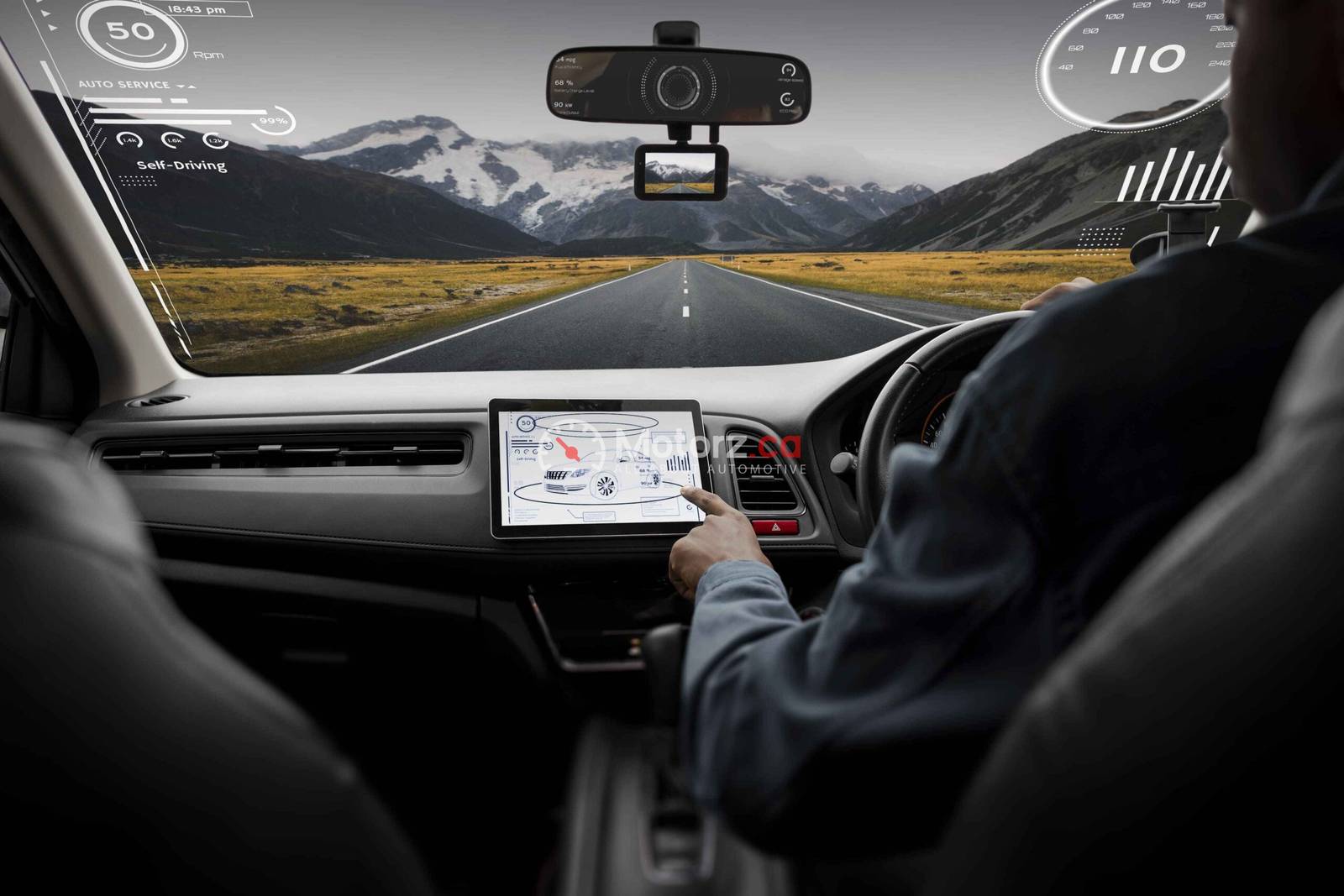
The Key Feature: Eyes-Off Freedom Under the activation criteria—which for the BMW Personal Pilot L3 means speeds generally limited to around 37 mph (60 km/h) on clearly separated motorways—the driver is legally allowed to take their eyes off the road and engage in “secondary activities,” such as watching videos on the central display, sending emails, or focusing on a phone call. This is the paradigm shift: the vehicle is now the fallback.
The Critical Caveat: Takeover Request The “conditional” aspect is everything. The system is designed to handle common situations like traffic jams or slow-moving highway traffic. However, if the car encounters a scenario it cannot handle—such as exiting the operational zone, severe weather, an emergency vehicle approaching, or a sudden malfunction—it will issue a Takeover Request. The driver then has a pre-determined amount of time (often several seconds) to acknowledge the request and regain full control of the vehicle. If the driver fails to respond, the system will execute a Minimal Risk Maneuver, bringing the vehicle to a controlled, safe stop. This transition phase is the biggest technical and legal challenge of Level 3 technology.
BMW Personal Pilot L3: Technology and Constraints
BMW’s Level 3 system, the Personal Pilot L3, relies on an advanced suite of sensors to achieve this conditional autonomy, often exceeding the requirements of Level 2 systems.
The Sensor Fusion Advantage
Unlike Level 2, which primarily uses standard cameras and radar, Level 3 systems must achieve redundancy and precision. BMW employs a sophisticated sensor fusion strategy:
3D LiDAR: A high-definition laser imaging sensor that provides precise distance measurements and 3D mapping, essential for operating reliably, especially in low-light conditions.
Enhanced Cameras and Radar: High-resolution cameras and long-range radar units work together to track surrounding traffic, pedestrians, and obstacles.
Live HD Mapping: The system requires extremely accurate, up-to-date high-definition maps of the operational domain. The car constantly cross-references its real-time sensor data with this digital map to confirm its exact position and validate the environment.
This advanced hardware, which allows the system to operate reliably even in the dark, is a significant differentiator for BMW.
Operational Design Domain (ODD) Limitations
The concept of the ODD is crucial for understanding Level 3. This is the specific set of conditions under which the automated system is designed to function. For the BMW Personal Pilot L3, the ODD is highly constrained:
Speed Limit: Typically around 37 mph (60 km/h).
Road Type: Motorways or highways with physically separated carriageways (i.e., divided highways).
Environmental Factors: Conditions must be clear, excluding heavy rain, snow, or dense fog.
Step outside these limits, and the system requires the driver to immediately take back control, reverting the car back to Level 2 or below functionality. This is why Level 3 is primarily a traffic jam assistant and a fatigue reducer, not an all-conditions highway driver.
The Legal and Insurance Ramifications of Conditional Driving
The core difference between Level 2 and Level 3 is liability.
Shifting Liability
The driver is always responsible and liable.
(Within ODD): The manufacturer (BMW, in this case) is generally responsible for accidents caused by the system when the Personal Pilot L3 is active and operating within its defined ODD. This is a monumental shift that requires regulatory approval state by state or country by country, which is why availability is highly localized.
Monitoring the Driver
To manage the critical takeover request, Level 3 vehicles must ensure the driver is present and able to resume control. The BMW system uses a sophisticated driver monitoring system (DMS), which tracks the driver’s head and eye movements.
The DMS confirms the driver is present and attentive enough to respond to the takeover request (i.e., not asleep or out of the seat).
If the DMS detects the driver is unresponsive during the takeover window, the car initiates the controlled stop. This requirement for the human to act as the “fallback system” is what separates Level 3 from the truly driverless experience of Level 4.
Is Level 3 Worth the Investment? The 2026 Perspective
The primary value proposition: eliminating the frustration and fatigue of stop-and-go traffic.
Discussion of the typical subscription or optional cost for the technology (e.g., the system’s initial cost).
Regulatory Uncertainty
The slow rollout of Level 3 approval across different regions (e.g., the US, Europe).
The risk of purchasing the technology only to have limited access due to local laws.
The Stepping Stone to L4
Viewing Level 3 not as the end goal, but as crucial testing and data gathering for the development of Level 4 highly automated driving.
The data collected by Personal Pilot L3 will refine algorithms for future, less constrained systems.