
There is a specific kind of silence that happens right before a Winter Driving Survival accident. It is the sound of your tires losing their “bite” on a patch of black ice, followed by the frantic, useless spinning of a steering wheel. For many drivers in northern climates, winter isn’t just a season; it is a high-stakes test of patience, preparation, and physics.
Every year, thousands of preventable collisions occur on icy roads because of small errors in judgment. While modern vehicles come equipped with all-wheel drive, anti-lock brakes, and traction control, none of these features can override the laws of thermodynamics. In 2026, as vehicles get heavier and road conditions become more unpredictable, mastering the art of winter driving is more critical than ever.
In this comprehensive guide, we are moving beyond the basic advice of “slow down.” We are diving into the three most critical, life-saving strategies that every driver needs to master before the next blizzard hits. Whether you are a seasoned commuter or a winter novice, these insights could be the difference between getting home safely and ending up in a snowbank.
Mastering the Winter Driving Survival: The Physics of Traction
The most important thing to understand about winter driving is that only four small patches of rubber—each about the size of a smartphone—connect your multi-ton vehicle to the road. This is your “contact patch.” In the winter, your primary goal is to protect the integrity of that connection.
The 7-Celsius Rule and Rubber Chemistry
Many drivers believe that all-season tires are enough for winter. However, rubber chemistry tells a different story. Once the temperature drops below 7 Celsius, the rubber compound in all-season and summer tires begins to harden. It becomes “glassy,” losing its ability to grip the road. Dedicated winter tires are made with high-silica compounds that stay soft and flexible in sub-zero temperatures, allowing the tread to “wrap” around microscopic imperfections in the ice.
Smoothness is Your Superpower
When traction is limited, any sudden movement can break the bond between your tires and the road.
Gentle Inputs: Imagine there is an egg between your foot and the pedals. You want to squeeze the brakes and the accelerator, never stomp them.
Separating Actions: Do not try to brake and turn at the same time. Finish your braking while traveling in a straight line, then coast through the turn, and only accelerate once the wheels are straight again.
Threshold Braking and the “Look Where You Want to Go” Rule
When a car starts to slide, the human brain often defaults to “panic mode.” This usually results in the driver staring directly at the obstacle they are trying to avoid—a phenomenon known as target fixation.
How to Steer Out of a Skid
If your rear end starts to fishtail (oversteer), or your front wheels stop responding to your steering (understeer), your eyes are your best tool.
Look at the Opening: If you are sliding toward a guardrail, do not look at the rail. Look at the open road next to it. Your hands will naturally follow your eyes.
Counter-Steer Method: Gently turn the steering wheel in the direction you want the front of the car to go. Avoid “sawing” at the wheel, which can cause the car to snap back violently in the other direction.
The Right Way to Use ABS
Almost every car on the road today has an Anti-lock Braking System (ABS). In an emergency, many drivers are startled by the “pulsing” or “grinding” sensation of the ABS and let go of the brake.
Stay Planted: If you need to stop quickly on ice, push the brake pedal down hard and hold it. Let the computer handle the pulsing.
The Exception: If you are driving an older vehicle without ABS, you must use “threshold braking”—applying steady pressure just up to the point before the wheels lock up, then easing off slightly if you feel a slide.
The “Space Cushion” and Visibility Strategy
In the summer, a three-second following distance is usually sufficient. In the winter, that distance needs to triple. You aren’t just giving yourself room to stop; you are giving yourself “escape routes.“
Increasing Your Following Distance
On a snow-covered highway, it can take up to ten times longer to stop than on dry pavement.
Heavy Vehicles: If you see a large commercial truck behind you, give yourself even more room in front. Trucks have much more mass and require significantly more distance to slow down.
The “Grey” Zone: Avoid driving in the blind spots of other vehicles. If they hit a patch of ice and spin out, you want to be nowhere near their trajectory.
Total Visibility: The “Snow Roof” Danger
Safety isn’t just about how you drive; it is about how you prepare your vehicle before shifting into Drive.
Clear the Roof: Leaving a “hat” of snow on your car is a major safety hazard. As your cabin warms up, that snow can slide down your windshield during braking, completely blinding you. Or, it can fly off and hit the driver behind you.
Clean Your Sensors: Modern cars rely on radar and cameras for emergency braking. If your front grille is covered in slush, your safety systems may be “blind.” Take thirty seconds to wipe down your sensors and your lights before every trip.
Frequently Asked Questions (FAQ)
Does All-Wheel Drive (AWD) help me stop on ice?
No. AWD only helps you get moving from a stop. It provides zero benefit for braking or turning. A heavy SUV with AWD and all-season tires will almost always perform worse on ice than a small sedan with front-wheel drive and proper winter tires.
What should I do if I get stuck in a snowbank?
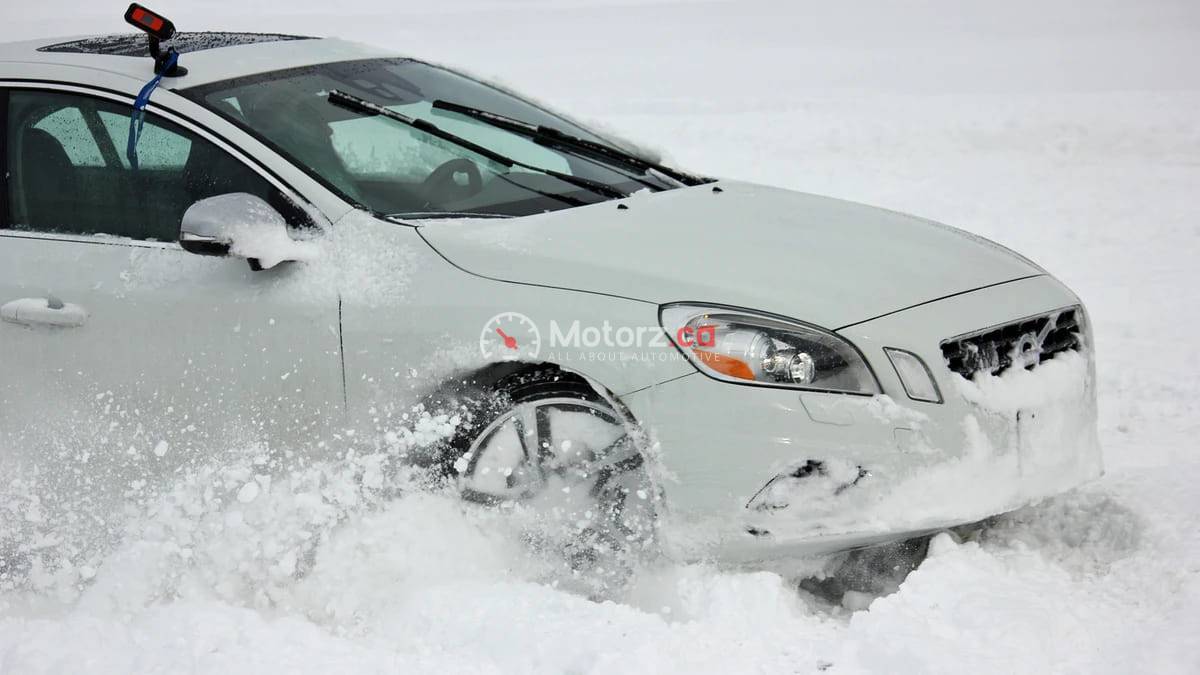
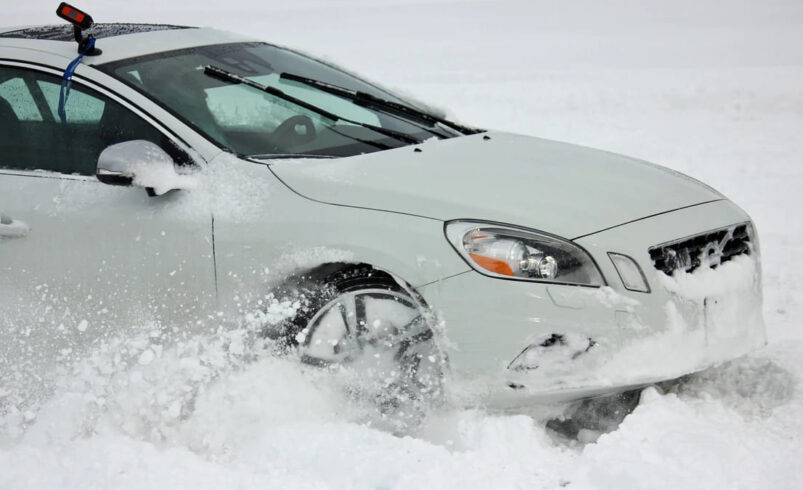
Avoid spinning your tires rapidly, as this creates heat that turns the snow into a sheet of ice. Instead, “rock” the car by shifting between Forward and Reverse, using gentle throttle. If that doesn’t work, use your floor mats or sand for traction under the tires.
Is it safe to use Cruise Control in the winter?
Absolutely not. Never use cruise control on wet, icy, or snowy roads. If your car hits a patch of ice while cruise control is on, the system may try to accelerate to maintain speed, which can cause an immediate and violent loss of control.
Preparation Trumps Luck
Winter driving doesn’t have to be a terrifying experience. By understanding the chemistry of your tires, the physics of a skid, and the importance of a massive space cushion, you move from being a victim of the elements to a master of them.