
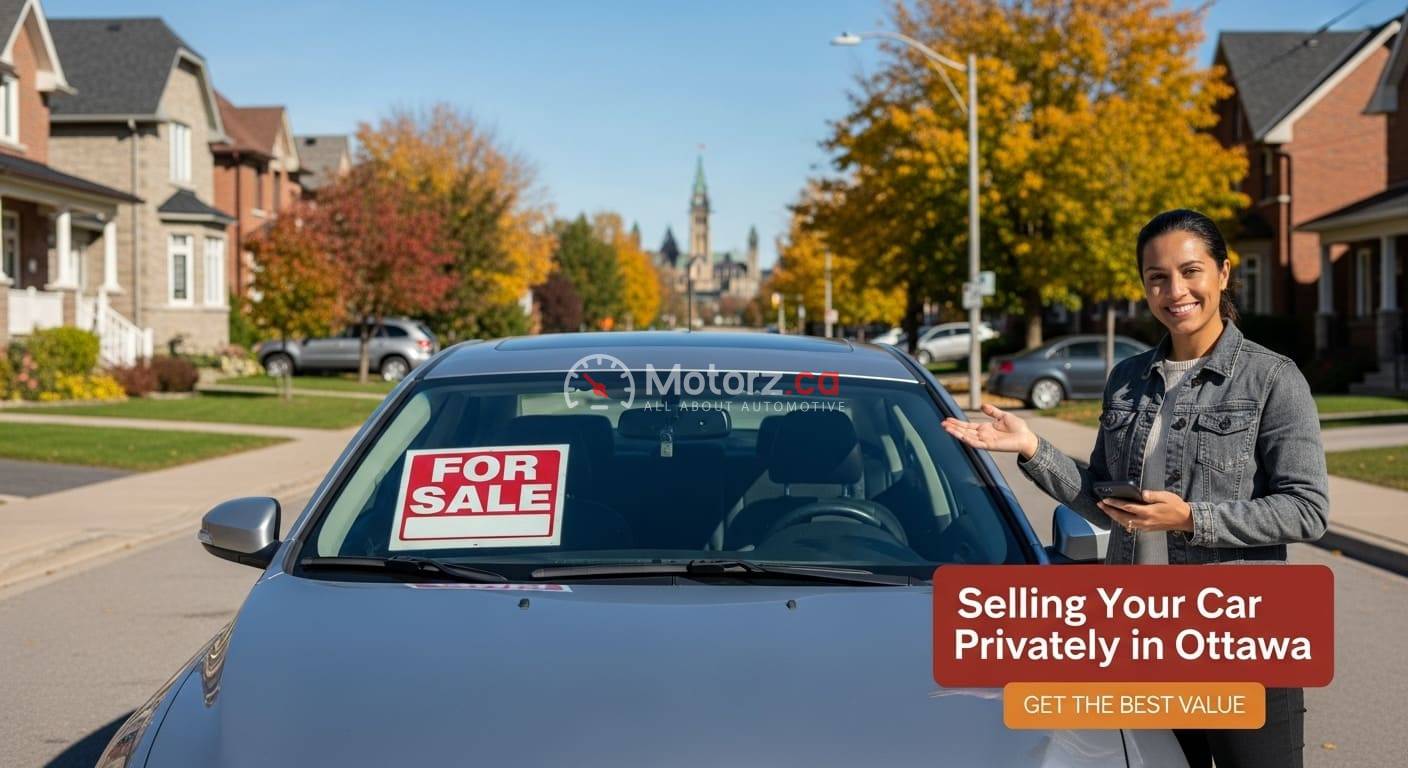

Selling your car privately in Ottawa, Ontario, can often net you a higher price than a trade-in, putting more money directly back into your pocket. However, unlike selling to a registered dealership, a private sale places the full weight of legal compliance and paperwork squarely on your shoulders. Ignoring the specific Ontario laws—particularly those mandated by the Ministry of Transportation (MTO)—can lead to serious headaches, from tax issues to liability concerns.
This comprehensive guide breaks down the process of a private Selling Your Car into easy-to-follow, legally compliant steps. We will walk you through the mandatory paperwork, how to manage prospective buyers, the final transaction, and the crucial post-sale steps to ensure a clean and worry-free transfer of ownership. By the end of this article, you will be equipped to handle your transaction with the confidence of a seasoned professional, legally protecting yourself while maximizing your profit on your used vehicle in Ottawa.
Selling Your Car Legal Preparation
Before you even place an ad Selling Your Car, there are mandatory legal steps every seller in Ontario must complete. These steps are designed to protect the buyer, but they are absolutely essential for shielding you, the seller, from future liability.
The Mandatory Used Vehicle Information Package (UVIP)
In Ontario, you, the Selling Your Car, are legally required to purchase and provide the buyer with a Used Vehicle Information Package (UVIP). This is non-negotiable for most used motor vehicles and is a cornerstone of a legal car sale in Ottawa.
What the UVIP Contains and Why It Matters
The UVIP is more than just a piece of paper; it’s a detailed history report that promotes transparency in a private vehicle transaction. It includes:
Ontario Registration History: A list of all previous owners and the vehicle’s registered status.
Lien Information: Crucially, it Selling Your Car if there is any outstanding debt (a lien) on the vehicle. You must clear any liens before the sale can be completed, or the debt holder can legally seize the vehicle from the new owner.
Average Wholesale and Retail Values: This “Red Book” value is what the provincial sales tax (RST) will be based on—either the stated sale price or the wholesale value, whichever is higher.
A Bill of Sale Section: A pre-printed, official Selling Your Car you must complete and sign.
You can purchase the UVIP online or at any Selling Your Car location. Failure to provide a valid UVIP is a violation of the Highway Traffic Act.
The Ownership Permit (Green Permit) Check
Your original vehicle ownership permit (the green document) is the official proof of legal ownership.
Verification and Condition of the Permit
Ensure your name and address are correct on the Selling Your Car. The Vehicle Identification Number (VIN) on the permit must match the VIN stamped on your car (usually visible through the windshield or on the driver’s side doorjamb). This document is where the ownership transfer will be officially executed at the time of sale.
Addressing Liens and Outstanding Debts
As mentioned, the UVIP will flag any active liens. If a bank or finance company has a lien on your car, you must have a clear plan for paying off the loan before transferring ownership. Many sellers coordinate with the buyer to pay the lender directly from the sale proceeds at the bank, ensuring the debt is cleared and the buyer gets a clear title. Get a Lien Release Letter from your lender for your records.
Preparing the Vehicle and Price in the Ottawa Market
While not strictly legal, these preparation steps are essential for a fast, profitable, and smooth sale, reducing potential legal friction with a Selling Your Car.
Pricing Your Car Fairly
Research the local Selling Your Car used car market on popular platforms like AutoTrader, Kijiji, and Facebook Marketplace. Set a realistic asking price that accounts for your vehicle’s condition, mileage, and features. Being overpriced can cause your ad to languish, while underpricing leaves money on the table.
The “As Is” Caveat and the Safety Standards Certificate (SSC)
In Ontario, you can legally sell a used vehicle “as is” without a Safety Standards Certificate (SSC). This is a common practice in private car sales.
Understanding the SSC Responsibility
Seller’s Obligation: You are not legally required to provide an SSC.
Buyer’s Obligation: The buyer must have a valid SSC to register the Selling Your Car and purchase license plates (unless the transfer is between immediate family members).
Legal Protection: If you sell the vehicle “as is,” you are no longer responsible for any repairs needed to certify the car. It is crucial to clearly mark this on your Bill of Sale and the UVIP to prevent legal claims later.
If you choose to obtain an SSC, it shows a commitment to the car’s quality and can speed up the sale, but it is only valid for 36 days.
Managing Prospective Buyers and Test Drives
Handling inquiries and test drives requires Selling Your Car, particularly in an urban setting like Ottawa. You must prioritize your safety and protect the vehicle.
Safety First: Meeting and Screening
Private selling means interacting with strangers. Always meet in a safe, public place in Ottawa—a busy parking lot, or a well-lit area near a coffee shop. Never give out your full home address until absolutely necessary.
Test Drive Protocols and Insurance
You must verify that the prospective buyer has a valid Selling Your Car licence. During the test drive:
Accompany the Buyer: Always ride along. Never let a stranger take your car unsupervised.
Your Insurance: Your existing Ottawa auto insurance policy typically covers the vehicle, including any driver operating it with your permission. However, it is wise to confirm with your insurance provider what their coverage limits are for a test drive before you begin.
The Transaction and Paperwork Execution
This is the most critical stage, where the legal transfer of ownership takes place. Precision in documentation is key.
The Official Transfer on the Ownership Permit
The green ownership permit has a section on the back for the Selling Your Car for Transfer. You, the seller, must complete and sign this part. The required information includes:
Date of Sale.
Purchase Price.
Name and Address of the New Owner (Buyer).
Odometer Reading at the time of sale.
Your Signature (the Seller).
Once completed, the vehicle portion of the permit is given to the buyer. You keep the plate portion (the smaller stub) and your plates.
Executing the Bill of Sale
A separate, signed Bill of Sale (which can be the one provided in the UVIP) is crucial for both parties’ legal protection.
Mandatory Bill of Sale Details
The document must clearly state:
Full names and addresses of both the seller and the buyer.
The Vehicle Identification Number (VIN).
Make, model, year, and colour of the vehicle.
The final agreed-upon Purchase Price.
The Date of Sale.
A clear statement if the vehicle is being sold “AS IS, WHERE IS” with no warranties (highly recommended).
Signatures of both the buyer and the seller.
Keep a signed copy of the Bill of Sale for your records. This is your legal proof that you are no longer the owner.
Secure Payment Methods
In the digital age, cash is no longer the only secure payment Selling Your Car. For a car sale in Ottawa, consider the following methods to avoid fraud:
Bank Draft/Certified Cheque: Insist on a bank draft or certified cheque and verify its authenticity before handing over the keys and paperwork. Ideally, complete the exchange at the buyer’s bank.
Interac e-Transfer: Useful for smaller amounts, but beware of daily limits and hold times for large sums.
Cash: Ensure it is verified. Never accept a personal cheque.
Post-Sale Legal Obligations
The sale is complete only after you have managed the aftermath of the transaction, specifically your licence plates and insurance.
Removing Licence Plates (and Plates are Yours!)
In Ontario, licence plates belong to the person, not the vehicle. The moment the sale is finalized and you have payment, you must remove your licence plates from the vehicle. Do not let the buyer drive away with your plates.
Plate Transfer and Returns
You can transfer your plates to another vehicle you own, or you can surrender them at a ServiceOntario center. If you surrender them, you may be eligible for a pro-rated refund on your annual validation sticker fees.
Cancelling Insurance and Liability
Your final, crucial step is to immediately contact your Ottawa car insurance provider to cancel or suspend your policy on the sold vehicle. As long as the vehicle is registered and insured in your name, you could potentially be held liable for any accidents or tickets. Once the transfer paperwork is signed and the vehicle is in the buyer’s possession, your obligation is to promptly notify your insurer.
Protection Against Curbsiding (Illegal Selling)
OMVIC, Ontario’s motor vehicle sales regulator, warns against curbsiding—unregistered, illegal dealers posing as private sellers. As a legitimate private seller, by following this guide and adhering to the mandatory UVIP requirement, you are clearly distinguishing yourself and protecting yourself from being mistaken for illegal activity. Always be honest about the vehicle’s history, as per your legal duty.