




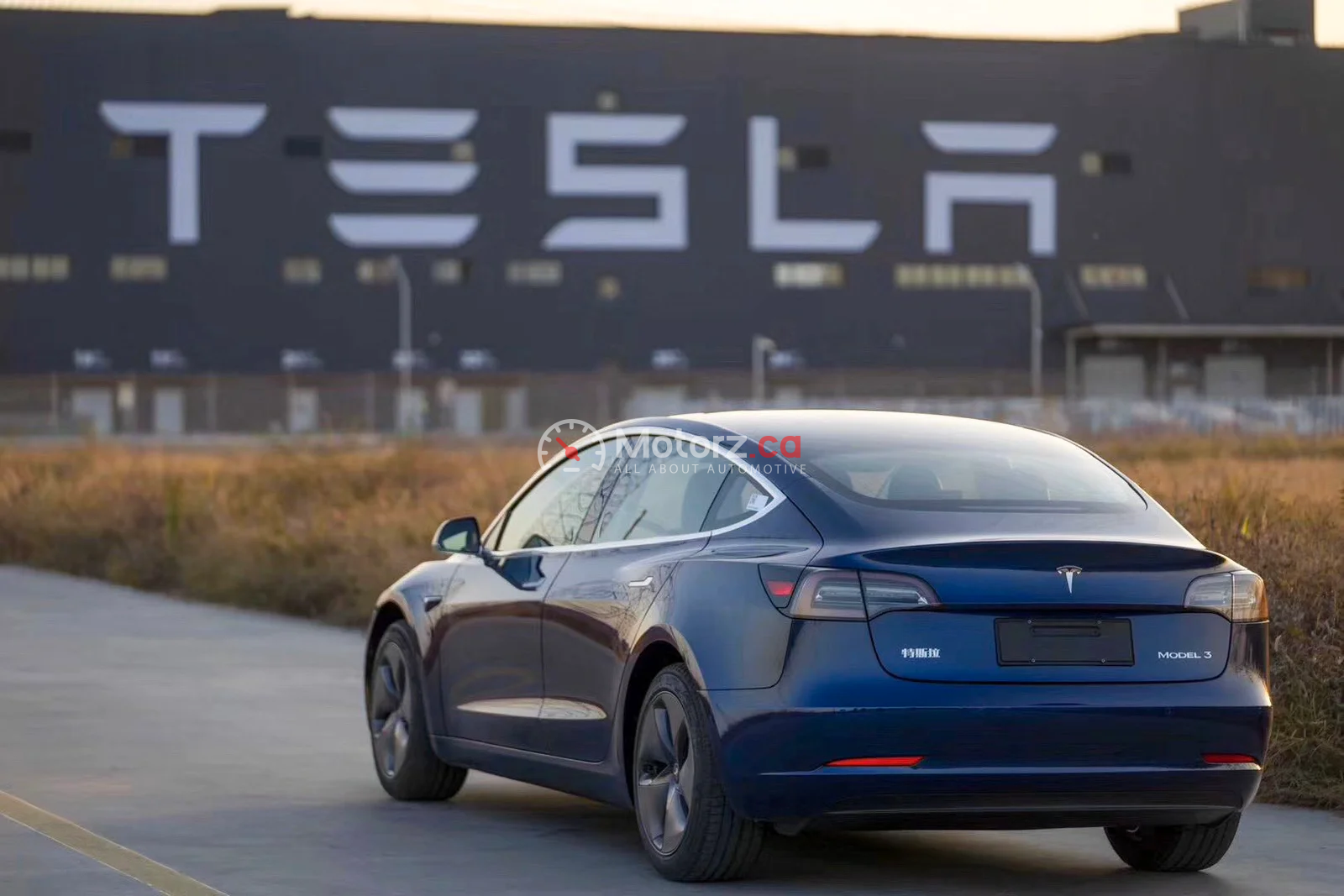

TSLA Stock Analysis has just fired a major salvo in the European electric vehicle (EV) market with the introduction of its most affordable Model 3 variant yet. Priced aggressively in key markets like Germany, where it starts at approximately 37,970 euros, this strategic move aims to combat softening demand and fend off intensifying competition, especially from value-focused Chinese rivals like BYD and legacy European automakers such as Volkswagen.
The decision to launch the Model 3 Standard in Europe, following its US debut two months earlier, is not merely a product expansion; it’s a critical volume-over-margin strategy that will fundamentally impact Tesla’s financials, market share, and stock performance in the near term.
This detailed analysis breaks down the specifications of the new low-cost Model 3, explores the highly competitive European EV landscape, and provides insights into what this price war means for TSLA investors regarding gross margins, delivery forecasts, and long-term valuation.
Tesla’s Strategic Pivot: Addressing Softening European Demand
The introduction of a cheaper entry-level Model 3 is a direct response to tangible market pressures Tesla has faced in Europe throughout 2025.
The Challenge of European Market Saturation and Competition
Europe is no longer a guaranteed growth engine for Tesla. While overall EV adoption continues to climb, new registrations for Tesla models have dipped in certain countries. This slowdown is primarily driven by three factors:
Chinese Aggression: Chinese manufacturers, led by BYD, are flooding the European market with high-quality, aggressively priced models, often starting well below 35,000 euros (and some below 30,000 euros), such as the BYD Atto 3. This unprecedented value proposition directly challenges Tesla’s historical dominance on price-to-range ratio.
Legacy OEM Response: European giants like Volkswagen (VW ID.3) and the newly formed Renault-Ford alliance are rapidly launching their own compact, sub-40,000 euro EVs, utilizing local manufacturing and strong brand loyalty to reclaim market share.
Consumer Sentiment: Reports suggest that consumer backlash in Europe over CEO Elon Musk’s controversial political actions has also weighed on demand, prompting Tesla to rely more heavily on pricing as a countermeasure.
The Model 3 Standard is Tesla’s attempt to drop its entry price point sufficiently to draw back cost-conscious buyers and re-engage the mass-market segment, preventing further market share erosion.
Specifications and Pricing of TSLA Stock Analysis
The low-cost variant achieves its aggressive pricing by carefully paring back non-essential premium features while keeping the core Tesla value proposition intact: performance, range, and the Supercharger network.
The crucial insight here is that Tesla is leveraging its superior manufacturing efficiency to deliver a competitive range (480+ km) and acceleration (0–100 km/h in under six seconds) at a price that significantly undercuts its own Premium offerings, making it a compelling reference point in the European EV ecosystem.
Financial Impact on TSLA: The Gross Margin Dilemma
The primary concern for TSLA investors following any major price reduction is the inevitable pressure on Automotive Gross Margins.
The Volume-vs-Margin Trade-Off
Tesla’s financial strategy has shifted from prioritizing high margins to maximizing volume and revenue growth, especially as the company focuses on the long-term, high-margin revenue streams of Full Self-Driving (FSD) and Robotaxis.
Margin Pressure: Tesla’s gross margins have already been under strain globally, having slid from their peak. The introduction of the Model 3 Standard, while using a smaller battery pack and simplifying components to lower the cost of goods sold (COGS), will still exert downward pressure on the average selling price (ASP) and, thus, the reported percentage gross margin.
Cannibalization Risk: Analysts fear the low-cost model might cannibalize sales of the higher-margin Model 3 Premium, leading existing buyers to downgrade their purchase for significant savings, thereby trading a high-margin sale for a lower-margin sale.
Volume Rebound: Conversely, if the aggressive pricing reinvigorates demand among consumers previously priced out of the Tesla ecosystem, the resulting increase in sales volume and higher factory utilization could offset the margin reduction in absolute dollar terms. This strategy is critical for sustaining revenue growth projections.
Investor Tip: When analyzing TSLA’s next earnings report (Q1 2026, when these deliveries begin), focus on total revenue growth and absolute gross profit dollars, not just the gross margin percentage. High volume can justify a lower margin if it locks in new customers for high-margin software subscriptions (FSD, Premium Connectivity).
Leveraging Factory Efficiency and Scale
Tesla’s ability to execute this price strategy hinges on its Gigafactory efficiency.
Cost Optimization: By consistently driving down the bill-of-materials cost through simplified design (like the rumored elimination of some wiring harnesses) and massive scale from Gigafactory Shanghai (which is supplying the Model 3 to Europe), Tesla can absorb price cuts better than rivals who operate on older, less streamlined production lines.
Operating Leverage: If the Model 3 Standard significantly drives volume, it improves operating leverage by spreading fixed costs (like factory rent, utility bills, and R&D overhead) across a larger number of produced vehicles, thereby lowering the COGS per unit.
The Competitive Landscape and Stock Catalysts
The launch must be viewed within the context of the accelerating price war in Europe, which is now a multi-front battle involving traditional OEMs, Chinese brands, and Tesla.
Countering the Chinese and Legacy Threat
The Model 3 Standard is a defensive and offensive play designed to create a “moat” around the mass-market EV segment.
Direct Price Confrontation: The pricing directly targets mid-tier European EVs like the VW ID.3 and Chinese compact crossovers like the BYD Atto 3, many of which are priced around the 35,000–38,000 euro range. Tesla is betting that buyers will choose the proven technology, superior charging infrastructure (Superchargers), and stronger brand equity of the Model 3 over these rivals.
Incentive Qualification: In many European countries, EV incentives and subsidies are tiered by price. Dropping the starting price to the sub-40,000 euro threshold (or lower in some markets) is crucial for securing government subsidies for buyers, making the vehicle’s effective purchase price even lower. This is a powerful volume catalyst.
Near-Term TSLA Catalysts and Risks
The stock price reaction to the European launch will be moderated by ongoing risk factors and future catalysts.
Long-Term Outlook: Software, Ecosystem, and Valuation
The long-term investment thesis for TSLA remains centered on its ecosystem and technological lead, not just the volume of its vehicle sales. The Model 3 Standard serves a necessary, if low-margin, role in this grander strategy.
The Power of the Supercharger Network
A key differentiator that rivals struggle to match is the Tesla Supercharger network. The European launch of the Model 3 Standard leverages this strength.
Ecosystem Lock-in: By bringing more drivers into the Tesla family, the company locks them into using the most extensive and reliable fast-charging network available. This convenience becomes a massive competitive advantage against rivals, particularly for first-time EV buyers concerned about charging reliability.
Future Revenue: As Tesla opens the Supercharger network to other brands (NACS adoption), the charging revenue becomes a new, stable, high-margin revenue stream that diversifies the company’s financials away from pure hardware sales.
The Role of the Model 3 Standard in the Robotaxi Future
While the Model 3 Standard is a necessary tactical move, CEO Elon Musk’s long-term focus remains on the development of Robotaxis and the fully autonomous FSD platform.
Data Collection Fleet: Every Model 3 Standard sold is a connected vehicle contributing valuable real-world data to the AI learning models for FSD. More volume means more data, accelerating the development timeline for full autonomy.
Foundation for Robotaxi: While Tesla scrapped plans for an all-new 25,000 EV platform, the Model 3 Standard demonstrates the ability to strip costs from existing platforms—a crucial skill for manufacturing the eventual Robotaxi or Cybercab at the ultra-low costs needed for profitability in autonomous ride-sharing.
The Model 3 Standard, therefore, is not merely a car; it is a data collection asset and a critical piece of the scale puzzle required to achieve the company’s ambitious long-term AI and autonomy goals.
TSLA Investors
Tesla’s launch of the low-cost Model 3 Standard in Europe is a calculated, aggressive, and necessary move to counter intensifying competition and address a slowdown in sales. It confirms the reality that the EV market has matured from a supply-constrained environment to a fiercely competitive, price-sensitive landscape.
For TSLA stock, the immediate risk is margin compression, which has already been flagged by analysts like Morgan Stanley. However, the potential for a substantial jump in European sales volume, combined with the underlying value of the Supercharger ecosystem and the accelerating FSD development, provides a compelling argument for its long-term growth trajectory. Investors should brace for near-term volatility driven by margin concerns but remain focused on the company’s ability to leverage this new low-cost model to secure volume, expand its data set, and solidify its dominant position in the crucial European market.