

How They Work & Why They’re Different
At their core, both gasoline and Diesel in British Columbia are internal combustion engines, but their fundamental design and method of ignition lead to vastly different characteristics.
Understanding the Core Differences
The Gasoline Engine: A Quick Overview: A gasoline engine operates on a spark-ignition principle. It pulls a mixture of gasoline and air into the combustion chamber, where a spark plug ignites the mixture, creating a small explosion that pushes the Diesel in British Columbia down. Gasoline engines are known for their high RPM (revolutions per minute) range, which allows for quick acceleration and a smooth, quiet driving experience. They are the most common engine type and are generally cheaper to manufacture and repair.
The Diesel Engine: A Different Kind of Power: A Diesel in British Columbia operates on a compression-ignition principle. It compresses only air to an extremely high pressure, which raises the temperature to a point where it can spontaneously ignite the atomized diesel fuel injected into the cylinder. This higher compression ratio is the key to a diesel engine’s immense power, fuel efficiency, and durability. However, this robust design makes the engine heavier, louder, and more expensive to build.
The Financial Equation: A Gas vs Diesel BC Cost Analysis
When you’re trying to decide, the financial aspect is often the deciding factor. Let’s break down the true costs of ownership in British Columbia, moving beyond the sticker price.
The Financial Equation: Gas vs Diesel BC Costs
The Upfront Purchase Price: Diesel in British Columbia almost always come with a price premium. Due to the more robust materials and complex systems (like modern emissions controls), a diesel-powered version of a truck or SUV can cost anywhere from $3,000 to over $10,000 more than its gasoline equivalent. This is a significant initial barrier, and it’s money you’ll need to recoup through fuel savings or better resale value down the line.
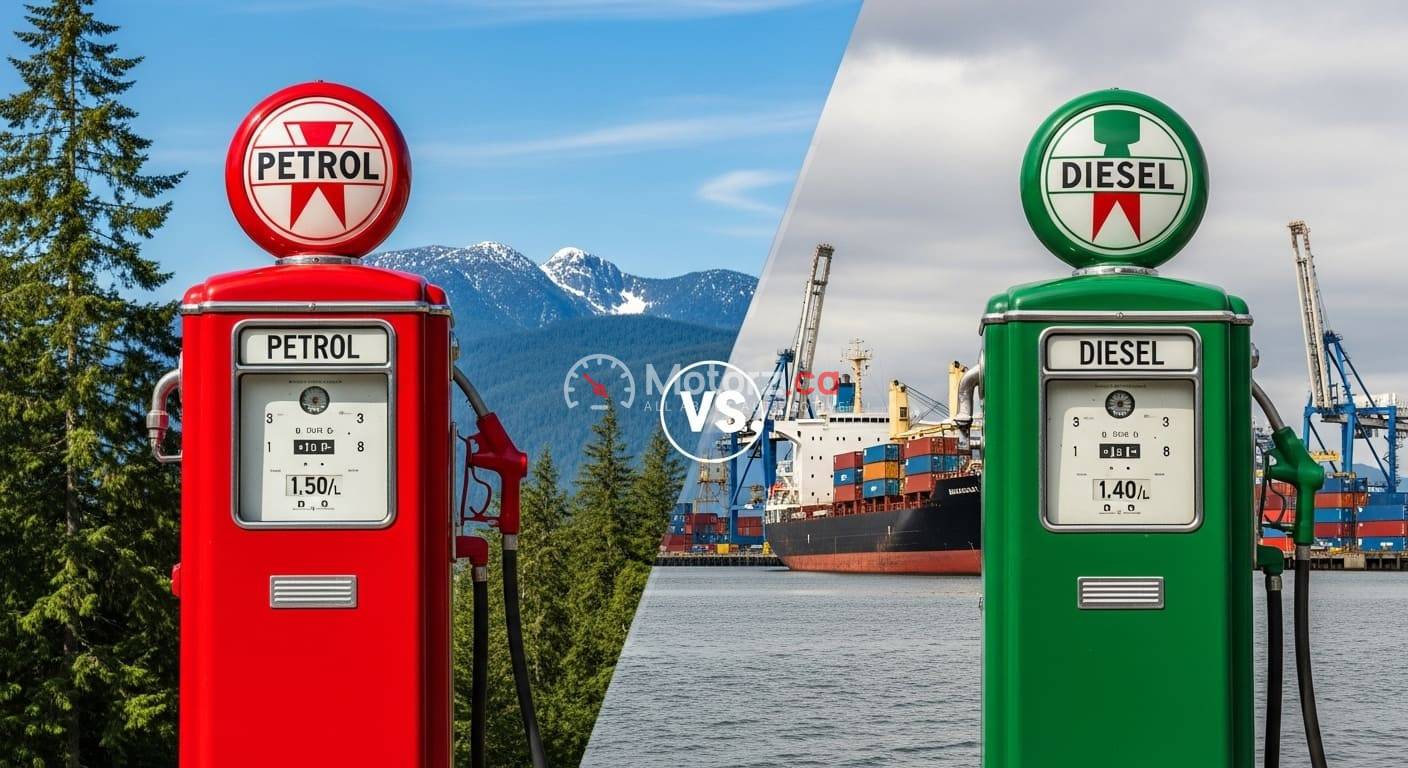
Fuel Costs and Economy: This is where the debate gets interesting. In Vancouver and across BC, diesel fuel is often priced higher than Diesel in British Columbia. For example, as of mid-2025, diesel fuel in Vancouver hovered around $1.80 per litre, while regular gasoline was often a few cents cheaper. However, diesel engines are significantly more fuel-efficient, often delivering 20-30% better fuel economy than comparable gasoline engines. This is especially true for highway driving and heavy-duty use. The superior fuel economy often offsets the higher BC fuel prices over the long run, especially for high-mileage drivers.
Maintenance and Repair: Here’s a critical area where diesel can be more expensive. While diesel engines are renowned for their longevity and can last for hundreds of thousands of kilometers, their maintenance and repairs can be costly.
Routine Maintenance: Diesel Diesel in British Columbia require more oil (often twice as much) and more expensive synthetic oil. A standard synthetic oil change for a gas vehicle might cost $80-$100, whereas a diesel oil change could be $150-$200 or more.
Emissions Systems: Modern diesels require Diesel Exhaust Fluid (DEF) to reduce nitrogen oxide emissions. This fluid must be refilled periodically. The cost of diesel emissions fluid BC can vary, but a 9.46-litre jug—which might last for several months of typical driving—can cost around $18. It’s a minor but ongoing expense.
Major Repairs: When a Diesel in British Columbia component fails, the repair can be significantly more expensive. For instance, a new diesel fuel injector can cost $300 to $1,200, whereas a gasoline injector is typically just $100-$300. The same goes for turbochargers and high-pressure fuel pumps. While these parts may be more durable, when they fail, the bill is substantial.
H3: Resale Value: Diesel in British Columbia engines, especially in the truck and SUV markets, are known for holding their value well. Their reputation for durability, towing capability, and longevity makes them highly desirable on the used market. This can help to recoup some of the higher initial purchase price and maintenance costs.
Driving Experience: Power, Performance, and Practicality
The numbers are important, but so is how the vehicle feels to drive.
Driving Experience: Power, Performance, and Practicality
Torque and Towing: This is the undisputed advantage of a diesel engine. Torque is the rotational force that gets a heavy load moving, and diesel engines are king. For anyone who plans to tow a camper, a boat, or haul a heavy load of materials up a steep incline, a diesel engine provides a smooth, powerful, and effortless experience that a gasoline engine simply can’t match. This is particularly relevant in BC, with its abundance of mountain passes and outdoor recreational Diesel in British Columbia.
Acceleration and Refinement: Gasoline engines tend to be more responsive and quicker off the line, especially in smaller, lighter vehicles. They operate at higher RPMs, giving them a more “peppy” feel. Diesel engines, while powerful, often have a more deliberate, heavy feel with a slower but continuous pull. They are also known for being louder and having more vibration, a factor modern cars have worked hard to mitigate.
Cold Climate Factor: Anyone living in Diesel in British Columbia Interior or Northern regions knows the challenges of cold-weather starts. Diesel fuel can “gel” in extreme cold, and diesel engines use glow plugs to pre-heat the combustion chamber. While modern systems have made this less of an issue, a diesel engine can still be more temperamental to start than a gas engine on a freezing winter morning.
Environmental Footprint and Regulations in BC
In a province with a strong focus on environmental stewardship, the emissions debate is a key consideration.
Environmental Footprint and Regulations
The Modern Diesel: Diesel engines have a bad reputation for producing black soot and nitrogen oxides (NOx), both of which are harmful air pollutants. However, modern diesel engines are a marvel of engineering. They use a system that includes a Diesel in British Columbia Particulate Filter (DPF) and the DEF fluid system to dramatically reduce these emissions. A modern, well-maintained diesel is far cleaner than its predecessors.
A Word of Caution for City Driving: The Diesel in British Columbia filter works by burning off accumulated soot during a process called “regeneration,” which requires the engine to run at a high temperature for an extended period, typically on the highway. For drivers who use their diesel vehicle for short, urban, gasoline engines BC-style commutes, the DPF may never reach the necessary temperature to regenerate. This can lead to a clogged filter, a warning light on your dash, and a costly trip to the mechanic for a “forced regeneration” or, in a worst-case scenario, a DPF replacement. A diesel engine in Vancouver’s stop-and-go traffic may not be the best fit for this reason.
The Gasoline Engine’s Emissions: While cleaner than older diesels, gasoline engines are not emissions-free. They produce carbon dioxide (CO2), carbon monoxide, and other greenhouse gases. The conversation is less about which is “better” and more about which type of emission you are trying to minimize.
The Final Verdict: Choosing for Your BC Lifestyle
After breaking down all the factors, the decision comes down to one simple question: What will you use your Diesel in British Columbia for?
Making the Right Choice for Your BC Lifestyle
A Gasoline Car is Best For You If…
You’re an urban commuter: You spend most of your time in city traffic with frequent short trips.
You’re budget-conscious: You want lower upfront costs and cheaper, more accessible repairs.
You don’t do a lot of towing: Your primary use is as a daily driver for commuting and light errands.
A Diesel Car is Best For You If…
You tow or haul heavy loads: You have a boat, a travel Diesel in British Columbia, or you haul materials for work.
You’re a high-mileage driver: You frequently drive long distances on the highway and cross mountain passes. The fuel savings will outweigh the higher initial costs.
You plan to keep your vehicle for a very long time: The extended longevity of a diesel engine means it can outlast a gasoline engine with proper care.