
The Secret Engine world holds its breath for the new chapter of a legend. For nearly two decades, the R35 Nissan GT-R, affectionately nicknamed “Godzilla,” has redefined the supercar landscape, proving that exceptional performance doesn’t have to come with a seven-figure price tag. Its heart, the mighty VR38DETT twin-turbo V6, became a benchmark for tunability and raw power.
But the world changes, and emissions regulations evolve. The glorious R35 is winding down its production run, and the future is accelerating toward us. The next chapter, the highly anticipated 2028 Nissan GT-R R36, is not just an update; it’s a re-engineering of the entire “Godzilla” ethos. The biggest secret? The engine. It’s no longer just about brute force; it’s about a blend of electric precision and internal combustion intensity.

This is the definitive dive into the rumored, hinted-at, and virtually-confirmed powertrain that will propel the R36 into the new decade, ensuring it remains a supercar killer for years to come.
The Inevitable Shift: Embracing Electrification
For a long time, the question wasn’t if the R36 would be electrified, but how. Nissan executives have all but confirmed that a pure internal combustion engine (ICE) is off the table, and a full battery-electric vehicle (BEV) was dismissed after testing revealed limitations with current battery technology—specifically, maintaining peak performance for multiple high-speed track laps.
The Hybrid Mandate
The consensus, supported by multiple high-ranking Nissan figures, points squarely at a hybrid powertrain. This decision isn’t just about meeting stricter global emissions standards (a significant factor, of course); it’s about leveraging electric motor technology to enhance the GT-R’s core identity: incredible speed, control, and all-weather usability.
A hybrid system allows the R36 to achieve several crucial goals:
Instantaneous Torque: Electric motors deliver maximum torque from zero RPM, eliminating any potential turbo lag and providing an immediate, bone-jarring launch.
Enhanced AWD System: Electric motors can provide superior, instantaneous torque vectoring and precise power distribution to individual wheels, taking the GT-R’s already legendary ATTESA E-TS All-Wheel Drive system to an entirely new dimension of grip and handling control.
Daily Usability: A plug-in hybrid (PHEV) variant, which has been suggested as the ideal architecture, would allow for a decent all-electric range for quiet, zero-emission commuting—perfect for “driving your kids to school or going to the grocery store,” as one Nissan VP put it.
The ‘R-Hybrid’ Moniker
While not officially confirmed for the R36, the “R-Hybrid” trademark application from years ago strongly suggested this direction. The system will likely be one of two architectures: a conventional hybrid or a full-blown plug-in hybrid, with the latter offering the performance benefits of a larger battery and the aforementioned electric-only range. Nissan’s timeline for the R36 aligns with the anticipated mass production of their Solid-State Battery (SSB) technology around 2028. If this next-generation battery arrives as planned, it could solve the weight and thermal management issues that current lithium-ion packs pose for a track-focused PHEV, making a true GT-R PHEV a reality.
The Next-Generation Internal Combustion Heart
While electrification provides the high-tech boost, the soul of the GT-R has always been its six-cylinder engine. The R36 will retain this configuration, but it will be a heavily revised or entirely new unit.
The VR38 DETT Evolution or Replacement
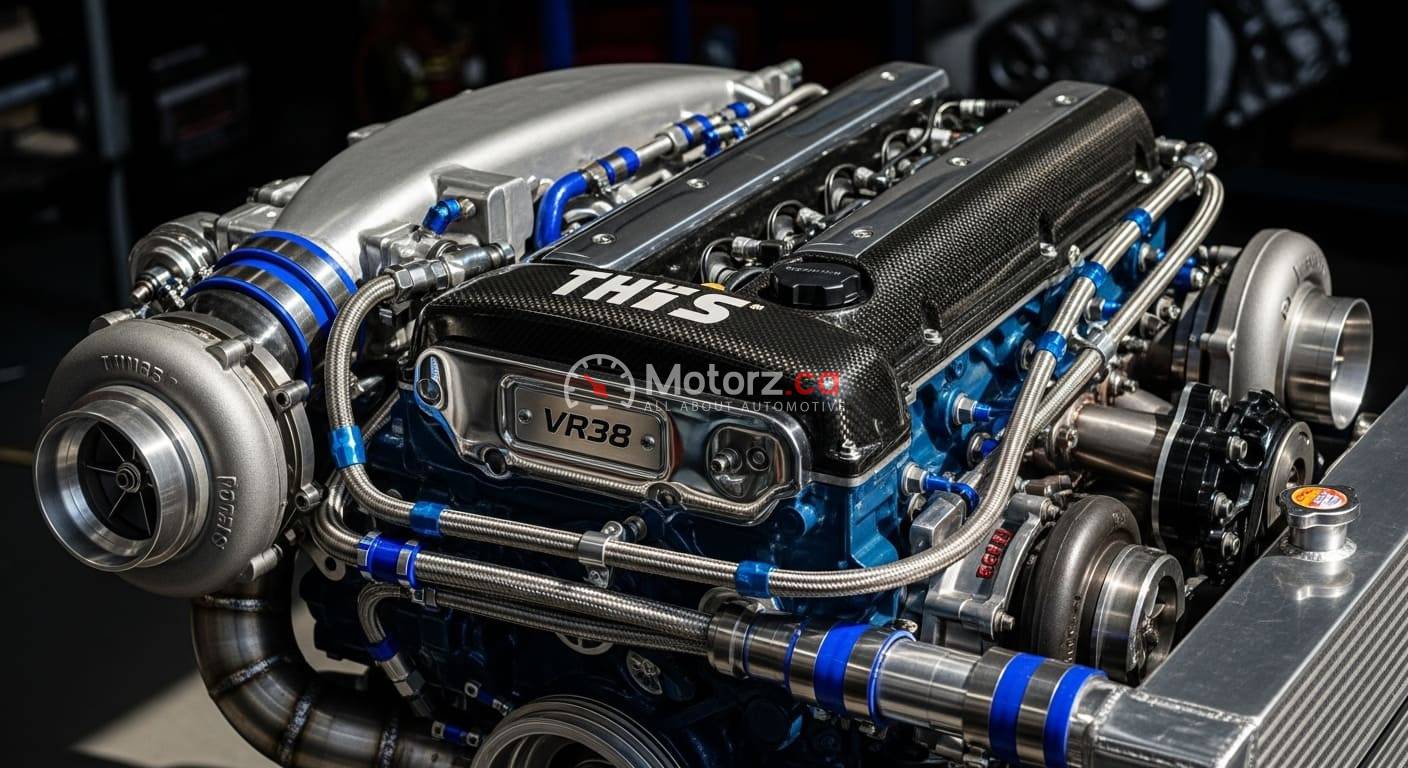
The R35’s VR38DETT is a masterpiece of modern engineering, a hand-built 3.8-liter twin-turbo V6. For the R36, Nissan must decide whether to significantly overhaul this proven engine or introduce a new V6, potentially based on the excellent VR30DDTT used in the Z and other premium models, heavily modified for supercar duty.
Rumored Engine Specifications for the ICE Component:
Configuration: Twin-Turbo V6 (Likely 3.0L to 3.8L)
Target ICE Output: Over 600 horsepower
Key Technology: Direct Injection, Plasma-sprayed cylinder liner bores (inherited from the VR38), and sophisticated heat management systems to cope with the added hybrid components.
Nissan has openly spoken about a “fire-breathing V6 twin-turbo ICE component” for the R36. This suggests an engine specifically engineered for high performance and durability, capable of handling the massive power density and high thermal loads that come with combining it with electric motors. The core engineering philosophy remains the same: a compact, powerful, and tuneable V6.
The Synergy: Twin-Turbo V6 Plus Electric
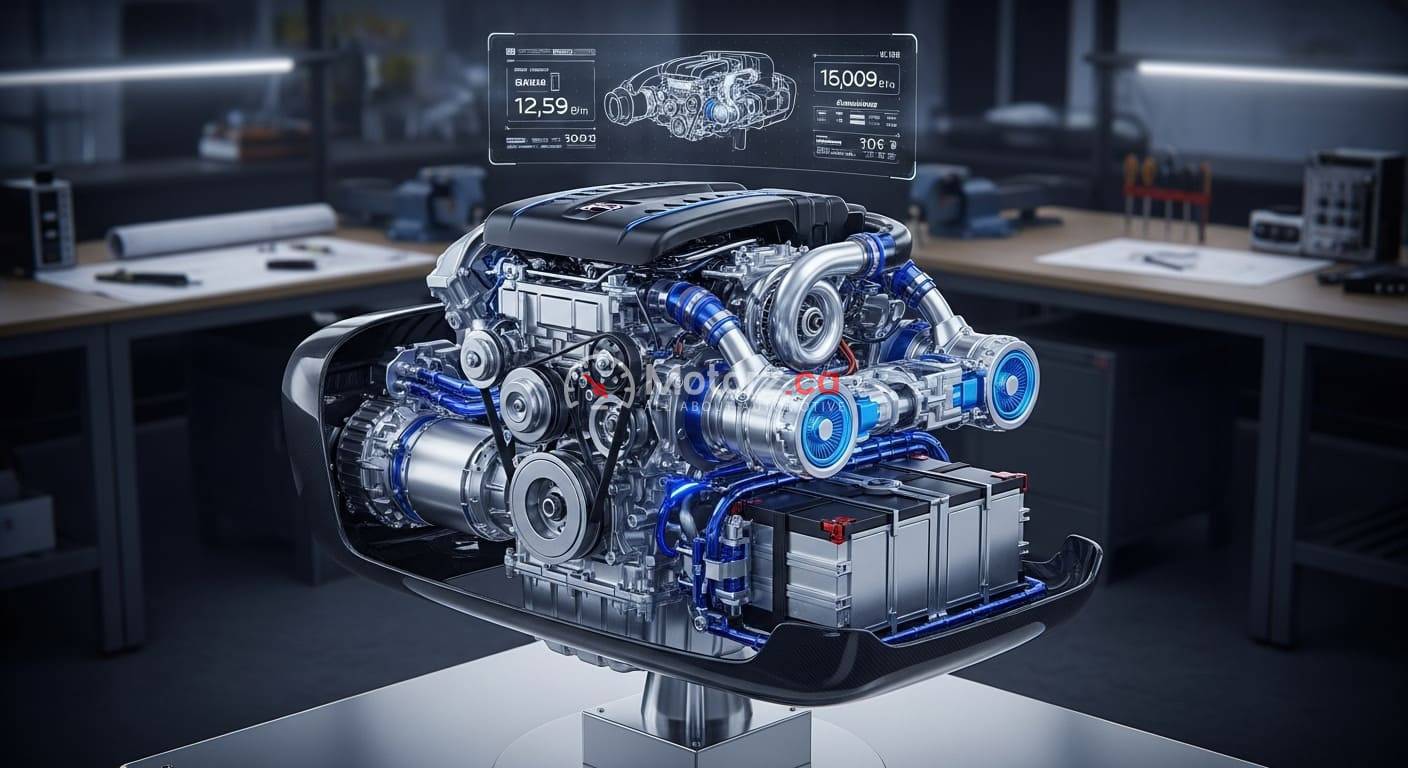
The real secret engine is the synergy between the V6 and the electric system. Imagine a high-output, twin-turbo V6 revving to its peak, while a massive surge of instantaneous electric torque is layered on top. This combination is expected to push the total system output well past the 700 horsepower mark, potentially even approaching the 800-horsepower territory for a Nismo version. This is the R36 hybrid power advantage.
The electric motor(s) will be positioned strategically: one integrated into the gearbox or driving the rear axle, and possibly one for the front axle, creating an even more potent and refined AWD traction system. This allows for:
Ultra-Fast Shifting: The electric motor can “fill” the torque gaps during gear changes, making the shifts in the already quick dual-clutch transmission feel even more seamless and brutal under hard acceleration.
Dynamic Cornering: The system can quickly modulate electric power to the front wheels to pull the car through a corner, improving turn-in and corner-exit speed beyond what the R35 was capable of.
Technology: The Backbone of the New Godzilla
The GT-R has always been a technology demonstrator for Nissan. The R36 engine is inseparable from the advanced tech surrounding it.
Advanced Heat and Energy Management
The biggest challenge in a hybrid performance car is thermal management. A system pushing 700+ horsepower needs massive cooling for both the V6 and the high-voltage battery pack and electronics. The R36 will undoubtedly feature a revolutionary cooling system, perhaps utilizing a multi-circuit liquid cooling system and advanced airflow management that is dictated by its aggressive new aerodynamic bodywork. The key to the R36’s track performance will be its ability to maintain peak power output lap after lap, something Nissan executives specifically cited as a current hurdle for BEV prototypes.
Solid-State Battery Integration
If the R36 debut aligns with the projected 2028 availability of Nissan’s Solid-State Batteries (SSB), this could be the true secret engine. SSB offers:
Higher Energy Density: More power and range for a given weight.
Superior Thermal Stability: The key to repeated high-performance usage without overheating or significant power degradation.
An SSB-equipped R36 PHEV would be able to run faster and harder for longer, justifying the extra weight of the hybrid components and fulfilling the promise of a true “Godzilla” for the track and the street.
The R35 became the “supercar killer” by offering world-beating performance for half the price of its rivals. The R36 must continue this tradition.
The new twin-turbo V6 hybrid powertrain isn’t just an answer to regulations; it’s the only way for the GT-R to stay competitive with the latest offerings from Porsche, Ferrari, and McLaren, many of which have also embraced hybrid technology. By combining the legendary reliability and high-output potential of its V6 engine with the immediate, precise control of electric power, the R36 is positioned to set new benchmarks in acceleration, track lap times, and overall driver engagement.
The secret engine behind the 2028 Nissan GT-R R36 is not just a collection of parts. It is Nissan’s commitment to innovation, a complex, high-voltage, twin-turbo ecosystem designed to make “Godzilla” faster, smarter, and more dominant than ever before. The roaring V6 and the silent surge of electric power are converging to write the next, unforgettable chapter in performance history. Get ready for the return of the king. The future of the Nissan GT-R is electrifying.