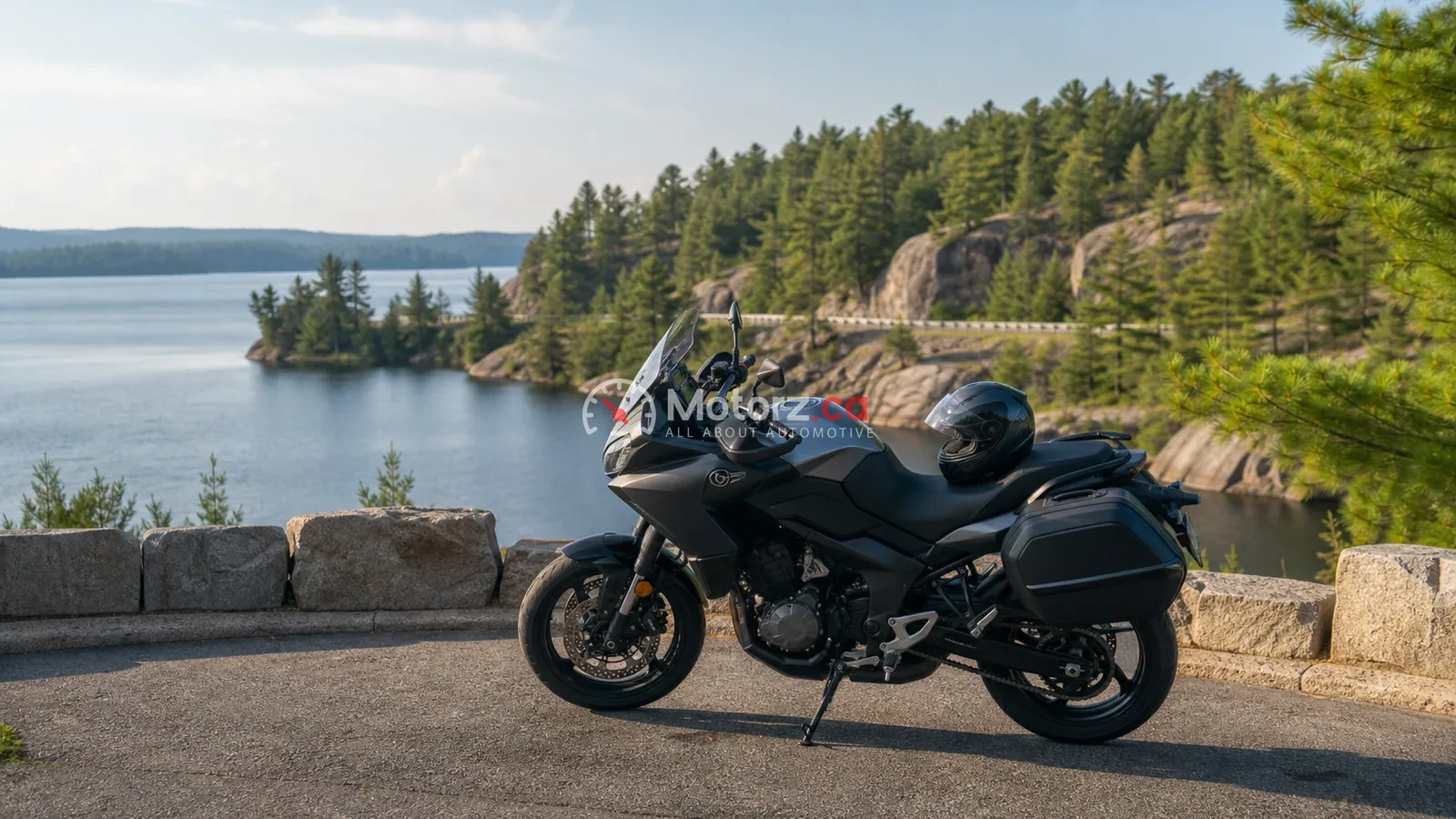
Ontario offers everything from Great Lakes touring to forest and escarpment roads, but the right route depends on current conditions, rider readiness and trip logistics.
The direct answer
For scenic motorcycle routes in Ontario, begin with a region rather than a rigid turn-by-turn itinerary. Great Lakes shorelines, Algoma, Manitoulin Island, the Highway 60 corridor, the Bruce Peninsula and parts of the Niagara Escarpment all offer different touring experiences. Check Ontario 511, weather, construction, ferry schedules, fuel range and official local information shortly before leaving. A tourism recommendation is not a guarantee that a road is suitable today.
Five Ontario touring regions to research
These are broad planning areas, not ranked “best roads.” Distance, traffic, pavement, wildlife, visibility and services can change. Build the final route with current official information and choose roads that match your licence, training, motorcycle and experience.
Lake Superior and Algoma
Northern Ontario’s Lake Superior and Algoma areas combine long distances, forest, exposed shoreline and communities spread along the route. Destination Ontario includes Lake Superior and Grand Algoma experiences in its current motorcycle-touring material. Their scale makes fuel, rest, accommodation, mobile coverage and changing weather part of the route decision, not details to solve after departure.
Manitoulin Island and the Bruce Peninsula
A Manitoulin or Bruce Peninsula plan may involve the seasonal Chi-Cheemaun ferry between South Baymouth and Tobermory. Verify its current operating dates, schedule, reservation process and boarding instructions with the official operator. If the ferry is unavailable, the practical road alternative is not a minor detour, so confirm before committing to accommodation or distance.
Algonquin and the Highway 60 corridor
The Highway 60 corridor provides forest and lake scenery through the Algonquin area. It is also a working provincial highway, not a closed scenic drive. Traffic, wildlife, park access and seasonal congestion deserve attention. Plan legal, designated stops rather than slowing unexpectedly or stopping on a shoulder for a photograph.
Muskoka, Haliburton and the Ottawa Valley
Central Ontario has many cottage-country and highland roads, but popularity does not establish consistent pavement or low traffic. Weekend volumes, construction and local access can alter the experience. Treat a published route as an idea to verify, not permission to ride faster or assume every curve is clear.
Niagara Escarpment and southern Ontario
Southern Ontario can offer shorter rides closer to major population centres, including escarpment, agricultural and waterfront scenery. The tradeoff may be denser traffic, frequent driveways and more urban transitions. A shorter distance can still demand close attention and may be a better choice than an ambitious remote itinerary when time or experience is limited.
How to choose a route that fits the rider
- Start with realistic distance. Include stops, meals, ferry or construction delays and the return journey.
- Match the road to experience. A route praised for curves or remoteness may not suit a newer rider.
- Check the motorcycle’s range. Identify fuel or charging options without assuming every rural stop is open.
- Plan safe breaks. Use designated parking areas, communities and official lookouts rather than an improvised roadside stop.
- Keep an exit option. Weather, fatigue, smoke, road closures or a mechanical concern can justify shortening or postponing the ride.
Ontario’s Ministry of Transportation encourages motorcycle-safety training for new riders and those improving their skills. A scenic route is not a substitute for training, licensing or experience. The official motorcycle handbook remains the starting point for provincial guidance.
Run a current-condition check
Ontario 511 publishes provincial-highway information including incidents, construction and road conditions. It does not eliminate uncertainty on every municipal or private road. Check municipal notices, park information and the route operator where applicable, then review the forecast near departure. Conditions found in an old forum thread, video or saved map may no longer apply.
The MTO motorcycle handbook advises riders to account for difficult weather and changing surfaces. If visibility, wind, rain, cold, smoke or surface conditions exceed your comfort or ability, delay or change the trip. This article does not provide riding technique; follow official training and the handbook.
Prepare the motorcycle and your stops
Use the owner’s manual and manufacturer schedule for the exact motorcycle. Address warning lights, tire or fluid concerns and damaged equipment before a long tour; a generic article cannot determine roadworthiness. Carry only equipment that can be secured within the motorcycle’s limits, and do not let luggage obstruct controls, lights or visibility.
Share the broad plan and expected check-in with a trusted person, while preserving flexibility. Confirm overnight parking, ferry rules and attraction hours directly. Motorz’s Canadian emergency-kit guide is written for cars, so motorcycle riders should instead use motorcycle-specific training and manufacturer guidance when selecting equipment.
Photograph the scenery without creating a hazard
Choose a legal parking area, secure the motorcycle and remain within public or permitted areas. Never stop in a live lane or choose a blind corner because it frames a dramatic image. The Motorz automotive photography guide emphasizes a fixed permitted position and respecting event or site boundaries; the same principle applies on a tour.
A route-planning checklist
- Select a region and set a conservative distance.
- Check Ontario 511, municipal or park notices and weather.
- Verify ferries, fuel, charging, food, lodging and legal stops.
- Review licence restrictions and the motorcycle owner’s manual.
- Build an alternate or early-return option.
- Recheck conditions on the day of travel and postpone when needed.
Sources
- Destination Ontario: Motorcycle touring
- Destination Ontario: Motorcycle roads by region
- Ontario Ministry of Transportation: Official Motorcycle Handbook
- Ontario 511: Current provincial-highway information
- Ontario Ferries: MS Chi-Cheemaun information
Updated August 2026: Rewritten with current provincial tourism and transportation sources. Speed-oriented descriptions, fixed road-condition claims and unsafe route instructions were removed.