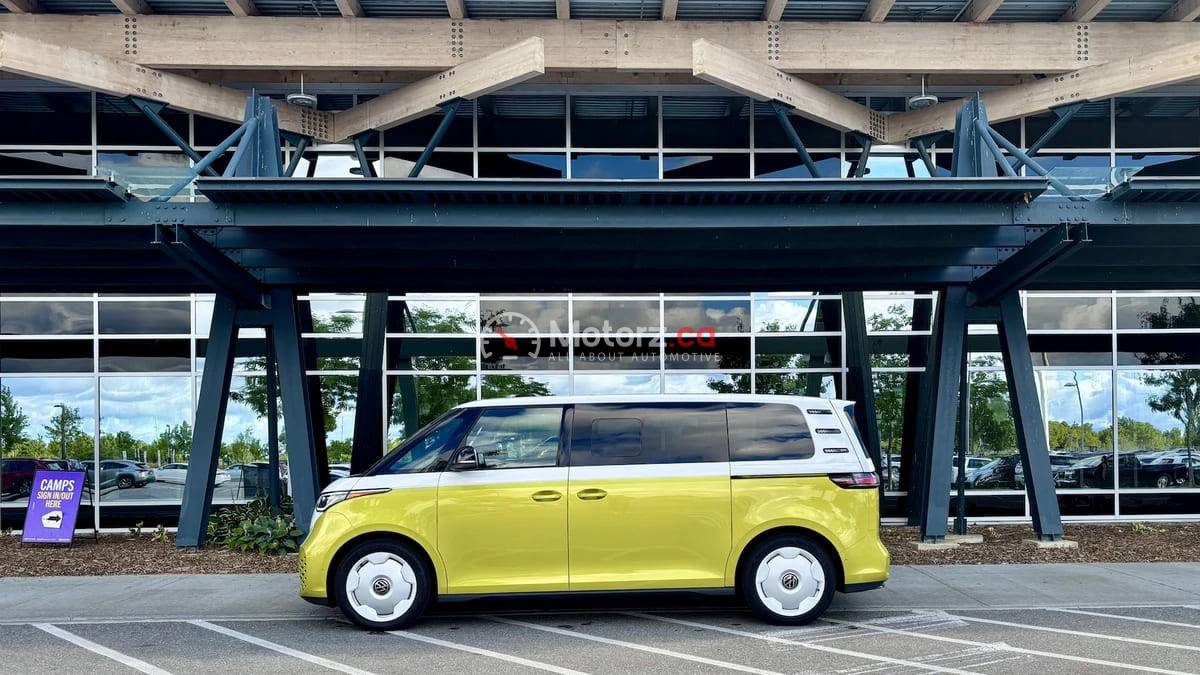

The Volkswagen ID. Buzz Skips 2026 that took decades to arrive is already taking a breather. In a move that has surprised the automotive world, Volkswagen has officially confirmed that the ID. Buzz will skip the 2026 model year in North America. Just one year after its highly anticipated U.S. and Canadian launch, the retro-inspired EV is being benched. While a “missing” model year often signals a vehicle’s quiet exit, Volkswagen is framing this as a strategic “pause” to reset for a significant 2027 model year transition.
If you’ve been eyeing the electric bus but were hesitant about its price or range, this news changes the landscape. Here is the full breakdown of why Volkswagen is skipping 2026, what it means for current inventory, and what the “Version 2.0” might look like in 2027.
Why is Volkswagen Skipping the 2026 ID. Buzz?
The decision to skip a model year is rarely accidental. For the ID. Buzz, it is a response to a perfect storm of economic and market factors that have made the 2025 launch a “learning experience” for the German automaker.
Addressing “Volkswagen ID. Buzz Skips 2026”
In a memo sent to dealers in late 2025, Volkswagen cited “current EV market conditions” as the primary reason for the hiatus. Specifically, the brand sold fewer than 5,000 units in the U.S. through the first three quarters of 2025. Compared to high-volume sellers like the ID.4 or the Tesla Model Y, the ID. Buzz has struggled to find its footing as a mass-market vehicle.
Managing Dealer Inventory
One of the most practical reasons for skipping 2026 is to give dealerships a chance to sell through their existing 2025 stock. Many dealers are currently sitting on units with high price tags, leading to some of the most aggressive discounts seen in the EV space. By skipping a year of new production, VW avoids “flooding” the market with 2026 models that are nearly identical to the 2025s already on the lot.
The Impact of Tariffs and Logistics
The ID. Buzz is currently manufactured in Hanover, Germany. Importing the vehicle to North America subjects it to significant logistical costs and shifting tariff landscapes. By pausing production for the North American market, VW can recalibrate its supply chain to ensure the 2027 model is more economically viable.
The “MY27 Transition”: What’s Coming in 2027?
Volkswagen isn’t just letting the ID. Buzz fade away; they are promising a 2027 transition. While official specs are still under wraps, the industry is buzzing with rumors about what a refreshed electric microbus could offer.
Potential for Better Range
The biggest criticism of the 2025 ID. Buzz has been its 234-mile EPA range. In a world where three-row competitors like the Kia EV9 are pushing 300 miles, the Buzz feels limited for family road trips. Experts expect the 2027 model to feature updated battery chemistry or a larger pack to bridge that gap.
Software and Infotainment Upgrades
Volkswagen has been aggressively updating its software interface across the ID. lineup. The 2027 model will likely debut the next generation of VW’s infotainment system, potentially fixing the “capacitive touch” frustrations that have plagued early reviews.
Could we see an EREV (Extended Range EV)?
There is growing speculation that Volkswagen might follow the lead of brands like Ford and Ram by introducing a range-extender option. A small gasoline generator could theoretically be added to eliminate range anxiety, though this has not been confirmed by Wolfsburg.
Is Now the Best Time to Buy a 2025 ID. Buzz?
Ironically, the news of the 2026 “skip” has made the 2025 Volkswagen ID. Buzz one of the most interesting value propositions on the market right now.
Deep Discounts: Dealers are authorized to offer massive incentives to move 2025 inventory. Some buyers have reported combined federal, provincial, and dealer credits totaling over 10,000 to 20,000 off the MSRP.
The “Halo” Factor: Despite the production pause, the ID. Buzz remains a head-turner. If you love the design and don’t plan on taking 500-km road trips every weekend, the current model is still a high-quality, unique EV.
Final Call for “First Edition” Trims: The First Edition models, with their unique two-tone paint and interior accents, will likely become collector’s items now that a 2026 version is off the table.
Comparing the ID. Buzz to Three-Row Rivals
If you need a family EV and can’t wait until the 2027 Buzz arrives, here is how the landscape looks:
The Long Road Back to the Bus
The Volkswagen ID. Buzz has always been about nostalgia, and nostalgia is patient. While the 2026 model year is officially canceled, the “return for 2027” suggests that Volkswagen is committed to making this vehicle work in the long run.
By taking a year off, VW has the opportunity to fix the price-to-range ratio that has hampered early sales. For enthusiasts, the 2026 gap is a moment to breathe—and perhaps a golden opportunity to snag a 2025 model at a price that actually makes sense.