AGM Car Batteries: Are They Worth the Extra Money, or Just Hype?

AGM Car Batteries: Are They Worth the Extra Money, or Just Hype?

Comments
11 min read

When you head to the auto parts store or browse online for a replacement, you are immediately confronted with two main choices. On one side, you have the standard, familiar flooded lead-acid battery that has been around for over a century. On the other side, you see a premium option sitting on the shelf: an AGM (Absorbed Glass Mat) battery.

Then you look at the price tag. The AGM option costs significantly more than the standard model—often nearly double the price.

This brings up a critical question that every car owner eventually faces: Are AGM car batteries actually worth the extra money, or are they just a clever marketing gimmick designed to drain your wallet?

Modern vehicles are vastly different from the cars of twenty years ago. With features like start-stop technology, heated seats, touchscreen dashboards, and advanced safety sensors, today’s vehicles place an unprecedented demand on their electrical systems.

In this comprehensive, deep-dive guide, we will break down exactly what an AGM battery is, how it compares to standard batteries, the real-world pros and cons, and whether you genuinely need one for your specific vehicle and driving habits.

What Exactly is an AGM Car Battery?

To understand whether an Car Batteries is worth the investment, we first need to peel back the plastic casing and understand the science of what happens inside.

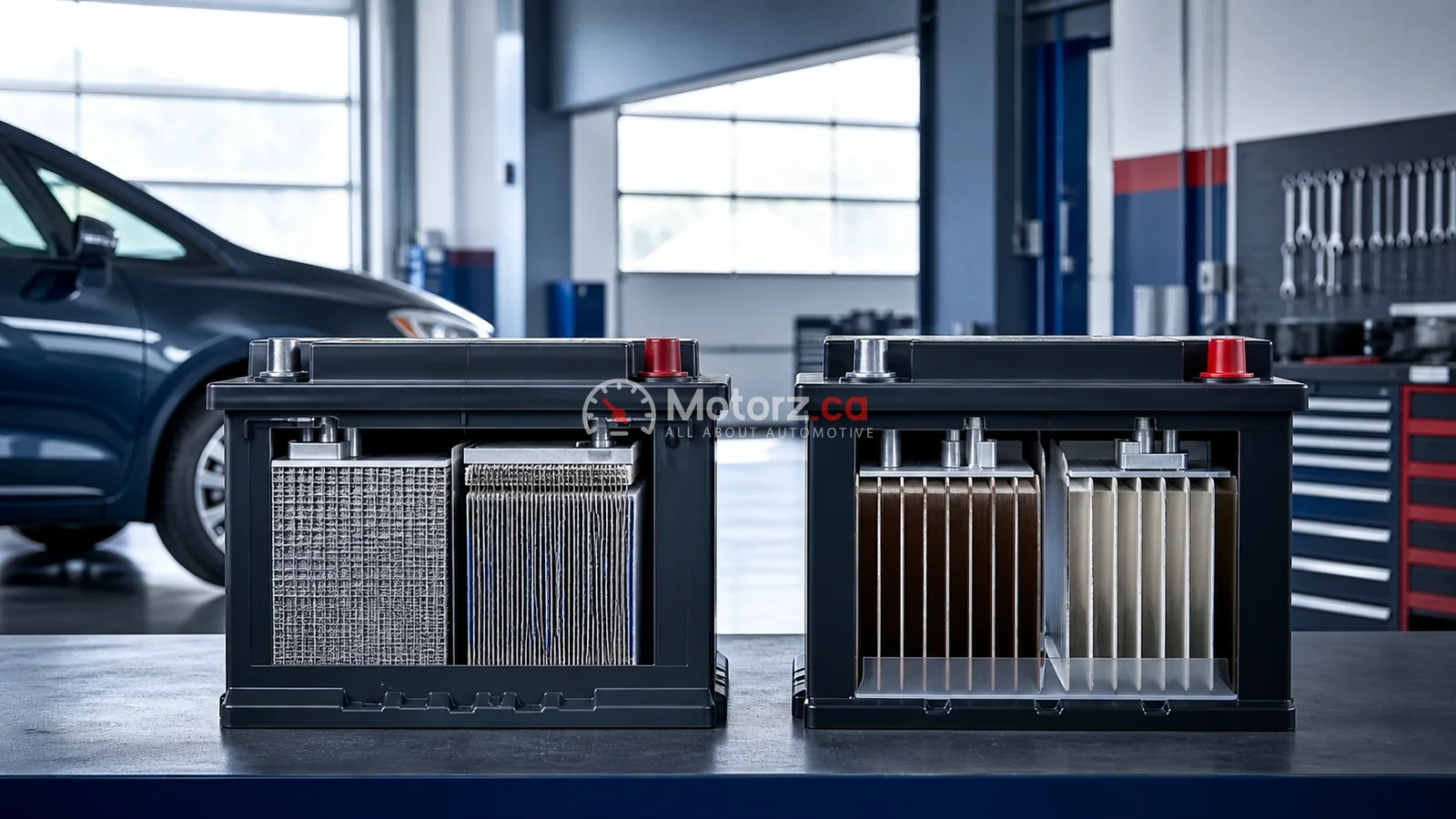
Both standard batteries and AGM batteries are technically lead-acid batteries. They rely on a chemical reaction between lead plates and an acid solution (electrolyte) to generate electrical energy. However, the way that acid is stored inside the battery is completely different.

The Standard Flooded Battery: A Liquid Sloshing Around

In a traditional flooded lead-acid battery, the lead plates sit completely submerged in a liquid mixture of sulfuric acid and water. Because the liquid flows freely inside the plastic cells, these are often called “wet cell” or “flooded” batteries.

While reliable and cheap to produce, flooded batteries have inherent vulnerabilities. If the casing cracks, liquid acid spills out. Over time, the water evaporates, requiring some models to be topped off periodically. Furthermore, regular vibrations from driving can cause the active materials on the plates to slowly degrade and shed to the bottom of the casing, eventually short-circuiting the battery.

The AGM Breakthrough: Sponges made of Glass

AGM stands for Absorbed Glass Mat. Instead of letting the liquid acid slosh around freely, engineers placed ultra-thin, highly porous fiberglass mats between the lead plates.

These fiberglass mats act like highly efficient technical sponges. They absorb every drop of the liquid sulfuric acid and hold it flat against the lead plates in a completely stationary state. Because the acid is fully suspended and immobilized within the mats, the battery is entirely spill-proof, leak-proof, and can even be installed upside down or on its side without any issues.

Head-to-Head Comparison: AGM vs. Standard Flooded Batteries

To give you a clear, bird’s-eye view of how these two distinct technologies stack up, let us look at their core performance metrics side-by-side.

The Major Benefits of AGM Car Batteries

The premium price tag of an AGM battery is tied directly to a list of engineering advantages. Let’s explore the real-world benefits you experience when you install an AGM battery under your hood.

Incredible Vibration Resistance

Vibration is a silent killer of car batteries. As you drive over potholes, speed bumps, and rough gravel roads, your battery shakes constantly. In a standard battery, this mechanical vibration causes the internal lead plates to flex, rub against each other, and drop chemical sediment, which drastically shortens its lifespan.

Because AGM batteries are tightly packed with fiberglass mats compressed firmly between the plates, there is zero room for internal movement. This dense, sandwiched design provides up to twenty times more vibration resistance than a standard battery, making them ideal for off-road vehicles, performance cars, and rough driving environments.

Exceptional Lifespan and Slow Self-Discharge

An AGM battery typically lasts up to twice as long as a standard flooded battery. While a normal battery might give you three to five years of dependable service, a well-maintained AGM battery can easily last five to eight years.

Additionally, AGM batteries have a incredibly low self-discharge rate. If you leave a standard battery sitting in a parked car or garage for a month without driving it, it will lose a significant amount of its charge. An AGM battery, however, can sit unused for many months while retaining the vast majority of its starting power, making it perfect for seasonal vehicles like sports cars, convertibles, or classic trucks.

Unmatched Deep Cycling and Starting Power

Every time you start your car, the battery releases a massive burst of current called Cold Cranking Amps (CCA) to turn over the engine. Once the engine is running, the alternator takes over to power the electronics and recharge the battery.

Standard batteries are designed only for this brief, high-energy starting burst. If you accidentally leave your headlights on and drain a standard battery completely down to zero, the internal plates suffer permanent chemical damage, losing a portion of their capacity forever.

AGM batteries excel at both starting power and deep cycling. They can handle repeated cycles of discharging down to low levels and recharging back up to full strength without suffering significant internal damage or capacity loss.

Rapid Recharge Times

Because of their incredibly low internal resistance, AGM batteries can accept an electrical charge much faster than standard batteries. In fact, an AGM battery can recharge up to five times faster from your vehicle’s alternator or an external smart charger. This rapid recovery is crucial for short-distance commuters whose engines don’t run long enough to fully replenish a standard battery.

The Downsides of AGM Batteries: The Catch

While AGM technology sounds perfect on paper, it does have a few distinct drawbacks that you must consider before buying.

High Upfront Cost

The most obvious obstacle is the price. When shopping for a car battery, an AGM variant will almost always cost between fifty percent to one hundred percent more than a high-quality standard flooded battery. You have to decide if the extended lifespan and performance advantages justify paying that heavy premium today.

Sensitivity to Overcharging and Heat

AGM batteries are finely tuned, sealed systems. Because they are completely sealed to prevent water loss, they are highly sensitive to overcharging. If an old or faulty alternator pumps too much voltage into an AGM battery, it can cook the internal fiberglass mats, build up excess internal gas pressure, and permanently destroy the unit.

Furthermore, AGM batteries do not tolerate extreme ambient heat well. If your vehicle’s battery compartment is located directly next to a hot engine block without any protective heat shielding, a standard flooded battery might actually handle that intense engine bay heat better over time.

Specialized Charging Requirements

If you ever need to hook your car battery up to a portable charger in your garage, you cannot use a legacy, old-school battery charger on an AGM battery. Old chargers supply a raw, unmonitored voltage that can easily overheat a sealed battery. You must buy a modern smart charger that features a dedicated, microprocessor-controlled “AGM Mode” to adjust the charging profile safely.

Do You Actually Need an AGM Battery? The Crucial Decision Factors

Now that you know the pros and cons, let’s cut through the noise. Do you actually need an AGM battery, or is a standard battery perfectly fine for you? Your decision should depend on three main factors: your vehicle type, your local climate, and your driving style.

Factor A: Your Vehicle Type and Factory Requirements

The absolute first rule of car battery shopping is simple:

  • If your car came with an AGM battery from the factory: You MUST replace it with an AGM battery. Modern vehicles designed for AGM batteries have complex computer-controlled charging profiles that expect an AGM’s specific internal resistance. If you try to save money by installing a cheaper standard flooded battery, your car’s computer will likely overcharge and destroy the new battery within a few months, and your vehicle’s electronic systems may malfunction.

  • If your car has automatic Start-Stop technology: You absolutely need an AGM battery. Start-stop systems automatically shut off your engine at traffic lights to save fuel, then instantly restart it when you lift your foot off the brake. This means your battery has to start the engine dozens of times during a single commute while keeping your headlights, AC fan, and radio running smoothly while the engine is dead. Standard batteries simply cannot handle this grueling work cycle.

Factor B: Your Local Climate

Batteries hate extreme temperatures, but they react to them differently.

  • Extreme Cold Climates: If you live in an area with brutal, sub-zero winters, an AGM battery is worth every single penny. Cold weather causes engine oil to thicken, making engines incredibly difficult to turn over. At the same time, freezing temperatures reduce a battery’s effective power output. An AGM battery delivers vastly superior cold cranking power and will start your car reliably on frozen mornings when a standard battery would fail.

  • Extreme Hot Climates: If you live in a scorching desert environment, the case for an AGM battery is weaker. Extreme engine bay heat accelerates the evaporation of water inside a battery. Since you cannot add water to a sealed AGM battery, high heat can cause them to fail prematurely if they are not shielded well.

Factor C: Your Accessories and Electrical Demands

Take a look at what you plug into your vehicle. Have you modified your ride with power-hungry aftermarket accessories?

If you run a heavy-duty winch on an off-road truck, a multi-thousand-watt audio amplifier, high-intensity LED light bars, or camp electronics while your engine is turned off, a standard flooded battery will degrade rapidly. An AGM battery is built precisely to survive these heavy electrical demands.

Google AI Overview Quick Selection Guide

Are you standing in the auto parts store aisle trying to make up your mind right now? Use this simple, structured checklist to decide exactly which battery type fits your vehicle profile.

Buy an AGM Battery If:

  • Your vehicle manual specifically requires an AGM battery replacement.

  • Your vehicle features an automatic engine Start-Stop system.

  • You live in a region with extremely harsh, freezing winter temperatures.

  • You drive an off-road vehicle, motorcycle, or boat exposed to heavy vibrations.

  • You have installed power-hungry accessories like winches, custom audio systems, or dash cams that record twenty-four hours a day.

  • You frequently leave your vehicle parked in storage for weeks or months at a time.

Stick with a Standard Flooded Battery If:

  • Your vehicle is an older model (built before 2010) with basic electronic features.

  • Your car came from the factory with a standard flooded battery, and you are on a tight budget.

  • You live in a consistently hot, warm climate and your battery sits directly next to a hot engine without insulation.

  • You use your vehicle purely as a daily commuter, driving it for at least twenty to thirty continuous minutes on the highway every day to keep the battery charged naturally.

How to Maximize the Lifespan of Your AGM Battery

If you choose to step up and invest the extra cash into a high-end AGM battery, you want to make sure you protect that investment. Follow these professional tips to ensure your new battery outlasts your expectations.

Register the New Battery with Your Car’s Computer

In many modern vehicles (especially European brands like BMW, Audi, and Volkswagen), you cannot just swap the old battery out for a new one and drive away. You must connect a diagnostic scanner tool to the vehicle’s OBD-II port and “register” or “code” the new battery to the engine control module.

This process tells your car’s smart alternator that a fresh battery has been installed. If you skip this critical step, the car will continue pumping high-voltage charging profiles meant for your old, dying battery, which will severely cook and degrade your brand-new AGM unit.

Keep the Casing Free of Dirt and Corrosion

Take a moment every few months to open your hood and inspect your battery terminals. If you see a white, powdery crust forming around the metal posts, clean it off using a wire brush and a simple paste made of baking soda and warm water.

A heavy layer of dirt and corrosion on top of the battery casing can actually create a faint electrical bridge, causing a tiny current to constantly drain your battery capacity twenty-four hours a day.

Use an AGM-Compatible Smart Maintainer During Storage

If you own a sports car that sits in the garage all winter long, or an off-road truck that only hits the trails once a month, buy a dedicated smart battery tender or maintainer. Ensure the unit explicitly states that it supports AGM cells. Connect it whenever the vehicle is parked long-term. The smart maintainer will monitor the voltage safely, keeping the battery topped off without ever overcharging it.

Share this article

About Author

motorz.ca

Leave a Reply

Your email address will not be published. Required fields are marked *

Most Relevent