
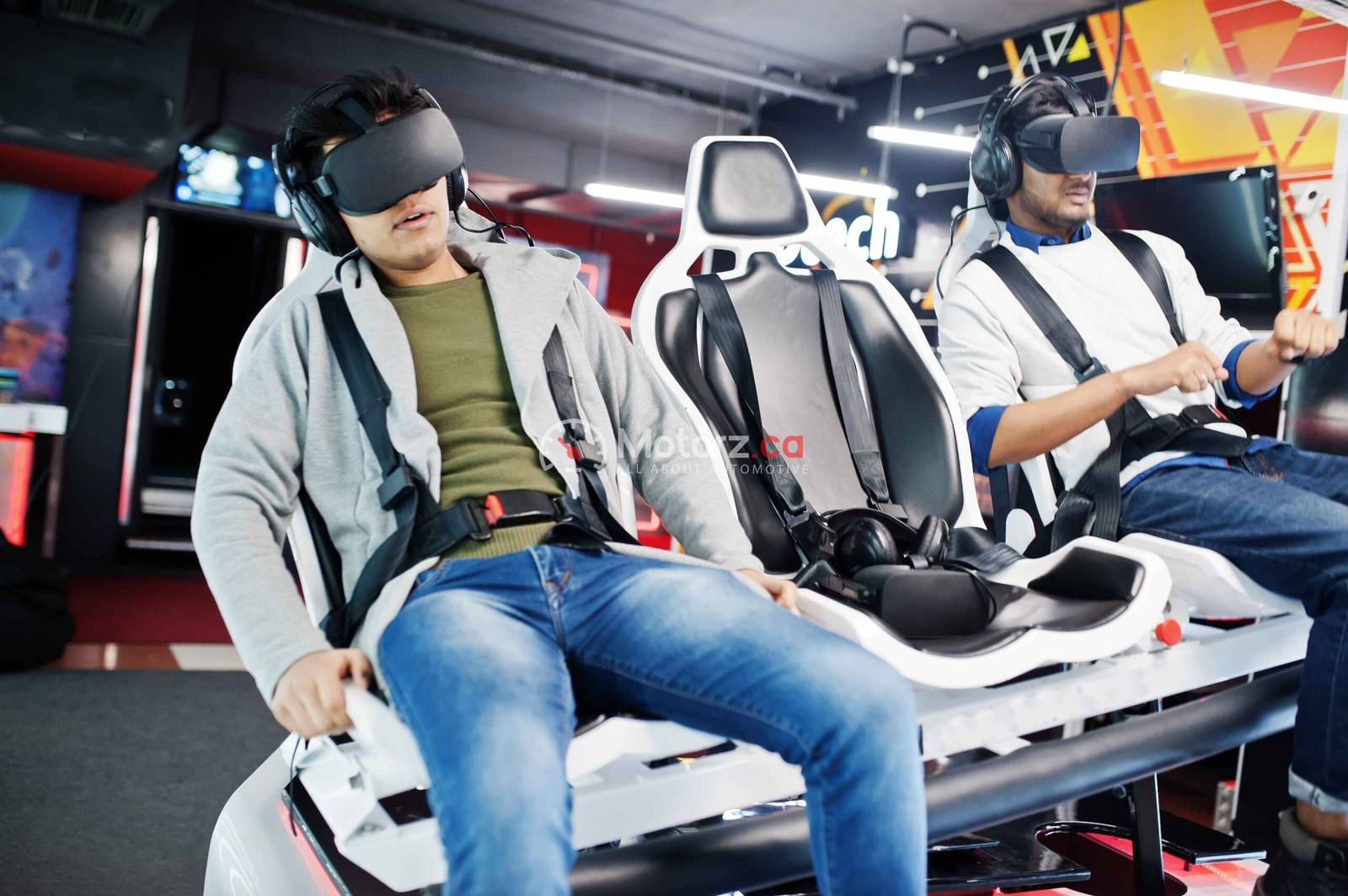

The roar of an engine, the Race Car Simulator you into the seat, the intense focus on the road ahead—there’s nothing quite like the thrill of driving a race car. For most of us, however, getting on a real racetrack is a luxury. The cost of track days, car maintenance, tires, and fuel can quickly add up to an astronomical sum. But what if you could have the heart-pounding excitement of racing a Formula 1 car at Monaco or a NASCAR stock car at Daytona from the comfort and safety of your own home?
Welcome to the world of sim Race Car Simulator, a hobby that has evolved from a simple video game into a serious, professional-grade training tool. A home race car simulator is no longer just a toy; it is a meticulously engineered piece of equipment that provides an immersive and incredibly realistic driving experience. In fact, many of today’s top professional drivers, from Max Verstappen in F1 to William Byron in NASCAR, credit simulators for helping them hone their skills and prepare for races.
This blog post is your ultimate guide to understanding why a race car simulator is one of the best investments you can make, whether you’re an aspiring professional, a weekend warrior, or just a die-hard motorsports fan.
The Skill-Building Advantage: From Virtual to Real
The most significant Race Car Simulator of a high-quality race car simulator is its ability to transfer skills from the virtual world to the real one. Simulators are not just games; they are powerful training tools that teach you the fundamentals of racecraft.
Mastering Car Control and Racecraft
In a simulator, you can practice aggressive braking, throttle control, and steering without the fear of a costly crash. You can push the car to its absolute limit, learn how it behaves on the edge of grip, and understand the consequences of understeer and oversteer. You can also practice “racecraft”—the art of navigating traffic, executing safe and effective Race Car Simulator, and defending your position against rivals.
The Mental Game: Concentration and Decision-Making
Racing is as much a mental game as it is a physical one. A race car simulator forces you to make split-second decisions under pressure. Should you pit now or stay out for another lap? Is there enough space to make a pass? Can you manage your tires for the rest of the race? By repeatedly experiencing these high-pressure scenarios, you sharpen your focus and improve your ability to think strategically, skills that are directly transferable to any real-world Race Car Simulator situation.
Learning Tracks and Car Setups
One of the biggest advantages professional drivers gain from simulators is the ability to “virtually” learn a new track. The best sim racing titles use laser-scanning technology to recreate real-world tracks with millimeter-perfect accuracy, including every bump, camber change, and elevation difference. A driver can run thousands of laps on a new track in the simulator, learning every braking point and apex before ever setting foot in the real car. This also allows drivers to experiment with hundreds of different car setups—from suspension to Race Car Simulator—without ever leaving the garage, saving valuable track time and resources.
The Unbeatable Value Proposition: Cost-Effectiveness
Let’s be honest: racing is an expensive sport. This is where a home race car simulator shines. It provides an almost unbelievable return on investment (ROI).
Reducing On-Track Costs
Think about the costs of a single Race Car Simulator. You have the track rental fee, which can be hundreds of dollars. Then there are the consumables: high-performance tires, which can be thousands of dollars for a single set; fuel, which for a race car is often a high-octane, expensive blend; and brake pads and rotors, which wear down quickly under racing conditions. And that’s not even mentioning the cost of a car and the potential for a costly repair bill if you have an incident. A simulator eliminates all of these expenses. You buy the equipment once, and your only recurring cost is the subscription to the software, which is a fraction of the cost of a single day at the track.
A Smarter Way to Practice
For serious amateur racers, a Race Car Simulator is a no-brainer. Instead of spending thousands of dollars to get just a few hours of practice at a track, you can run hundreds of laps on a simulator for a fraction of the cost, whenever you want. This allows you to practice more consistently and get better faster. As SimCraft, a simulator manufacturer, points out, a high-end simulator can pay for itself in just a few hours of equivalent track time for high-expense series.
The Accessibility Factor: No Schedule, No Risk
The physical limitations of real-world racing are a significant barrier to entry. A home simulator removes those barriers entirely.
Convenience and Time-Saving
You don’t have to worry about track Race Car Simulator, travel time, or unpredictable weather. With a home setup, you can hop in the driver’s seat and start racing whenever you have a free moment—at midnight, on your lunch break, or after the kids are asleep. This flexibility is invaluable for anyone with a busy schedule.
Safety First
This is perhaps the most obvious but most important benefit. A mistake in a real car can lead to serious injury or even worse. A mistake on a simulator is a quick reset button. This allows you to be fearless and push the limits of car control in a way you never would in a real car, which ultimately makes you a better and safer driver on the Race Car Simulator as well.
Building Your Home Racing Simulator
A race car simulator setup can range from a budget-friendly starter kit to a full-blown professional rig. The key is to start with a setup that fits your needs and budget and build on it over time.
The Starter Setup
A basic setup can be a great way to dip your toes into the world of sim racing. This usually consists of a solid wheel and pedal set from a reputable brand like Logitech or Thrustmaster, and a stable stand to mount them on. You can use your existing PC or a console like a PlayStation or Xbox to run a popular sim racing game like Assetto Corsa, Race Car Simulator, or Forza Motorsport.
The Mid-Tier Enthusiast Rig
This is where the experience starts to become truly immersive. A mid-tier setup typically includes a more robust aluminum profile rig (or “cockpit”) for stability, a direct-drive wheel for superior force feedback, and load-cell pedals for a more realistic braking feel. The PC will be more powerful, allowing for higher frame rates and better graphics. At this level, many users upgrade to triple monitors or a virtual reality (VR) headset for a truly immersive Race Car Simulator of view.
The Professional-Grade Setup ($10,000+)
This is the pinnacle of home sim racing. A professional-grade simulator is a serious investment. It often includes a full-motion platform that mimics the G-forces of a real car, high-fidelity hydraulic pedals, and a powerful PC with multiple high-end screens or a professional-grade VR headset. These rigs are used by professional drivers and race teams for serious training and R&D.
The Racing Community: Online and Off
Finally, getting a home racing simulator is your ticket into a massive and vibrant global community. Online racing platforms like iRacing, Assetto Corsa Competizione, and rFactor 2 host structured, highly competitive races every day, with a driver rating system that puts you in a race with others of your same skill level. This allows you to compete with people from all over the world, building your racecraft and pushing your limits without ever leaving your Race Car Simulator.
Whether you’re looking to get your feet wet in motorsports, become a better driver on the track, or simply experience the adrenaline of racing without the financial and physical risks, a home race car simulator is an invaluable tool. It’s an investment in your passion, your skills, and a new way to experience the world of Race Car Simulator.