


For millions of Cold Weather Safety, especially those facing the harsh realities of a Canadian winter, the decision between buying winter tires or sticking with all-season tires is a crucial safety choice. Snow, ice, and freezing temperatures don’t just make driving inconvenient; they fundamentally change how your vehicle interacts with the road.
The truth, backed by engineering and claims data, is stark: once the temperature consistently drops below a critical threshold, the performance gap between dedicated winter tires and even the best all-season alternatives becomes massive. Winter tires are not just for snow; they are for the cold. They can reduce your stopping distance by multiple car lengths in an emergency situation, a difference that can be life-saving.
This comprehensive guide dissects the technology, laws, and economics of winter tires. We’ll explain the crucial 7 degrees Celsius rule, decode the mandatory Three-Peak Mountain Snowflake (3PMSF) symbol, and provide a province-by-province breakdown of legal requirements and insurance discounts, giving you everything you need to know to drive safely and confidently this winter season.
The Core Difference: Why Cold Weather Safety Below 7°C
The key distinction between winter tires and other tire types lies in two fundamental areas: the rubber compound and the tread design. This difference is what determines your safety margin when the weather turns cold.
The Science of the Cold Weather Compound
The most critical factor in winter tire performance is the rubber itself, not just the tread.
All-Season Compromise: The rubber compounds in all-season and summer tires are designed for versatility and durability in warmer temperatures. When the temperature drops below 7 degrees Celsius (45 degrees Fahrenheit), this compound begins to stiffen, losing its elasticity and its ability to conform to the tiny imperfections on the road surface. This hardening dramatically reduces grip, making the tire less effective on cold, wet, or icy pavement.
Winter Tire Flexibility: Winter tires use specialized, silica-enhanced compounds that are engineered to remain soft and flexible even at extreme sub-zero temperatures (down to -40 degrees Celsius). This pliability allows the tire to maintain crucial contact and friction, maximizing braking and handling performance in all cold conditions—even on cold, dry pavement.
Tread Design: Sipes, Grooves, and Biting Edges
Beyond the rubber, the tread pattern of a winter tire is optimized for interaction with snow and ice, featuring three key elements:
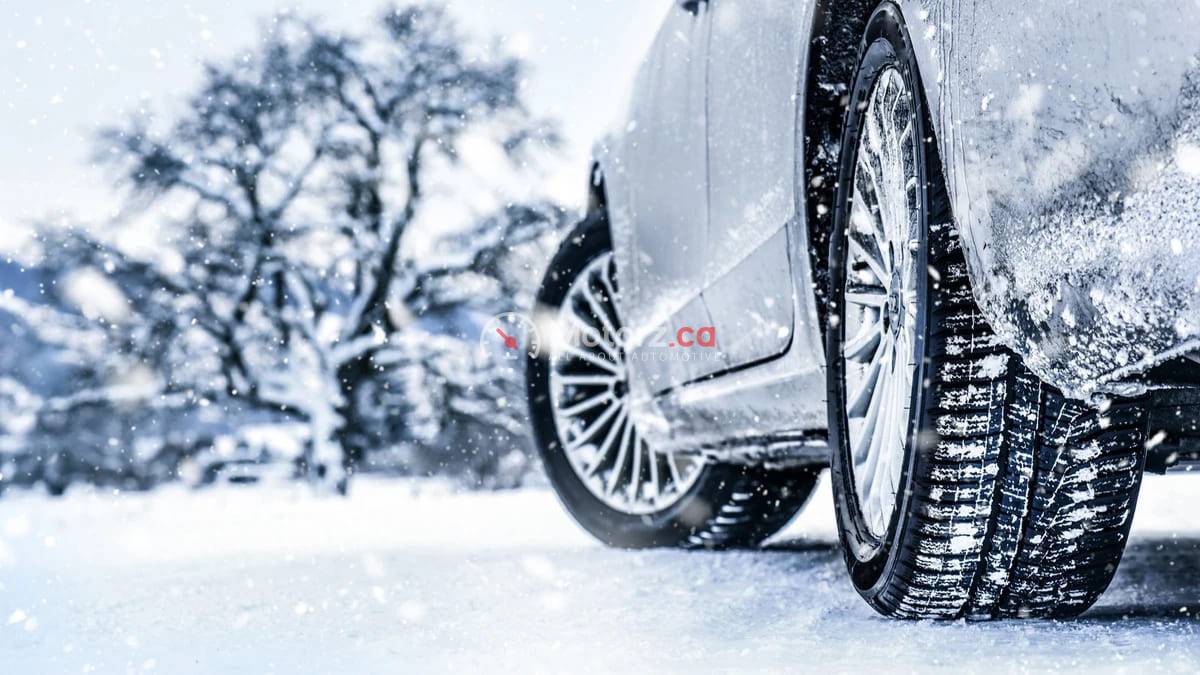
Deeper Tread Grooves: These channels are significantly deeper than those on all-season tires, helping to prevent the tread from being packed with snow. Instead, the tire is designed to capture and hold snow, as snow-on-snow traction is actually more effective than rubber-on-snow traction.
Aggressive Outer Blocks: The larger gaps between the outer tread blocks are designed to scoop and move snow and slush out from under the tire, maintaining contact with the road surface.
High Siping Density: Sipes are the thousands of tiny, razor-thin slits cut into the tread blocks. When the tire rolls, these sipes open and close, acting like miniature biting edges that grab and displace the thin layer of water that forms on ice (the main cause of slippage).
The Three-Peak Mountain Snowflake Symbol (3PMSF) Explained
When shopping for tires, look past any simple “M+S” (Mud and Snow) markings. The only official designation that matters for severe winter driving is the Three-Peak Mountain Snowflake Symbol (3PMSF).
What the 3PMSF Symbol Guarantees
The 3PMSF symbol—a snowflake contained within the outline of a mountain peak—is not an optional logo; it is a certification mark.
Severe Snow Traction Testing: This symbol indicates that the tire has undergone rigorous, standardized testing and has demonstrated superior performance in medium-packed snow compared to a standard reference tire. It is a guarantee of minimum performance standards for traction in severe winter conditions.
M+S vs. 3PMSF:
M+S: The Mud and Snow marking is based purely on the tire’s geometric tread pattern and carries no performance guarantee in cold temperatures or on ice. Many all-season tires have this.
3PMSF: This mark signifies that the tire has passed a specific performance test, certifying its suitability for harsh winter roads.
Crucial Tip: In provinces with mandatory winter tire laws (like Quebec and parts of B.C.), the tire must carry the 3PMSF symbol to be legally compliant.
When to Switch: The 7°C Rule and Timing Your Changeover
Knowing when to install and remove your winter tires is essential for maximizing their performance and lifespan.
The Golden Rule of 7 Degrees Celsius
The time to install your winter tires is not the first time it snows, but when the average daily temperature consistently drops below 7 degrees Celsius.
Why Temperature Matters Most: As noted, it is the cold that hardens the all-season rubber, severely impacting braking performance even on dry roads. By switching at the 7°C mark (usually late October or early November for most of Canada), you ensure the optimal safety performance of the softer winter compound before the first snowfall hits.
Removal Time: Conversely, once spring arrives and temperatures are consistently above 7 degrees Celsius (typically April), you must switch back to your all-season or summer tires. Running winter tires on warm pavement causes their soft compound to wear rapidly, reduces fuel efficiency, and compromises handling due to their aggressive tread pattern.
Installation Logistics and Best Practices
Always remember that tires should be installed in a complete set of four.
Four Tires Only: Never install just two winter tires (e.g., only on the front axle). This can create a dangerous imbalance in handling and grip. If you put winter tires only on the front of a front-wheel-drive car, the rear end will have significantly less grip, increasing the risk of the vehicle spinning out during a turn or braking event.
Dedicated Rims: Investing in a dedicated set of steel wheels (or rims) for your winter tires saves you money in the long run. By mounting the tires once to the rims, you eliminate the bi-annual cost of mounting and balancing the tires, reducing the switchover to a simple, lower-cost wheel change.
Mandatory vs. Recommended: Canadian Provincial Laws and Fines
While highly recommended across the country, dedicated winter tires are a legal requirement in some of Canada’s most populous and geographically challenging regions.
Non-Mandatory, Highly Recommended Regions
In the rest of Canada (Ontario, Alberta, Saskatchewan, Manitoba, and Atlantic Canada), winter tires are not legally required on a province-wide basis, but they are essential for safety and financial protection.
Ontario and Insurance: While not mandatory, Ontario law requires insurance companies to offer a winter tire discount to customers who install a full set of 3PMSF-rated winter tires for the season. This discount can offset a portion of the initial purchase cost.
The Myth of AWD: All-Wheel Drive (AWD) helps you accelerate in snow, but it does nothing to improve your braking or steering on ice. Since stopping is the most critical safety factor, dedicated winter tires are necessary even for AWD, 4×4, and heavy SUVs.
Studded vs. Non-Studded: Which Winter Tire is Right for You?
The choice between traditional (non-studded) and studded winter tires depends entirely on your local driving conditions and provincial regulations.
Studded Tires for Extreme Ice
Purpose: Studded tires incorporate small metal or ceramic pins embedded into the tread. These pins mechanically dig into packed ice, providing unparalleled traction in the most challenging, icy conditions.
Drawbacks: Studs can damage pavement in dry conditions, increase road noise, and may reduce grip on clear, dry roads. They are only permitted in certain provinces (or specific regions, like Northern Ontario) and only within designated dates. Always check local regulations before purchasing studded tires.
Non-Studded Tires
Modern Innovation: Today’s non-studded winter tires (e.g., those using proprietary rubber or multi-cell compounds) use highly advanced siping and soft rubber technology to grip ice by effectively wiping away the thin layer of water that causes slip.
Best For: Most drivers in urban and suburban environments, where roads are regularly plowed and the pavement is often wet or cold rather than pure ice. They offer a quiet, consistent ride and are permitted everywhere.
The Financial Argument: Winter Tires vs. The True Cost of Risk
While the initial investment for a set of four winter tires and rims seems high, the cost should be weighed against the massive financial benefits and risk reduction.
Shorter Stopping Distance: Studies consistently show that winter tires can reduce your stopping distance on ice by up to 25 to 50 percent compared to all-season tires—a difference of several car lengths that can prevent a collision and save your insurance deductible.
Longevity and Cost Neutrality: When you run two sets of tires (winter and all-season/summer), you are essentially halving the wear on each set. While the upfront cost is higher, you significantly extend the total lifespan of both sets, meaning the long-term cost of tires is roughly equivalent, but you gain six months of maximum safety every year.
Insurance Savings: As mentioned, the mandatory insurance discount in provinces like Ontario acts as an immediate subsidy on your safety investment.
Your Safety is Built on Four Contact Patches
The facts are unequivocal: dedicated winter tires are the single most effective safety feature you can add to your vehicle for cold-weather driving. Their specialized rubber compound and aggressive tread design provide a crucial layer of grip that traditional all-season tires simply cannot deliver below 7 degrees Celsius.
Don’t wait for the first snowfall. Adhere to the 7°C rule, look for the 3PMSF symbol, install a full set of four tires, and check your local provincial laws for compliance. Equipping your vehicle with the right winter tires is not an expense—it is a critical investment in your own safety and the safety of everyone else on the road.