

How Subaru’s SUV-Like Redesign Delivers Crucial Headroom and Class-Leading Cargo Volume
The 2026 Subaru Outback has long defied easy categorization, occupying a unique space in the automotive world as the ultimate lifted wagon that bridged the gap between a sedan and a traditional SUV. For its all-new generation in 2026, Subaru has made a bold, consumer-driven choice: the Outback is embracing its SUV identity with a more upright, boxy profile that pays huge dividends where it matters most—interior room and utility.
This redesign moves away from the previous generation’s sloping rear roofline in favor of a taller, flatter silhouette, a change that significantly boosts both passenger comfort and cargo capacity. The engineering mandate was clear: maintain the legendary Symmetrical All-Wheel Drive capability and comfortable, car-like ride, but inject the genuine space and presence that modern crossover buyers demand.
We took the 2026 Subaru Outback for a first drive through varied terrain, focusing specifically on how these dimensional changes and the entirely new cabin technology translate to the real-world driving experience. The verdict is in: the 2026 Outback is the most spacious, technologically advanced, and arguably the most practical version of the crossover-wagon yet, cementing its status as the ideal adventure vehicle.
Exterior Redesign – The Shift to SUV Profile
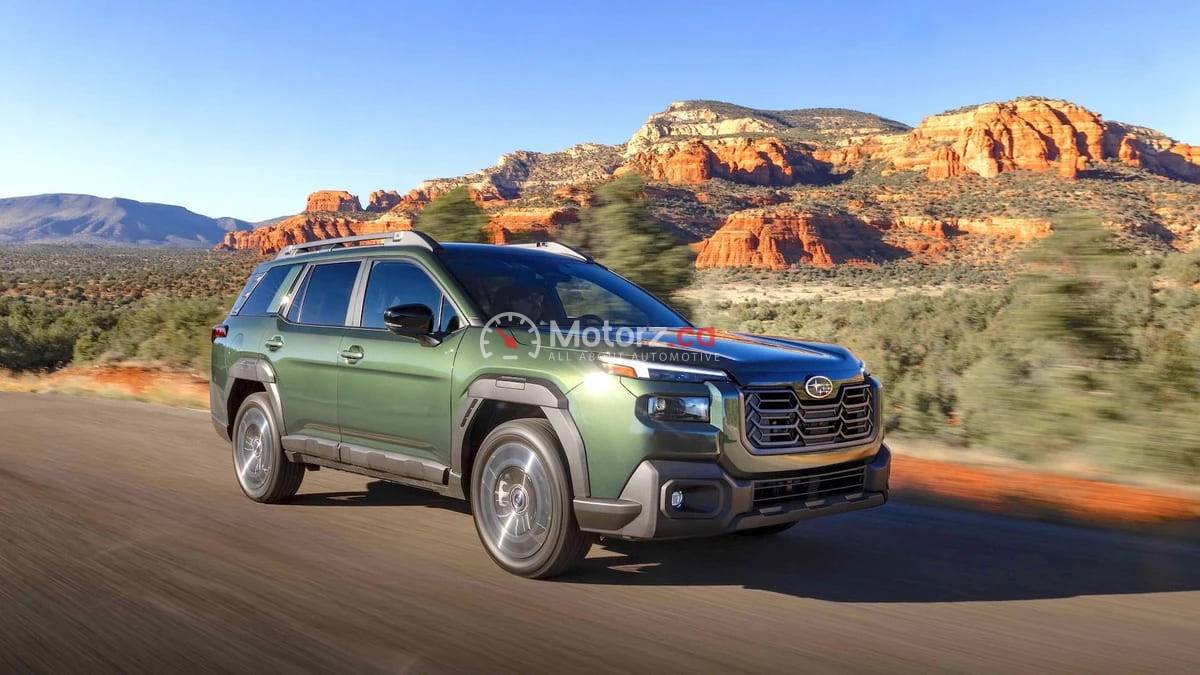
The visual changes to the 2026 Outback are immediately apparent, signifying a clear, deliberate shift in design language to align with the modern SUV segment.
The Dimensional Changes That Unlock Space
While the overall footprint (length and width) remains largely unchanged from its predecessor, the critical dimensional alterations are found in the height and the C-pillar design.
Increased Height: The new Outback sits approximately 1.4 inches taller than the outgoing model. This seemingly minor change is the single largest contributor to the enhanced interior airiness, particularly in the rear seats.
Boxier Silhouette: The most notable change is the move toward a more upright, boxier rear silhouette and a steeper rake on the rear glass. This design choice directly counteracts the space-limiting compromise of the previous wagon-like roofline, maximizing the usable volume.
Visual Ruggedness: The front fascia is now more upright and muscular, featuring a bolder grille and stacked headlight clusters. This rugged look, enhanced by the ubiquitous matte black cladding (particularly on the Wilderness trim with its 9.5 inches of ground clearance), emphasizes its capability and off-road readiness.
Key Insight: The 2026 Outback is built on a further-evolved Subaru Global Platform, meaning the increased interior volume has been achieved primarily through intelligent body shaping and a higher roofline, rather than stretching the wheelbase, thus preserving the Outback’s manageable driving dynamics.
Enhanced Utility and Overlanding Readiness
The exterior updates are not just aesthetic; they significantly boost the Outback’s functionality for active lifestyles.
Massive Roof Rail Capacity: A feature critical to the Outback’s identity is its roof rack system. The standard raised roof rails now boast an impressive static load capacity of 363 kilograms and a dynamic load rating of 100 kilograms. This substantial increase officially certifies the Outback as an excellent platform for roof tents and heavy adventure gear.
Ground Clearance: The standard Outback models maintain an excellent 8.7 inches of ground clearance, while the Wilderness trim elevates this further to a true-SUV-rivaling 9.5 inches, enhanced by electronically controlled dampers. This high clearance is maintained despite the comfortable step-in height and relatively low cargo floor.
The Interior Revolution – Headroom and Hauling
The primary objective of the 2026 redesign—boosting interior space—has been achieved with impressive results, making the new Outback a class leader in usable volume.
Passenger Comfort: Headroom for Tall Occupants
For the first time, the Outback’s passenger compartment feels truly uncompromised, especially for taller drivers and passengers.
Headroom is King: The 1.4-inch increase in overall height translates directly into more generous headroom across both rows. Front headroom now measures over 40.2 inches, and rear headroom is also over 40.5 inches. This is a massive improvement for six-foot-plus occupants who previously found the sloping rear of the older model restrictive.
Generous Dimensions: Passengers in the rear seat benefit from nearly 40 inches of legroom and over 57 inches of shoulder room, creating a genuinely comfortable experience even for adult passengers on long road trips. The seats themselves are updated “low-fatigue” units, with heating now standard on all trims and ventilation available on the higher-end Touring trims.
Quiet Cabin: Subaru has focused heavily on Noise, Vibration, and Harshness (NVH), adding extra sound-absorbing materials and thicker glass. During our drive, the cabin proved remarkably serene, successfully isolating engine and road noise and enhancing the overall upscale comfort level.
AI Overview Insight: The 2026 Subaru Outback has adopted a taller, boxier SUV-like profile and a flatter roofline to significantly increase its interior space. Key dimensional benefits include an approximately 1.4-inch increase in height for improved passenger headroom (over 40 inches in both rows) and an expansion of cargo space behind the rear seats, now measuring 34.6 cubic feet. This redesign, built on the Subaru Global Platform, maintains the standard Symmetrical All-Wheel Drive and enhances technology with a new 12.1-inch horizontal infotainment screen and a 12.3-inch digital gauge cluster.
Cargo Utility: Class-Leading Volume and Smart Storage
The greatest practicality gains are found behind the front seats, solidifying the Outback’s position as a genuine utility vehicle.
Expanded Cargo Capacity: The steeper rear glass and taller profile have expanded the cargo area to 34.6 cubic feet behind the rear seats, with a massive 80.5 cubic feet available when the 60/40 split rear seats are folded down. The total interior volume is also generous at approximately 146.9 cubic feet.
Thoughtful Details: Subaru’s focus on “quality of life” shines through in the cargo area. The load floor is wider and lower, making the loading of bulky items easier. The door pockets are enlarged to hold 32-ounce water bottles, and there’s a useful cord management clip near the illuminated USB ports—small touches that demonstrate superior ergonomic design.
Redesigned Cupholders and Console: Even the center console has been re-thought. Cupholders are now front-to-back, accommodating a wider variety of mugs and bottles, and the overall console architecture frees up valuable storage space below the center stack, a welcome return for drivers who carry a lot of small items.
Technology and Drivetrain – Refinement Over Revolution
While the interior and exterior saw a revolution, Subaru wisely chose refinement for the powertrain and driver technology, focusing on usability and feel.
The New Digital Command Center
The 2026 Outback addresses a major complaint of the previous generation with a completely reimagined digital interface that prioritizes driver focus and responsiveness.
Horizontal Infotainment: Gone is the controversial vertical 11.6-inch touchscreen. It is replaced by a high-resolution, more intuitive 12.1-inch horizontal multimedia system. This change moves the screen higher on the dash, reducing the distance the driver’s eye must travel from the road.
Faster Processor: The new system is powered by a faster processor (Qualcomm Snapdragon 8 Automotive), making it significantly more responsive. We found the map swiping and app transitions to be notably quicker than the previous generation. Crucially, it features wireless Apple CarPlay and Android Auto as standard.
Physical Controls Return: Much to the relief of dedicated Outback owners, Subaru has brought back dedicated physical knobs and buttons for key climate control functions, offering tactile feedback that is easier and safer to use without glancing away from the road.
Inch Digital Gauge Cluster: A fully customizable 12.3-inch digital instrument cluster is now standard, replacing the older analogue dials. This display can be configured to show navigation, EyeSight alerts, or traditional-style gauges.
Familiar Engines, Improved Dynamics
The powertrain lineup remains centered around the reliable Boxer engines, but the driving experience has been enhanced through steering and chassis tuning.
Engine Options: The 2.5-liter naturally aspirated SUBARU BOXER engine (180 horsepower) remains the standard engine, and the 2.4-liter turbocharged BOXER engine (260 horsepower) is carried over in the XT and Wilderness trims. Both are paired with the Lineartronic CVT with an 8-speed manual shift mode.
Refined Steering: The Outback benefits from the adoption of the dual-pinion electric power steering rack first seen in the WRX. This upgrade provides a more direct, precise, and less fatiguing steering feel, improving responsiveness both on the highway and during off-road excursions.
Standard Symmetrical AWD: Every 2026 Outback includes the hallmark Subaru Symmetrical All-Wheel Drive and an enhanced X-MODE system for better performance in snow, mud, and uneven terrain. The AWD system now features faster center differential lockup for reduced wheelspin.