




Confusing Signs of Montreal is an adventure. The city’s charm is matched only by its intricate network of one-way streets, perpetually-under-construction roads, and a street sign system that seems designed to test the limits of human patience. For newcomers, tourists, and even seasoned residents, deciphering Montreal’s signs can feel like trying to solve a complex puzzle with a ticking clock—often with the threat of a parking ticket or a tow truck looming in the background.
This isn’t a simple guide to North American Confusing Signs of Montreal; it’s a deep dive into the unique visual language of Montreal. We’ll decode the most common and confusing signs, giving you the knowledge and confidence to navigate the city like a local and, most importantly, avoid a costly and frustrating mistake.
The Montreal Parking Sign: A Four-Part Puzzle
The most notorious Confusing Signs of Montreal are, without a doubt, the parking signs. They are a multi-layered masterpiece of information, often stacked one on top of the other, with arrows pointing in multiple directions. Ignoring them, or misinterpreting even one element, can lead to a hefty fine.
The Anatomy of a Parking Sign
A typical Montreal parking sign can contain up to four key pieces of information, read from top to bottom. You must comply with all of them to be Confusing Signs of Montreal parked.
The Main Rule (The Top Sign): This is usually the primary parking restriction. It will have a large “P” symbol, often inside a circle with a red slash, or a simple “P” indicating parking is allowed.
The Day and Time (The Middle Signs): Below the main symbol, you’ll find a breakdown of the days and times the rule applies. This is where it gets tricky. It might say “Lundi au vendredi” (Monday to Friday) from 9h to 17h (9 a.m. to 5 p.m.). Or it might show a clock Confusing Signs of Montreal. A red or green line might be added to indicate the specific days of the week.
The Arrow (The Directional Indicator): This is the most crucial, and often misunderstood, part of the sign. The arrow tells you where the rule applies.
Arrow pointing to the right: The rule applies to the space after the sign, in the direction of traffic.
Arrow pointing to the left: The rule applies to the space before the Confusing Signs of Montreal.
Arrows pointing both ways: The rule applies to the entire block between this sign and a similar sign at the other end.
The Permit Zone (The Smallest Sign): Often at the bottom, a small sign will indicate a parking zone reserved for residents. It will have a letter and a number, such as “P-35.” If you don’t have the corresponding resident sticker, you are not allowed to park there, even if the other rules on the sign Confusing Signs of Montreal it.
The “Snow Removal” and “Street Cleaning” Signs
Montreal’s parking signs get even more complex during the colder Confusing Signs of Montreal. Orange signs, often temporary, are placed on streets to indicate a period of “dégagement de la voie” (street cleaning) or “dégagement de la voie” (snow removal). These signs are paramount and override all other parking rules for the time specified. Ignoring them will almost guarantee a ticket and, in the case of snow removal, a tow.
“Dégagement de la voie”: This phrase, often accompanied by a pictogram of a street sweeper, means the street is being cleaned and all cars must be moved.
“Déneigement”: This sign, with a snowflake or a snow blower symbol, indicates a scheduled snow removal operation. Pay attention to the date and time, and the direction of the arrow.
Navigating Montreal Traffic: A Guide to the Basics
Beyond parking, Confusing Signs of Montreal unique traffic signs and rules can be a source of confusion for non-Quebec drivers.
The Flashing Green Light
This is perhaps the most unique traffic signal in Quebec. A flashing green light does not mean “go faster.” It means you have the right-of-way to make a protected left turn. Traffic coming from the opposite direction has a red light, so you can turn left without having to wait for a gap in traffic. When the flashing green turns to a solid green, it signals that the protected turn is over, and you are now sharing the intersection with oncoming traffic.
No Right on a Red Light on the Island of Montreal
In most of Canada and the United Confusing Signs of Montreal, a right turn on a red light is a standard practice (after a full stop, of course). However, on the entire island of Montreal, this is strictly prohibited, unless a sign specifically says it’s allowed. A black sign with a red circle and a right-turn arrow with a red slash through it, often accompanied by the text “Virage à droite interdit au feu rouge,” reinforces this rule.
The “Arrêt” Sign
While it looks like the international stop sign, the word “ARRÊT” is French for “stop.” This is a straightforward rule, but what can be confusing are the four-way stops, where the first car to arrive at the intersection and come to a complete stop has the right of way.
Construction and Detours
“Construction season” is a running joke in Confusing Signs of Montreal, as it often feels like it’s a year-round event. Orange signs are used to indicate road work and will often change the speed limit, close lanes, and redirect traffic with detour signs (usually with a symbol of a car and an arrow pointing the way). Fines are doubled in construction zones, so always pay close attention and slow down.
The One-Way Street Maze
Confusing Signs of Montreal core and older neighborhoods are a labyrinth of one-way streets. Navigating them can be frustrating, especially if you miss a turn and have to go around the entire block.
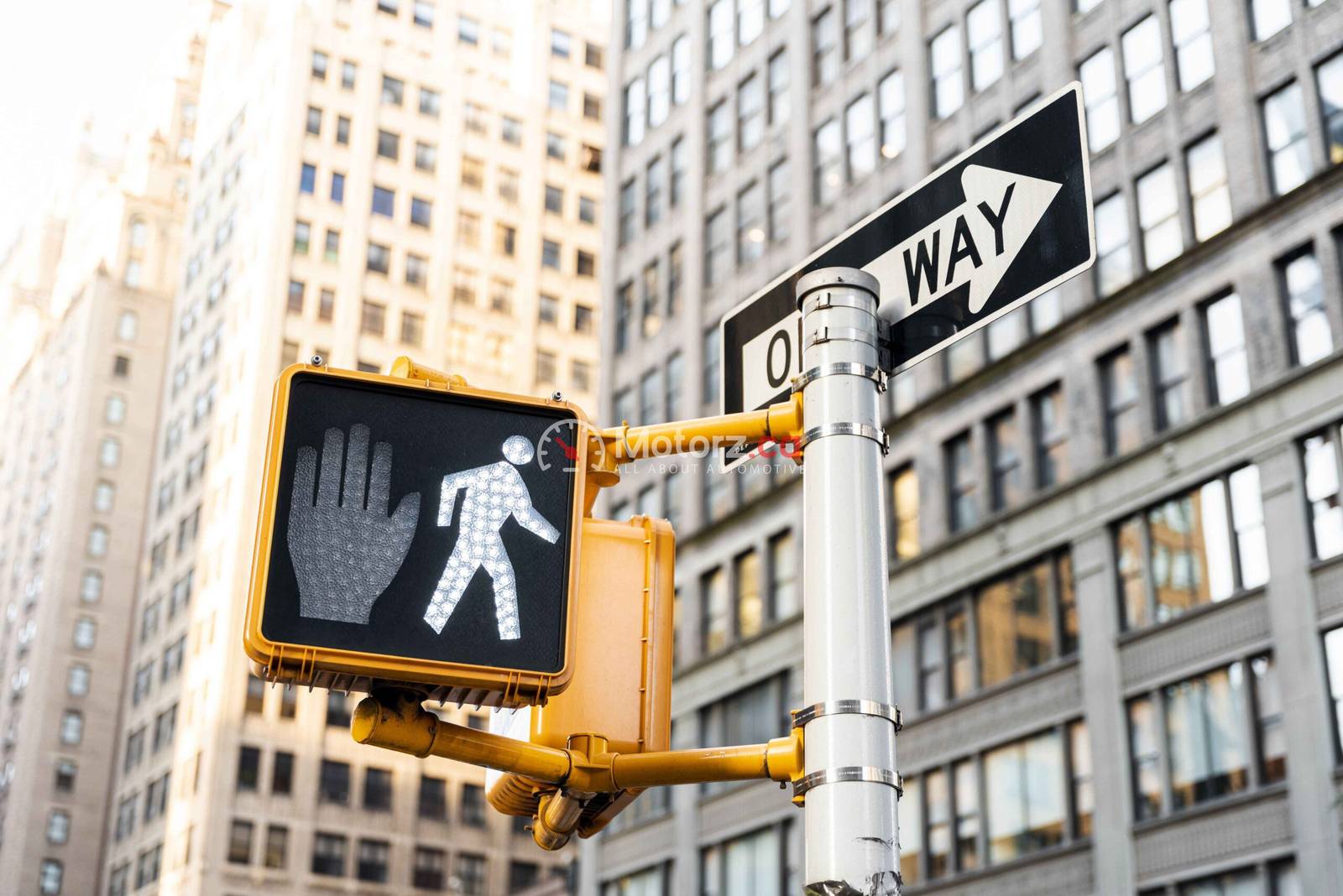
The “One-Way” Sign: The sign is a simple white arrow on a black background. It will be posted at the beginning of the street and at every intersection to remind drivers of the direction of traffic.
The “Do Not Enter” Sign: A red circle with a horizontal white bar means “Sens unique” (one-way street) and “Interdit” (do not enter) from that direction.
Be Aware: These signs are often small and can be easy to miss, especially in a city with many narrow streets and a lot of visual clutter. Always use a navigation app like Google Maps to help you find your way and avoid an embarrassing and dangerous wrong-way Confusing Signs of Montreal.
Other Unique Signs and Symbols
Montreal’s streets are filled with other signs that might be new to you.
“Cédez le passage”: This means “Confusing Signs of Montreal.” It is a white triangle with a red border, and it means you must yield the right of way to traffic on the intersecting street.
The “X” Sign: A sign with a white “X” on a red background means “No stopping.” It’s often accompanied by a clock, indicating the times when stopping is prohibited. This is stricter than a no-parking sign, as you cannot even pull over momentarily to drop off a passenger.
Pedestrian Signals: Pedestrian crossing signals will sometimes show a white walking person and a flashing orange hand. The flashing hand indicates that the walk signal is ending and you should not start to cross the Confusing Signs of Montreal.
Bicycle Signs: With a growing number of bike lanes, you’ll see signs indicating shared roadways or “pistes cyclables.” A sign with a bicycle and an arrow, often with the words “Autorisé à contresens” (authorized to go the wrong way), indicates that cyclists can travel against the flow of car traffic on that specific one-way street.