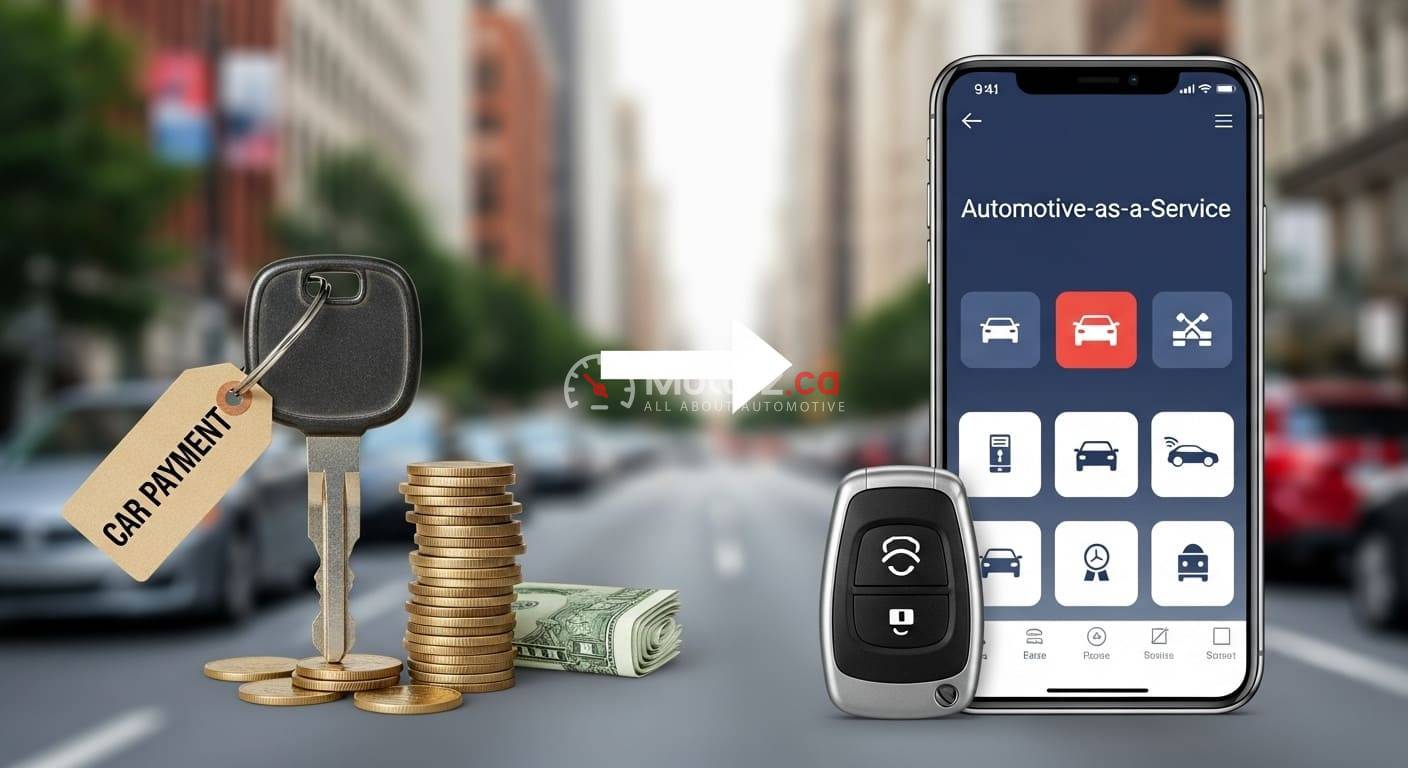
For generations, the automobile represented the ultimate symbol of ownership, freedom, and personal investment. The ritual of selecting a vehicle, securing a loan, making a car payment for years, and eventually owning a depreciated asset was simply the way things were done.
Today, that Automotive-as-a-Service model is facing an existential challenge from a paradigm shift sweeping across the entire economy: The Subscription Economy. From streaming entertainment to software, consumers increasingly prioritize access and flexibility over ownership and long-term commitment. This trend has birthed Automotive-as-a-Service (AaaS), a term that encompasses everything from ride-hailing to the increasingly popular car subscription model.
In 2025, AaaS is positioned squarely in the growth stage, with the global Vehicle-as-a-Service market estimated at 12.6 billion and projected to skyrocket, registering a compound annual growth rate (CAGR) of over 20 percent through 2035. This growth signals a deep, structural change in how consumers view personal transportation. But is the subscription model truly ready to replace the monthly car payment for the average driver, or is it still a niche luxury?
This comprehensive analysis breaks down the Automotive-as-a-Service ecosystem, compares the financial realities of car subscription versus traditional car ownership and leasing, and assesses the major shift in strategy among Original Equipment Manufacturers (OEMs) that is making this alternative mobility model a permanent fixture of the automotive landscape.
The Core Concept: Access Over Ownership
The foundation of the car subscription model is a simple cultural shift: consumers want the convenience of personal transportation without the burdens and risks associated with owning a depreciating asset.
Defining Automotive-as-a-Service (AaaS)
AaaS is a broad term for mobility solutions that treat transportation as a utility. The car subscription model falls within this, offering a vehicle for a single, all-inclusive monthly fee.
All-Inclusive Pricing: The single biggest appeal of AaaS is the elimination of budgeting volatility. The monthly subscription fee typically covers: insurance, routine maintenance, roadside assistance, registration, and often the vehicle’s depreciation costs. The driver only pays for fuel/charging and tolls.
Unmatched Flexibility: Unlike traditional Automotive-as-a-Service (which locks the driver into a 24- to 48-month contract with punitive early termination fees) or financing (a five- to seven-year commitment), subscriptions often allow drivers to swap vehicles or cancel with minimal notice (sometimes as short as 30 days). This flexibility is highly attractive to young urban professionals, those in transitional life phases, or families whose needs change frequently (e.g., needing an SUV for the summer and a sedan for the winter).
Consumer Preferences Driving the Shift
Millennials and younger generations are increasingly prioritizing experiences and freedom over asset acquisition. Research shows a significant percentage of young people value transportation access over vehicle ownership, especially in highly urbanized environments.
Urbanization and Convenience: In congested city Automotive-as-a-Service, the hassles of parking, rising insurance premiums, and unpredictable maintenance costs make ownership less appealing. A single, transparent subscription payment and a service that handles all logistics is a strong counter-argument to the complexities of traditional ownership.
Trial and Variety: A subscription allows drivers to “try before they buy” or simply enjoy driving a new model every six to twelve months, accessing the latest connected car technology and safety features without the associated long-term financial risk.
Subscription vs. Ownership: The Financial Reality Check
While the convenience of a car subscription is undeniable, the financial comparison with traditional ownership is nuanced and depends heavily on the driver’s lifestyle and financial goals.
The Upfront Cost Advantage
The most significant financial benefit of a Automotive-as-a-Service is the low barrier to entry.
Zero Down Payment: Unlike financing or leasing, which almost always require a substantial down payment or cap cost reduction, subscription models typically require minimal or no upfront fees (sometimes just a refundable security deposit). This preserves capital for other investments or necessities.
No Loan or Credit Impact: Subscriptions are not a form of credit or financing. They do not involve a traditional loan agreement and thus do not impact the customer’s long-term credit score or ability to secure other loans (like a mortgage).
The Higher Monthly Cost Drawback
The all-inclusive nature of the subscription inevitably results in a higher monthly payment compared to a basic loan or lease payment for the exact same Automotive-as-a-Service.
The Premium for Flexibility: Subscribers are paying a premium for the convenience of flexibility and the assumption of risk by the provider (the OEM or third-party service). Over a 36-month period, the total cost of a subscription will usually exceed the total cost of a lease.
No Equity Build-Up: The fundamental drawback of the subscription model is the lack of equity. Every dollar spent is an expense, much like rent. When the contract ends, the driver returns the vehicle and has nothing to show for the payments, unlike financing, where the driver eventually owns a sellable asset (even if depreciated). For individuals who view a vehicle as a necessary, if small, long-term asset, this no-ownership model is a major turn-off.
Mileage and Hidden Fees
Just like leases, subscriptions come with mileage Automotive-as-a-Service. Drivers who exceed the often-conservative annual limits (typically 1,000 to 1,250 miles per month) face overage fees that can quickly negate the financial convenience. Furthermore, excessive wear and tear can incur additional charges upon vehicle return, requiring careful review of the subscription contract’s terms and conditions.
OEMs Pivot: Subscriptions as a Core Business Strategy
The initial wave of car subscriptions was spearheaded by startups. However, the sustainable growth in 2025 is being driven by the strategic pivot of major Original Equipment Manufacturers (OEMs). Companies like Volvo (Care by Volvo) and Porsche (Porsche Drive) have refined their programs, viewing subscriptions not as a niche offering but as a vital pillar of future revenue.
Recurring Revenue Streams
The traditional model of a single, one-time vehicle sale is being replaced by the pursuit of predictable, recurring revenue.
Customer Lifetime Value (CLV): Subscription models keep the customer closely engaged with the brand throughout the vehicle lifecycle. This ongoing relationship allows OEMs to continuously collect data, offer personalized services, and sell additional features, vastly increasing the customer’s long-term value to the company.
Feature Subscriptions: Beyond the physical car, OEMs are increasingly using subscriptions for software-defined vehicle (SDV) features. Drivers can subscribe to unlock certain functionalities like heated seats, Advanced Driver-Assistance Systems (ADAS) capabilities, or enhanced navigation packages. This allows OEMs to lower the initial sticker price of the vehicle while creating constant, high-margin revenue streams throughout the vehicle’s life, regardless of who owns it.
Lifecycle and Fleet Management
OEMs are perfectly positioned to manage subscription fleets efficiently because they control the manufacturing, maintenance, and remarketing processes.
Residual Value Management: One of the biggest risks in automotive finance is estimating the residual value (the vehicle’s future worth). By retaining ownership through the subscription model, OEMs gain direct control over vehicle maintenance and condition, allowing them to manage and maximize the residual value when the car is finally sold as a high-quality used vehicle.
Customer Acquisition: Programs like Porsche Drive have shown significant success in attracting customers new to the brand, using the low-commitment subscription as a gateway to eventually purchasing a vehicle.
The Future of Mobility: Beyond the Personal Car
The ultimate vision of AaaS extends beyond simply swapping one personal car for another; it points toward an integrated Mobility-as-a-Service (MaaS) ecosystem.
Integration with Shared Mobility
In large metropolitan areas, the car subscription model integrates seamlessly with other forms of shared transport. A consumer might use a dedicated car subscription for daily commuting and weekend trips, but rely on ride-hailing (Uber/Lyft) or scooter/bike-sharing for short, hyper-local errands. This combination of services is transforming transportation into a flexible, multi-modal utility package.
Electrification as a Catalyst
The transition to Electric Vehicles (EVs) is a major driver of the subscription model’s growth.
Risk Mitigation: EVs carry higher initial costs and are subject to faster technological advancements (especially in battery range and charging speed). The subscription model mitigates the technological risk for the consumer, allowing them to enjoy the benefits of an EV today without fearing that the vehicle will be technologically obsolete in three years.
Fleet Management: For fleet operators and OEMs, managing EV fleets is simpler under a centralized model, simplifying the logistics of charging infrastructure access and battery health monitoring. In 2025, the electric engine segment is expected to account for over 60 percent of the Vehicle-as-a-Service market revenue share.
Is AaaS Ready for the Mainstream? A 2025 Verdict
The answer to whether Automotive-as-a-Service is ready for the mainstream depends entirely on the mainstream driver’s profile.
The Ideal AaaS Subscriber
High-Mobility Professionals: Those with fluctuating job locations or frequent international assignments.
Uncertain Families: Individuals needing to switch between a small hatchback and a large minivan based on family expansion or lifestyle changes.
Technology Seekers: Drivers who want the latest autonomous driving and digital features every 12 months without the hassle of selling or trading in.
Urban Residents: Those who prioritize convenience and transparency over long-term financial equity.
The Traditional Buyer
The majority of consumers who live in suburban or rural areas, drive high annual mileage, and view their vehicle as a necessary, long-term asset for five to ten years will still find financing or ownership to be the most financially sensible option. Their lower average maintenance and insurance costs, coupled with the long-term equity, will typically outweigh the convenience premium of a subscription.
Ultimately, Automotive-as-a-Service will not replace the traditional car payment model by 2030, but it will fundamentally reshape the market. It is evolving from a niche experiment into a robust, parallel option backed by major manufacturers, catering to a new generation of drivers who value freedom, flexibility, and a hassle-free experience more than a title of ownership.