
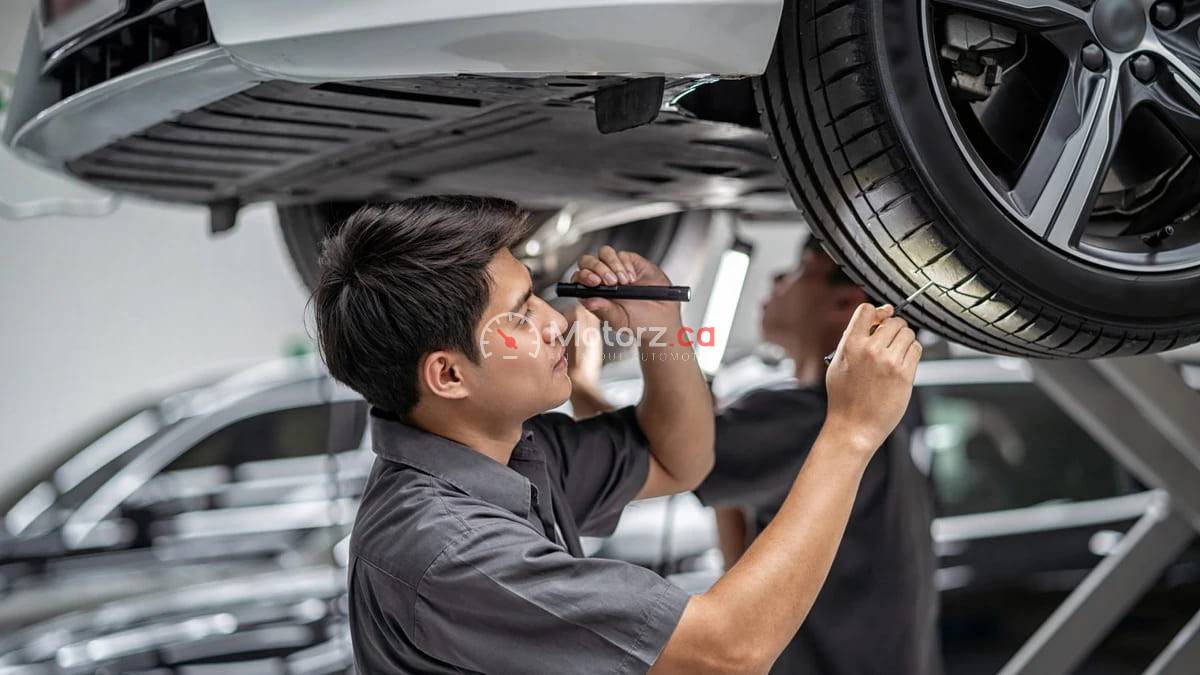

Most Mechanic for an Undercarriage Tour a familiar disconnect at the auto shop. You sit in a waiting room, scrolling through your phone, while a stranger takes your vehicle behind a heavy metal door. Thirty minutes later, a service advisor hands you a list of “necessary” repairs with a hefty price tag. You are left wondering: Do I really need a new CV axle, or am I just paying for the shop’s new hydraulic lift?
There is a simple way to bridge this gap:
Far from being a nuisance, requesting a guided look at your Mechanic for an Undercarriage Tour undercarriage is one of the smartest moves a car owner can make. It transforms a mysterious transaction into a transparent conversation. In this guide, we will explore why you should get under the hoist, what you need to look for, and how to handle the “tour” like a pro.
Why Every Driver Needs an Under-Car Tour
The undercarriage of your car is the ultimate “truth-teller.” While a shiny exterior can hide a multitude of sins, the frame, suspension, and drivetrain reveal exactly how a car has been treated.
Transparency and Trust
Trust is the most valuable currency in automotive repair. A shop that is willing to bring you into the bay and show you exactly where a part has failed is a shop that has nothing to hide. Seeing a leaking strut or a rusted-out exhaust pipe with your own eyes eliminates the “fear of the unknown” and gives you the confidence to approve (or decline) a repair.
Understanding the “Snowball Effect”
As we have discussed in previous guides, small problems in a car often lead to catastrophic failures. By looking underneath, you can see how a minor oil leak is degrading a rubber bushing, or how a torn boot is letting grit destroy a thousand-unit axle. Seeing the “dominoes” before they fall helps you prioritize your maintenance budget.
Spotting Environmental Damage
If you live in a region that uses road salt in the winter, the undercarriage is your primary battlefront. Corrosion can eat through brake lines and fuel tanks long before you ever see a spot of rust on the body panels. A quick visual inspection can tell you if it’s time for a professional undercoating or a deep-clean.
How to Ask for a Tour (The Right Way)
Safety and liability are the two main reasons a shop might hesitate to let you into the work area. To get your tour, follow these professional etiquette tips:
Ask Before the Work Starts: Don’t wait until they have already put the car back on the ground. When you hand over the keys, say: “I’m interested in learning more about the health of my car. Would it be possible for a technician to show me the undercarriage once it’s up on the lift?”
Respect the Safety Lines: Many shops have yellow lines painted on the floor. Never cross them without an escort.
Don’t Touch: Modern lifts are secure, but they aren’t playgrounds. Keep your hands in your pockets unless the mechanic invites you to feel a specific part.
Be Brief: The technician is “on the clock.” Ask for a two-minute walkthrough, not a thirty-minute lecture.
What to Look for During Your Under-Car Tour
When you are standing under several thousand pounds of metal, it can be overwhelming. Focus your eyes on these five critical areas to get the most out of your inspection.
The “Wet Spots” (Leaks)
The underside of your car should be relatively dry.
Engine and Transmission: Look for dark, oily stains. A “sweating” seal might be okay for another year, but a hanging drip is an immediate concern.
Brake Lines: If you see “wet” spots along the thin metal lines running to your wheels, do not drive the car. This is a high-pressure safety system that is about to fail.
Shocks and Struts: If the body of the shock absorber is covered in oily grime, the internal seal has blown, and your car’s handling is compromised.
The “Soft Parts” (Rubber and Plastics)
Rubber parts are the first to go.
CV Boots: These are the accordion-like rubber sleeves on your axles. If they are torn, the grease inside will fly out (look for grease splattered on the inside of the wheel) and the axle will fail soon.
Bushings: These are the rubber “donuts” in your suspension. Look for cracks, dry rot, or pieces of rubber literally falling out.
Hoses: Check for bulges or “soft spots” in the radiator and heater hoses.
The “Skeleton” (Frame and Body)
Surface Rust vs. Structural Rot: Flaky orange surface rust is common on older cars. However, if you can poke a screwdriver through a metal part, or if the metal looks like “Swiss cheese,” the car may be unsafe to drive.
Impact Damage: Look for dents in the oil pan or scrapes on the subframe. This can indicate that the car has bottomed out or been involved in an unreported accident.
The Exhaust System
Holes and Cracks: Even a tiny pinhole in an exhaust pipe can leak carbon monoxide into the cabin.
Hangers: Ensure the rubber loops holding the heavy exhaust pipes are intact. A swinging exhaust pipe can eventually snap or melt nearby plastic parts.
Tire Wear Patterns
While the car is at eye level, look at the inside edge of the tires.
Uneven Wear: If the inside edge is bald while the outside looks new, you have an alignment or suspension problem that you might have missed while the car was on the ground.
Red Flags: When a Shop Denies Your Request
While some shops have legitimate insurance policies that strictly prohibit customers in the bay, most modern shops have a “customer viewing” protocol.
If a shop refuses to show you the damage and cannot provide a photo or video of the failed part, consider it a major red flag. In the age of smartphones, every technician has the ability to snap a picture of a broken part. If they won’t show you the problem, they might be “fishing” for repairs.
Knowledge is Power (and Money)
Taking a tour underneath your car is the quickest way to move from being a “passive consumer” to an “informed owner.” It allows you to see the reality of your car’s condition, verify that the work you are paying for is actually necessary, and learn more about the machine that carries you and your family every day.
Next time you head to the shop for an oil change or a brake check, don’t just take their word for it. Ask to see for yourself. A good mechanic will be happy to show off their work, and you will walk away with peace of mind that no waiting room can provide.