




For decades, the phrase Half-Million-Dollar Electric Flagship was more than just a slogan for Cadillac; it was a global reality. In the mid-20th century, a Cadillac was the ultimate signifier of success, standing toe-to-toe with the finest machinery from Europe. But over the years, that luster faded, replaced by mass-market luxury and the relentless rise of German and British marques.
Now, in 2025, Cadillac is attempting the most audacious comeback in automotive history. Enter the Cadillac Celestiq. With a starting price around 340,000 units and bespoke commissions easily soaring past 400,000 and even 500,000 units, it is the most expensive and exclusive Cadillac ever built.
But does a badge that also appears on suburban rental SUVs belong on a hand-built masterpiece designed to rival Rolls-Royce? We sat down with the specs, the story, and the driving experience to determine if the Celestiq is a true high-luxe contender or just a very expensive vanity project.
Beyond the Assembly Line: The Half-Million-Dollar Electric Flagship
The most significant “credible” factor for the Celestiq isn’t its horsepower or its battery range; it is how it is made. Unlike every other Cadillac on the road, the Celestiq is not built on a traditional assembly line.
The Artisan Center at the GM Global Tech Center
Every Celestiq is hand-assembled in Warren, Michigan, at the historic GM Global Technical Center. Cadillac invested 81 million units to create a specialized “Artisan Center” where no more than two cars are finished per day. This move mirrors the “Atelier” systems used by brands like Bugatti and Ferrari, signaling that Cadillac is serious about craft over volume.
3D Printing as a Luxury Medium
Luxury is often defined by what is impossible to mass-produce. The Celestiq features over 115 3D-printed parts, including structural components and intricate interior trim like the steering wheel boss. These parts are made from materials like stainless steel, titanium, and aluminum, finished with a level of detail that traditional stamping simply cannot achieve.
The Visual Statement: Is it Too “Lyriq”?
One of the loudest criticisms of the Celestiq is its family resemblance to the much cheaper Lyriq SUV. In a segment where exclusivity is currency, looking like a 60,000-unit car can be a fatal flaw.
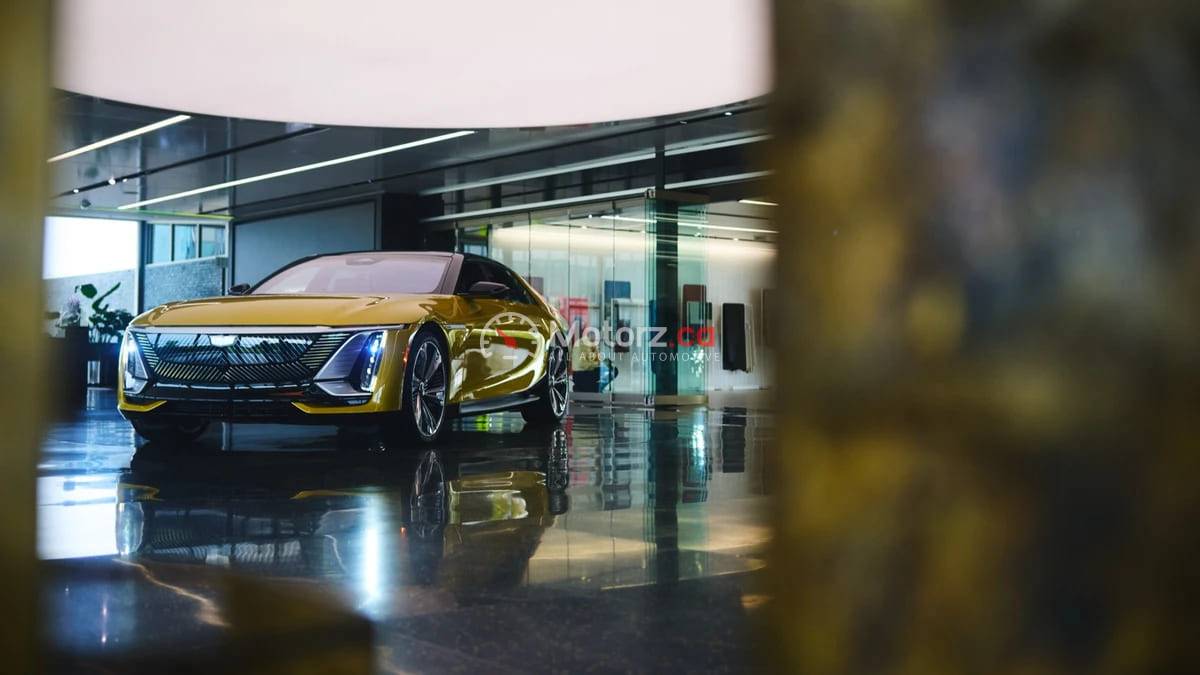
However, seeing the Celestiq in person changes the narrative. Its proportions are staggering:
Length: Over 217 inches (longer than a full-size Escalade).
Stance: It is incredibly low and wide, giving it the presence of a 1950s “land yacht” reimagined for the year 2055.
Lighting: The “digital micromirror” headlamps feature 1.3 million pixels per side, performing a choreographed light show that feels genuinely “ultra-luxe.”
While the design language is shared, the execution of the Celestiq—with its sheet-molded composite panels and brushed aluminum accents—is in a different league of finish.
Performance: Refinement Over Raw Speed
In the world of ultra-luxury EVs, manufacturers like Lucid and Tesla focus on 0 to 60 times that challenge fighter jets. Cadillac has taken a more “Bentley-esque” approach.
The Power of the Ultium Platform
The Celestiq utilizes a dual-motor all-wheel-drive system producing approximately 655 horsepower and 646 lb-ft of torque. It hits 60 mph in about 3.7 seconds. While that is fast, it isn’t “record-breaking.” Instead, the focus is on effortless delivery. The acceleration is tuned to be linear and silent, intended to “waft” the passengers rather than pin them to their seats.
Chassis Wizardry: Magnetic Ride Control 4.0
To justify a half-million-unit price tag, the ride must be flawless. Cadillac has thrown every piece of suspension tech in its arsenal at this car:
Adaptive Air Suspension: For a “magic carpet” ride.
Active Rear Steering: Allowing this massive sedan to maneuver in tight city spots like a much smaller car.
Active Roll Control: Using electronic stabilizers to keep the car perfectly level during cornering.
Reviewers have noted that the Celestiq offers a level of isolation and quietness that rivals the Rolls-Royce Spectre, which is perhaps the highest praise an American luxury car could receive.
The Interior: A 55-Inch Digital Sanctuary
The cabin of the Celestiq is where the “contender” status is truly tested. It is a four-seat configuration, ensuring that every passenger has a “First Class” experience.
The Pillar-to-Pillar Display
The dashboard is dominated by a 55-inch diagonal HD display. While large screens are becoming common, Cadillac’s implementation includes “digital blinds” that allow the passenger to watch movies or browse the web without the driver being able to see the screen, preventing distraction.
The Smart Glass Roof
The Celestiq features a four-quadrant suspended-particle-device roof. This allows each of the four passengers to individually adjust the transparency of the glass above their head. If the driver wants a clear view of the sky while the rear passenger wants total shade for a nap, both can have their way simultaneously.
Truly Bespoke Materials
Cadillac emphasizes that no two Celestiqs will be the same. Buyers work with a personal concierge to select everything from the leather hide (available in any color imaginable) to the “Uranus Recycled Paper Wood” or hand-finished metal inlays.
The Competitive Landscape: Celestiq vs. Spectre vs. Flying Spur
Is the Celestiq a credible contender? Let’s look at how it stacks up against the established royalty.
The Celestiq’s greatest challenge isn’t its technology—it’s brand cachet. A buyer in this segment is buying a “legacy.” While Rolls-Royce and Bentley have maintained their high-luxe status for a century, Cadillac is asking the world’s wealthiest people to believe in their “resurgent era.”
The Verdict: Is it a Credible Contender?
After analyzing the engineering, the bespoke process, and the initial market reception in late 2024 and early 2025, the answer is a qualified yes.
The Celestiq is a credible contender because it doesn’t try to be a “better” version of a Mercedes S-Class. It tries to be a different expression of luxury—one that is distinctly American, unapologetically tech-forward, and remarkably daring.
What makes it credible:
Exclusivity: You cannot simply walk into a dealer and buy one.
Engineering: It uses the pinnacle of GM’s EV and suspension technology.
Bespoke Nature: The level of individualization matches the “Big Three” European brands.
What remains the challenge:
Depreciation: Will a 400,000-unit Cadillac hold its value as well as a Rolls-Royce?
Range: At an estimated 300 to 303 miles, it is sufficient but not industry-leading for 2025.
Potential Collectors
If you are looking for the most efficient EV or the fastest car on the road, the Celestiq is not for you. But if you are a collector who appreciates the “moonshot” nature of this project—the moment an American icon decided to stop apologizing and start leading—the Celestiq is one of the most interesting vehicles of the decade.
It is a rolling sculpture that proves Cadillac hasn’t forgotten how to build the “Standard of the World.” It just took them a little while to remember where they put the blueprints.