




Is a Hybrid Vehicle Truly an Eco-Friendly Middle Ground?
Hybrid Cars electric vehicles (HEVs) occupy a critical space in the automotive landscape. Pitched as the ideal transition technology, they offer significant fuel savings without the “range anxiety” often associated with pure battery-electric vehicles (BEVs). But as consumers become increasingly aware of global environmental impact, a fundamental question remains: What is the true carbon footprint of a hybrid car?
The answer is complex and requires a deep dive into Life Cycle Assessment (LCA)—the method of measuring emissions from a vehicle’s “cradle to grave.” It’s not just about the tailpipe emissions; it’s about the emissions generated during manufacturing, the carbon cost of the battery, the efficiency of operation, and even the source of the electricity (especially for plug-in hybrids).
This comprehensive, authoritative guide will unpack the full environmental cost of hybrid vehicles, comparing them directly against conventional gasoline cars and all-electric vehicles (EVs). We’ll analyze the different types of hybrid technology and provide clear insights to help you determine if a hybrid is the right step on your personal path to sustainability.
The Hybrid Advantage: Operational Emissions vs. Gasoline
The most immediate and obvious benefit of a hybrid car’s carbon footprint comes during the Use Phase—the actual driving of the vehicle.
Tailpipe and Fuel Cycle Emissions
Hybrid technology is designed to reduce fuel consumption, directly translating to lower tailpipe CO₂ emissions. This is the core environmental advantage over conventional internal combustion engine vehicles (ICEVs).
Regenerative Braking and Electric Assist
Hybrid vehicles use a combination of a gasoline engine and an electric motor/battery pack. They achieve superior efficiency through two primary mechanisms:
Electric Assist: The electric motor helps propel the vehicle during low-speed driving and acceleration, reducing the load on the gasoline engine and allowing it to operate in its most fuel-efficient range.
Regenerative Braking: Energy that is normally wasted as heat during braking is captured and converted back into electricity to recharge the battery. This “recycled” energy further reduces the demand for gasoline.
The Impact on CO₂: Because hybrids consume significantly less gasoline than ICEVs (often achieving 30% to 50% better fuel economy than comparable gasoline models), they produce a commensurate reduction in lifetime operational emissions. Research indicates that standard HEVs generally produce lower lifetime greenhouse gas (GHG) emissions—often around 15% lower—than equivalent conventional vehicles.
The Plug-in Hybrid (PHEV) Controversy: Reality vs. Rating
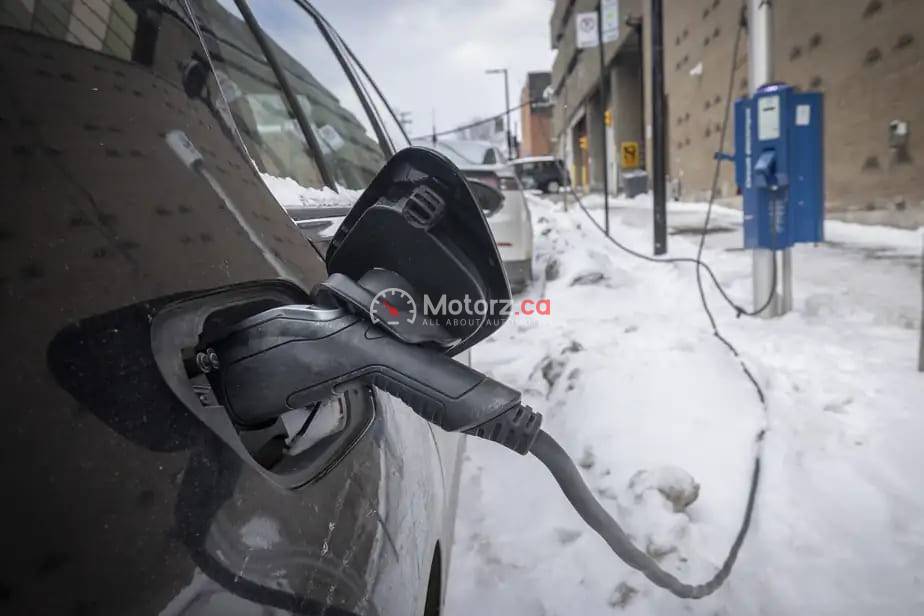
Plug-in Hybrid Electric Vehicles (PHEVs) are designed to offer a further reduction in emissions by allowing external charging and providing a meaningful all-electric range (typically 20 to 50 miles). However, their real-world carbon footprint is highly contentious.
The Utility Factor Discrepancy
Official emissions ratings for PHEVs assume a high Utility Factor (UF)—the percentage of time the vehicle is driven in all-electric mode.
Lab Data vs. Real World: Studies from Europe and North America have shown that the real-world CO₂ emissions of PHEVs can be two to five times higher than their official laboratory ratings.
Driver Behavior: The primary reason for this massive gap is driver behavior. Many owners, especially those with company cars or limited home charging access, fail to charge their PHEVs regularly, effectively driving a heavy, gasoline-dependent car burdened by a large, unused battery.
Grid Impact: For PHEVs that are regularly charged, the emissions during the electric-driving phase depend entirely on the carbon intensity of the local electricity grid. Charging in a state powered heavily by coal will generate higher emissions than charging in a region powered by solar or hydroelectric energy.
Insight: While a PHEV driven meticulously and charged using a clean grid can boast very low emissions, a PHEV used primarily on gasoline may have a lifetime carbon footprint surprisingly close to or only slightly better than a conventional hybrid, or even a highly efficient ICEV.
The Hidden Cost: Manufacturing and the Battery Debt
The emissions produced during the manufacturing of any vehicle, known as Vehicle Cycle Emissions, are a crucial part of the LCA. For hybrids and EVs, this phase is where they initially carry a heavier carbon debt than conventional cars.
Comparing the Production Footprint
Manufacturing a hybrid car is inherently more energy-intensive than manufacturing a traditional gasoline car because it involves adding a high-voltage battery pack and an electric motor alongside the traditional internal combustion engine system.
Standard Hybrids (HEVs): Because HEVs use smaller battery packs
their manufacturing footprint is only slightly higher than an equivalent ICEV. The additional carbon debt is relatively small and can be paid off quickly.
Plug-in Hybrids (PHEVs): PHEVs use larger battery packs (typically 8–18 kWh). While smaller than a pure EV battery, these packs require more energy-intensive mining of critical minerals (lithium, cobalt, nickel) and energy for the assembly process, resulting in a higher initial carbon footprint than a standard HEV.
Battery Electric Vehicles (BEVs): BEVs use the largest batteries (typically 60–100 kWh), giving them the highest initial manufacturing carbon debt, often twice as high as a gasoline car.
The Environmental Cost of Hybrid Batteries
Battery production is the single largest contributor to the manufacturing carbon footprint of any electrified vehicle.
Mitigation: The location and energy source of the battery manufacturing plant are key. A battery produced in a region powered by coal will carry a much heavier carbon debt than one produced in a factory powered by renewable energy. Automakers are increasingly focused on decarbonizing their battery supply chains to shrink this initial footprint.
The Payback Period: When Do Hybrids Become the Greener Choice?
A crucial concept in the LCA of electrified vehicles is the carbon payback period or break-even point. This is the number of miles (or kilometers) a vehicle must be driven before its operational savings offset its higher initial manufacturing emissions.
The HEV Advantage in Break-Even Time
Due to their small manufacturing carbon debt, standard hybrid electric vehicles (HEVs) have the shortest payback period of any electrified vehicle type.
Standard Hybrid Payback: Studies suggest that a standard hybrid often offsets its manufacturing debt in a very short time, sometimes within the first one to two years of ownership, or between 10,000 to 20,000 miles (16,000 to 32,000 km).
BEV Payback: In contrast, a battery-electric vehicle (BEV) typically requires a longer period, sometimes 1.4 to 6 years or up to 70,000 miles (112,000 km), depending heavily on the carbon intensity of the local electricity grid and the vehicle’s battery size.
Key Insight: For consumers who only keep their vehicle for a few years or drive low mileage, a standard hybrid offers the most immediate carbon savings advantage over an ICEV. Its small battery burden is overcome quickly through superior fuel efficiency.
Final Verdict: Hybrid vs. ICEV vs. BEV
To assess the carbon footprint of hybrid cars, we must look at the total GHG emissions over the vehicle’s full lifetime.
Strategic Role of the Hybrid
Standard HEVs (Like the Toyota Prius or Honda Insight): These are an excellent choice for immediate, low-barrier emissions reduction. They provide guaranteed savings in every tank of gas and offer a swift carbon payback. They are particularly effective for drivers who do a mix of city and highway driving and are not ready for the charging commitment of a BEV.
Plug-in PHEVs (Like the Toyota RAV4 Prime or Ford Escape PHEV): The environmental benefit is contingent on the owner. When charged daily and used primarily in electric mode for local driving, the PHEV’s total emissions can rival or even surpass a BEV’s savings. However, if rarely plugged in, their advantage diminishes drastically.
Maximizing Your Hybrid’s Green Potential
If you own or plan to purchase a hybrid, you can actively reduce its overall environmental impact:
PHEV Owners: Charge Religiously: The single biggest factor is using the all-electric mode as often as possible. Treat it like an EV for short trips.
Drive Efficiently: Hybrids thrive on smooth acceleration and anticipating traffic to maximize regenerative braking. Aggressive driving forces the gas engine to work harder, negating the efficiency gain.
Battery Longevity: Hybrid batteries are highly durable and often last the vehicle’s lifetime. Ensure proper battery maintenance and investigate recycling programs for end-of-life battery disposal to minimize the environmental impact of raw material extraction.
Hybrids as a Decarbonization Bridge
The carbon footprint of hybrid cars, while not zero, offers a demonstrable and immediate improvement over conventional gasoline vehicles. Standard hybrids provide an undeniable reduction in lifetime emissions with a minimal initial carbon debt, making them a safe and effective entry point for climate-conscious consumers.
While battery-electric vehicles ultimately hold the potential for the lowest lifetime emissions—especially as electricity grids become cleaner—hybrids remain a vital, pragmatic, and highly efficient transitional technology. They bridge the gap by delivering significant and verifiable emissions cuts today, paving the way for a fully electric future without demanding a complete shift in infrastructure or driver habits. For millions of drivers, the hybrid remains the smart, green choice right now.