
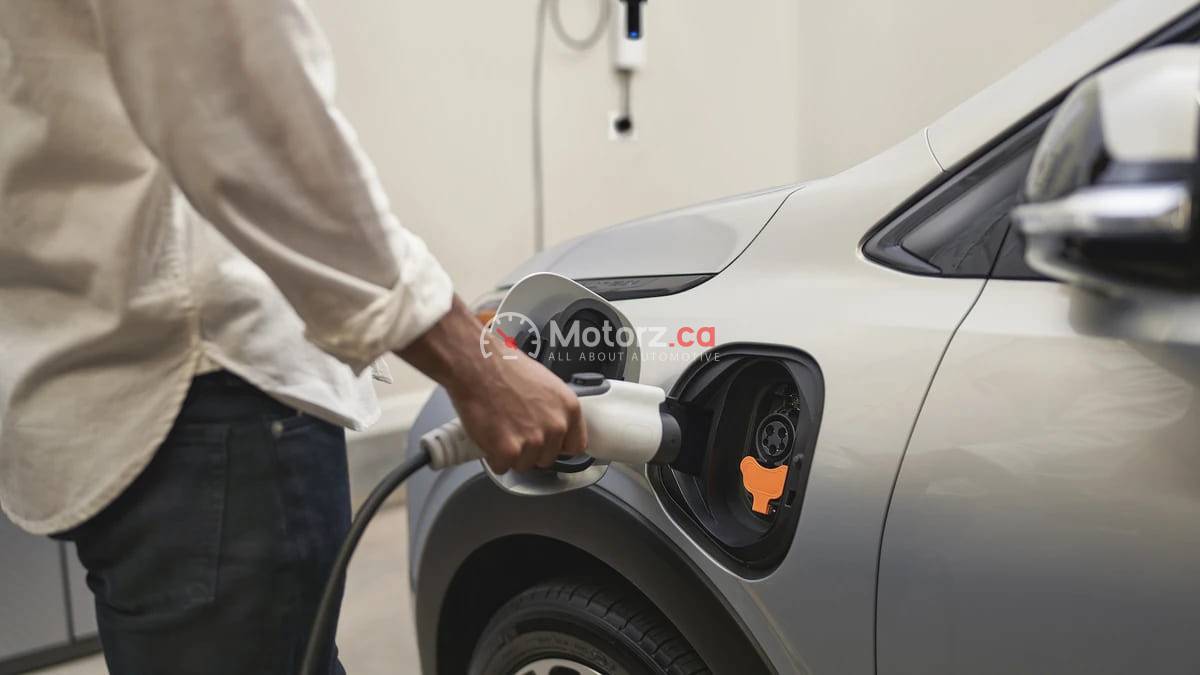

The biggest hurdle facing potential Game-Changing EV Incentive buyers is not range or performance—it is the often-overlooked logistical challenge and cost of home charging installation. Transitioning from a gasoline car to an EV requires setting up a dedicated, 240-volt charging outlet, an electrical upgrade that can easily cost hundreds or even thousands of dollars depending on the home’s layout and existing panel capacity.
In a move designed to sweep this significant barrier aside, Chevrolet (Chevy) introduced a highly attractive incentive: covering the cost of a standard Level 2 (240-volt) home charging outlet installation for eligible customers. This program, often facilitated in partnership with the installation network Qmerit, instantly makes EV ownership more accessible and convenient, transforming the anxiety of charging into the simplicity of plugging in overnight.
While this incentive was famously launched for the popular 2022 and 2023 Chevrolet Bolt EV and Bolt EUV models, its structure provides a template for how major automakers plan to tackle the charging ecosystem for the next generation of EVs, including the much-anticipated Ultium platform vehicles. This article breaks down the specifics of the Chevy home charging offer, analyzes its impact on the EV market, and provides crucial details on eligibility and how the installation process works.
The Heart of the Incentive: Why Game-Changing EV Incentive
Chevrolet’s focus on the Level 2 outlet addresses the core need of virtually all EV owners: the desire to charge quickly and conveniently in their own garage.
Level 1 vs. Level 2: The Speed Difference
When purchasing an EV, customers often receive a Dual Level Charge Cord (standard on many Bolt models) which allows for charging at both standard 120-volt household outlets (Level 1) and higher-power 240-volt outlets (Level 2).
The Problem with Level 1: While functional, Level 1 charging is agonizingly slow. If a customer commutes 50 miles daily, Level 1 charging barely replaces the energy consumed overnight, making it impractical for most drivers.
The Necessity of Level 2: Level 2 charging, powered by a 240-volt circuit (similar to a clothes dryer or oven), is the industry standard for home charging. By covering the installation of the NEMA 14-50 outlet (the 240-volt receptacle), Chevrolet ensures buyers can utilize the full potential of their Dual Level Charge Cord without the immediate expense of hiring an electrician.
The Cost Barrier: Eliminating the Hidden Fee
The decision to cover the installation costs is a direct response to a major financial roadblock.
Typical Installation Costs: Standard installation for a 240-volt outlet can cost between 500 and 1,500, even for a straightforward job. If the electrical panel is far from the garage, or if the home requires a service panel upgrade to handle the additional load, the cost can easily climb higher.
Chevrolet’s Solution: By partnering with installation expert Qmerit, Chevy covers the cost of the standard installation and necessary permit fees. This removes the guesswork and the immediate out-of-pocket expenditure, making the switch to EV ownership a cleaner, single transaction at the dealership.
Program Eligibility and How the Installation Works
To take advantage of this compelling offer, prospective Chevrolet EV buyers must understand which models qualify and the steps required to get the outlet installed.
Eligible Chevrolet Models (Historical Focus)
The core of the Level 2 installation program has been centered around Chevrolet’s most accessible EV models.
Primary Focus: The offer has historically been explicitly extended to eligible customers who purchase or lease a new 2022 or 2023 Chevrolet Bolt EV or Bolt EUV. These vehicles, renowned for their affordability and respectable range, are often the entry point for first-time EV owners, making the charging incentive all the more critical for their market success.
Ultium Platform Vehicles: While the Bolt program set the standard, customers purchasing newer, Ultium-platform vehicles like the Chevrolet Silverado EV, Blazer EV, and Equinox EV are often subject to different, evolving incentives. Buyers of these newer models must confirm with their dealer if a similar installation rebate or credit is currently being offered, as incentives frequently change based on model year and production volumes.
The Seamless Qmerit Installation Process
Chevrolet simplifies the often-complex process of electrical work by collaborating with Qmerit, a network specializing in home EV charger installations.
Dealer Sign-Up: The process begins at the dealership during the purchase or lease transaction. The EV Specialist registers the customer for the program.
Information Gathering: The customer receives a form from Chevrolet (via Qmerit) to provide details about their home’s electrical system, often involving a simple online questionnaire and submitting photos of the electrical panel and desired installation location.
Vetted Electrician Assignment: Qmerit handles the complex logistics, matching the customer with a local, licensed, and pre-approved electrician.
Installation and Permit: The electrician secures any necessary local permits and schedules the installation of the 240-volt NEMA 14-50 outlet at the customer’s primary residence. Chevrolet covers the cost of this standard work.
Important Caveat: Non-Standard Installation: The offer covers standard installation. If the home requires significant, non-standard work—such as an upgrade to the main electrical panel (a cost that can exceed 3,000)—Chevrolet typically provides a credit of up to 1,500 towards the cost of installation. The customer is responsible for paying the remaining balance directly to the electrician.
Alternative Options: Public Charging Credits and Charging Stations
Chevrolet understands that not all customers can or wish to install a 240-volt outlet at home, especially apartment or condo dwellers. The program offers valuable alternatives.
The Public Charging Credit Option
For customers who live in multi-unit buildings, already have a Level 2 setup, or simply decline the home installation, Chevrolet offers a useful alternative incentive.
FLO Network Credit: Eligible customers can opt for a 750 public charging credit to be used on the FLO network and its roaming partners.
On-the-Go Charging: This credit is particularly attractive for city dwellers who rely on street parking or workplace charging. FLO provides access to one of the largest public charging networks in North America, allowing drivers to charge conveniently while shopping or working.
Utilizing the Installation Credit for a Wall-Mounted Charger
The 1,500 non-standard installation credit offers flexibility for buyers who want more than just a wall outlet.
Credit Towards Hardwired Chargers: The credit can often be applied towards the purchase and hardwired installation of a customer-supplied wall-mounted charging station (like the GM PowerUp Charger).
The Advantage of a Dedicated Station: While the standard NEMA 14-50 outlet is fully functional with the Dual Level Charge Cord, a dedicated Level 2 wall charger often provides enhanced features like Wi-Fi connectivity, charging schedule management, and slightly faster charging speeds, appealing to the tech-savvy owner.
Market Impact and the Future of GM Energy
Chevrolet’s aggressive approach to simplifying the charging experience is part of a broader, strategic push by General Motors (GM) to dominate the EV market.
Reducing Friction for First-Time EV Buyers
The single biggest effect of the free Level 2 installation is the reduction of friction in the customer journey.
Psychological Barrier: The complexity of electrical work, permits, and coordinating contractors is a major psychological hurdle. By eliminating this step and managing the process end-to-end, Chevrolet removes uncertainty and makes the leap to EV ownership feel less daunting.
Value Perception: The offer significantly increases the perceived value of the vehicle package. For first-time EV buyers, receiving the necessary home infrastructure essentially free of charge is often more compelling than an equivalent cash rebate.
The GM Energy Ecosystem
The Level 2 installation program is intrinsically linked to GM’s larger vision for GM Energy, the brand’s new division focused on comprehensive energy management solutions.
V2H Preparedness: GM is rolling out Vehicle-to-Home (V2H) bidirectional charging capabilities in its Ultium-platform vehicles. While the standard NEMA 14-50 outlet does not support V2H, the partnership with Qmerit establishes an approved pathway for customers to easily upgrade to more advanced GM Energy products, like the GM Energy PowerShift Charger, which can facilitate V2H technology in the future.
Home Integration: By managing the home charging installation, GM creates a direct channel to integrate the EV into the customer’s home energy ecosystem, positioning the vehicle not just as transportation, but as a potential power source and energy management tool.
Making the EV Transition Irresistible
Chevrolet’s initiative to cover the cost of a standard Level 2 home charging outlet installation is more than just a promotional perk; it is a fundamental acknowledgment that the future of electric mobility is powered from the garage. By partnering with experts like Qmerit, the automaker has successfully demystified and defrayed the cost of the most critical piece of the EV ownership puzzle.
For prospective owners of the Bolt EV, Bolt EUV, and future Chevrolet electric models, this program represents significant, practical value. It ensures that the daily routine of EV ownership is characterized by convenience—plugging in at night and waking up to a full charge—rather than the stress of finding public charging stations. Buyers should always confirm the latest program details and eligibility with their local authorized Chevrolet dealer, especially as incentives evolve with the introduction of new Ultium-platform trucks and SUVs.